Français
 English
11 things you didn't know about Barcelona
- Beaches: Barcelona had no beaches before 1992; the old industrial seafront was transformed for the Summer Olympics. The city now has 7 beaches along 4.5 kilometres, including Barceloneta and Nova Icària.
- Sagrada Família: work began in 1882 at the initiative of the bookseller Josep Maria Bocabella and was taken over by Gaudí after Francisco Paula del Villar resigned. Funded by tickets and donations, at €25 million a year, it welcomes 3 million visitors a year; the tallest of its 18 spires, the tower of Jesus Christ, will reach 170 metres.
- Squares and statues: Plaça del Fòrum, at 14 hectares, is the second largest square in the world after Tiananmen, with a 1,700 m² solar panel; the statue of Christopher Columbus, erected in 1888, stands on a 60-metre iron column.
- Traces of the past: two of the twelve Wallace fountains received in 1888 remain; Casa Adret was already inhabited in the 12th century; Refuge 307 is one of 1,400 Civil War shelters.
- Key point: FC Barcelona, founded in 1899, plays at the Camp Nou, with its 100,000 seats.
Seasoned tourists and passionate locals agree that Barcelona is full of fascinating stories. From Christopher Columbus to Iniesta, these anecdotes about Spain's top tourist city will surprise you.
Today, we share 11 remarkable facts about Barcelona, chosen by our team of property advisers. Facts that are sure to make you want to invest in the Catalan capital!
No. 1: Brand-new beaches
Hard to believe, but Barcelona had no beaches until 1992.
The seafront used to be an industrial area full of factories, until the city decided to host the 1992 Summer Olympics.
A very good move by the city, as Barcelona's beaches are now among the most beautiful urban beaches.
In all, Barcelona has 7 beaches along 4.5 km of seafront.
We recommend trying Barceloneta beach for yourself, with its many bars and restaurants right on the sand, or relaxing on the warm sand of Nova Icària, known to be quieter than its neighbour.
No. 2: A sense of déjà vu
On a street corner, you may notice Wallace fountains, named after the philanthropist who paid for them, Richard Wallace. These fountains still provide drinking water and can be found all over the world: there are two in Barcelona today, and others in Paris, London, Bordeaux and Montreal. They date from the 19th century, when supplying drinking water was a real challenge and some people did not have access to it every day.
Paris was the first city to install these fountains, and the city council ordered so many that it decided to give around fifty to cities around the world: Barcelona received 12 for the 1888 Universal Exhibition, but only two of them still stand in the city. Go to the Ramblas opposite the wax museum, or to the corner of Gran Vía and Passeig de Gràcia to see them or have a drink.
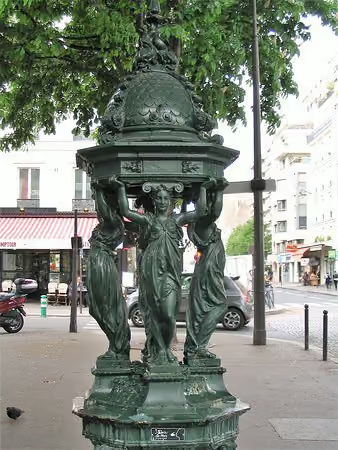
The fountains are easy to recognise, decorated with four women who each represent a virtue: kindness, charity, simplicity and sobriety, and each is also an allegory of one of the four seasons.
No. 3: The unfinished symbol
The Sagrada Família should have taken 144 years to build (had it been completed in 2026 as originally planned, a date recently pushed back), with at least as many odd or little-known facts about it. Here are a few to impress on your next trip.
George Orwell, the famous author of the novel 1984, once said it was the ugliest building in the world. Yet it is the most visited place in the city, with 3 million visitors a year.
Its construction is funded entirely by private money, through entrance tickets and donations from various patrons. That still adds up to €25 million a year.
The project started in 1882, the idea of the bookseller Josep Maria Bocabella, who had returned from a trip to Italy where he had fallen in love with its churches. The architect Francisco Paula del Villar began building a Gothic church, but he resigned after a year, and Gaudí took over the project and changed all the plans.
The 18 spires that will eventually crown the Sagrada Família represent Jesus Christ and the Virgin Mary, the 12 apostles and the 4 evangelists: the tower of Jesus will be 170 m high.
No. 4: The second largest square in the world
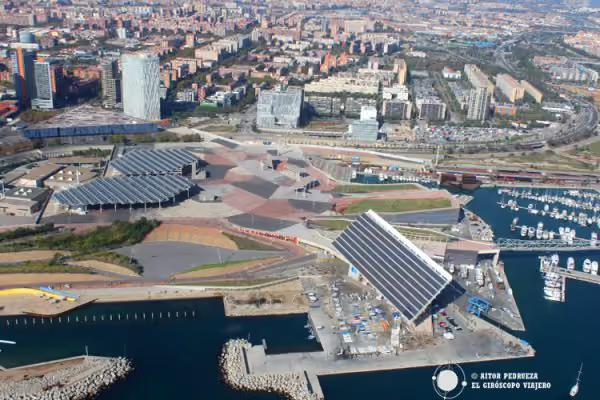
Plaça del Fòrum is the second largest square in the world after Tiananmen Square in Beijing. It covers a total area of 14 hectares (140,000 m²), and part of it is covered by a large 1,700 m² solar panel.
Opened in 2004 for the Universal Forum of Cultures, Parc del Fòrum includes an esplanade, an international convention centre, a seafront park, a marina and a swimming area. It can be reached by metro and tram, and many events take place there every year, such as the Primavera Sound festival, the Telecogresca party, or the Feria de Abril de Cataluña.
No. 5: What is Christopher Columbus pointing at?
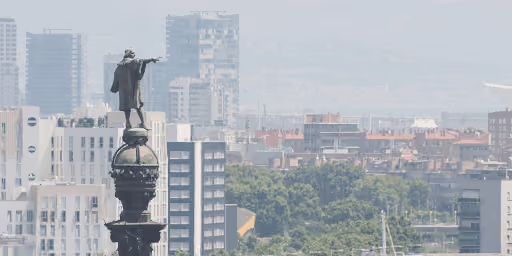
Between the Ramblas and the harbour stands a statue of Christopher Columbus. Erected in 1888 for the Universal Exhibition, it shows Columbus on top of a stone base with four flights of steps, decorated with six lions and several reliefs and sculptures illustrating his life.
Standing at the top of an iron column 60 metres high, he points towards the horizon. There are two main theories: either he is pointing at the sea, or towards his home city of Genoa, in Italy.
No. 6: The oldest house in Barcelona
The oldest house in Barcelona is at number 6, Salomó Ben Adret street, in the Gothic Quarter. Hidden in a narrow lane of the former Jewish quarter, this small white stone house, with walls tilted by an earthquake in 1428, was already inhabited in the 12th century.
Today it is called Casa Adret and houses a Jewish cultural centre that attracts hundreds of visitors a month. It is also the headquarters of the magazine on Jewish culture in Barcelona: Mozaika.
No. 7: The medieval skyscraper
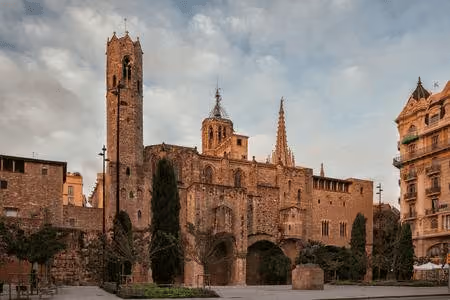
In the Gòtic district, the Mirador del Rei Martí towers over Plaça del Rei. In medieval times, this highest tower of the Palau Reial Major was considered the tallest building in the world. With its five floors built in 1555, the lookout tower is a true ancestor of skyscrapers.
No. 8: Another dimension
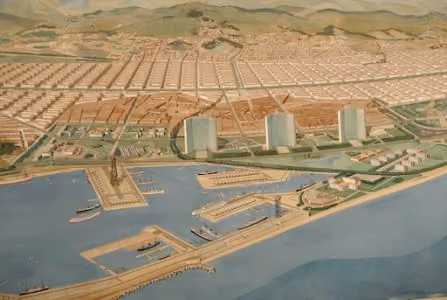
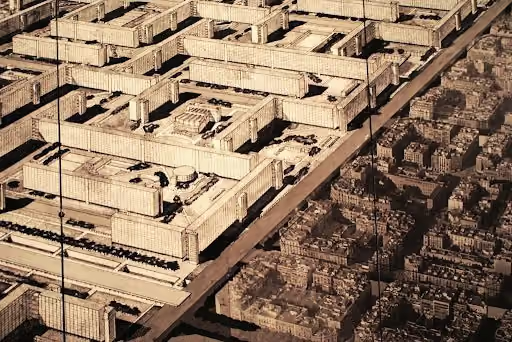
Barcelona could have been completely different. In the 1930s, a call for proposals to redesign the seafront was launched to tackle the growing slum conditions in the poorest areas of the city.
The Haussmann-style plan by the architect Antoni Rovira i Trias won the jury over unanimously, but it was not approved by the central government in Madrid, which imposed the Cerdà plan and the district of the Eixample. Le Corbusier's proposal is also worth remembering: had it been chosen, it would have completely changed the face, and perhaps even the development, of Barcelona.
No. 9: Refuge 307
The Spanish Civil War had countless direct effects on Spanish architecture and behaviour. From the start of 1937, Franco's army and its Italian allies bombed the country, and Barcelona in particular, forcing residents to build their own air-raid shelters to protect themselves.
Refuge 307 is one of the largest of the 1,400 shelters in the city, and parts of it are still in perfect condition (and open to visitors thanks to the Barcelona History Museum).
No. 10: World champions
We could not end this list without mentioning FC Barcelona, the city's legendary club founded in 1899 by Joan Gamper. Barça, with its famous Camp Nou stadium, is one of the best-known clubs in the world, and the stadium is still the largest in Europe, with its 100,000 seats.
According to the Football Money League, FC Barcelona's revenue, excluding player trading, reached €840.8 million at the end of the 2019-2020 season.
No. 11: Easter egg
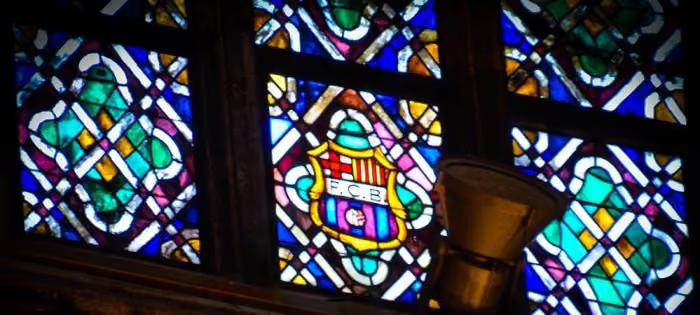
A second anecdote about the blaugrana: the stained-glass windows of the Basilica of Santa Maria del Mar include a Barça crest. To the left of the altar is the FC Barcelona crest. Although the windows date back to the Middle Ages, most of them were made after the Civil War, which damaged many of them. Seizing the opportunity, Barça made a small donation towards the restoration.
As a purchase or sale in a foreign country calls for in-depth expertise and close follow-up throughout the process, feel free to contact us.
Romain Traversino is head of the Barcelona office of Alveo Search (Alveo group). He supports international buyers with their property projects in Barcelona and in Catalonia, from search to signing. He speaks six languages and shares his advice on choosing neighbourhoods, analysing prices and buying remotely.

Our resources for buying in Spain