Français
 English
Sant Andreu, Barcelona: a neighbourhood guide

- Neighbourhood identity: Sant Andreu, with farming roots and an industrial past, keeps a long shopping tradition. Its transformation is integrating the former industrial sites around Plaça del Mercadal and the church of Sant Andreu de Palomar.
- Key figures: the district has 148,560 inhabitants over 656.50 hectares, a density of 226 inhabitants per hectare, according to the Ajuntament de Barcelona.
- Old town: the historic core is still densely populated, with more than 52,000 inhabitants, and sits alongside the areas created by industrial redevelopment.
- Major projects: the district will have one of Barcelona's two high-speed train (AVE) stops, at the new La Sagrera station. The urban changes affect the lower parts of Sagrera and Sant Andreu, along the railway line. Bon Pastor is undergoing urban renewal: residents of the low-cost houses are to be rehoused in new buildings in the same neighbourhood.
- Key point: the neighbourhoods of Congrés i els Indians, Navas and Trinitat Vella will not see any AVE-related urban development on their land.
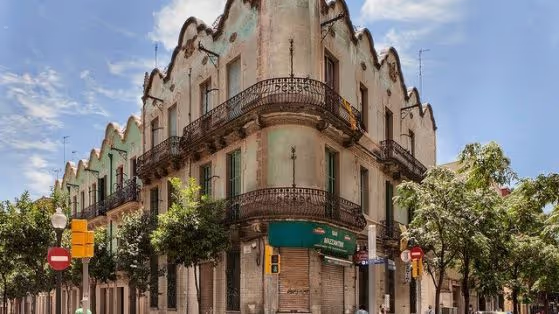
A modern and innovative neighbourhood in Barcelona
Barcelona's Sant Andreu district, with its farming roots, industrial past and long shopping tradition, is changing fast. The changes are improving former industrial sites and integrating them into historic Sant Andreu, around Plaça del Mercadal or the church of Sant Andreu de Palomar.
A neighbourhood where the most modern and innovative side of Barcelona blends with an old town that goes about its life as if unaware of all these changes. Here, commercial and cultural life, the legacy of a working-class and very outspoken neighbourhood, offers visitors all kinds of entertainment.
New projects for the neighbourhood
Canódromo Parque de Investigación Creativa
The arrival of the high-speed train (AVE in Spanish) in Sant Andreu
The district will have one of Barcelona's two high-speed train stops, at the new La Sagrera station. This is a significant step for the area. The planned urban changes linked to this project have already started to reshape it. The transformations affect the lower parts of the Sagrera and Sant Andreu neighbourhoods. The boundary between Sant Andreu and the Bon Pastor and Baró de Viver neighbourhoods will follow the whole route of the railway. Congrés i els Indians (named in memory of the Catalans who made their fortune in the American colonies and then came back), Navas, to the south, and Trinitat Vella, to the north, will not see any AVE-related urban development on their land.
The old town of Sant Andreu
The old town of Sant Andreu is still densely populated, with more than 52,000 inhabitants. Bon Pastor is also affected by a major urban renewal project, under which, for now, the residents of all the low-cost houses are to be moved to new buildings in the same neighbourhood.
Sant Andreu, Barcelona, in figures
- 148,560 inhabitants
- Area of the district: 656.50 hectares
- Population density: 226 inhabitants per hectare
Source: Ajuntament de Barcelona
Thomas Rouer is the founder of Alveo Search and the CEO of the Alveo group. Based in Spain for almost ten years, he develops property services designed for the specific needs of foreign buyers.
His expertise covers every aspect of buying property in Spain: understanding the market, searching for and selecting properties, negotiation, financing, paperwork, tax and securing the purchase process.

Our resources for buying in Spain