Français
 English

The role of the notary in Spain

- Limited role: in Spain, the notary is a public official acting for the State. Impartial, the notary makes sure the deed of sale complies with the law, without taking the side of the buyer or the seller.
- What the notary does: certifies the identity of the parties and any witnesses, sends the deed to the Registro de la Propiedad so the new owner can be registered, and informs both parties of the taxes and costs due on the sale.
- What the notary does not do: the full legal checks. A lawyer, included in Alveo Search's fees, checks that the property is free of debts, charges and occupants, has no mortgage and has an energy certificate.
- Other services: for a fee, the notary also deals with inheritances, loans, powers of attorney and NIF applications. To set up a company, you must go before a notary to validate the articles of association.
- Language: Alveo Search works with notaries used to foreign buyers. If the notary speaks your language, you do not need to pay a sworn translator.
In Spain, the notary's role is fairly limited in a property transaction. In this practical guide, we explain what the notary does and how this role works alongside a lawyer, when you buy a property. Our property experts have put this guide together to help you understand the value of our turnkey packages, which include administrative and legal support.
What can you expect from a notary in Spain?
In Spain, the notary does not work for either party and is a public official acting for the State. The notary is a legal professional who holds a public office, and as such must give impartial legal advice, free of charge, to anyone who asks.
However, the Spanish notary also offers paid services such as:
- Personal and family matters (marriage property regimes, inheritance and wills)
- Housing and property (buying and selling property, new construction)
- Mortgages and loans
- Businesses and companies (setting up a company)
- Powers of attorney
- Notarial deeds
- Mediation
- Procedures (NIF applications, etc.)
What is the notary's role in a property purchase?
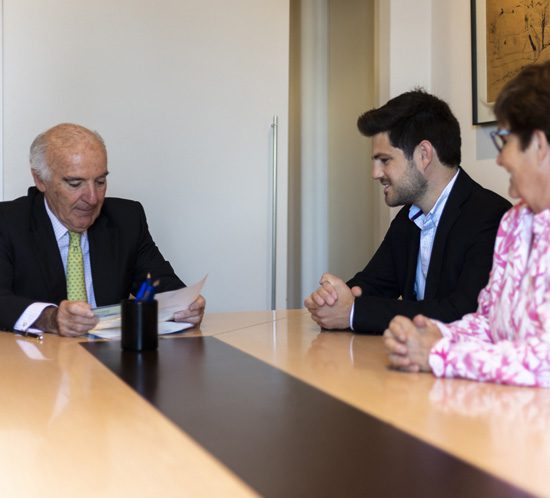
Unlike a solicitor or attorney acting for you, in a property purchase the Spanish notary is impartial, takes neither the buyer's nor the seller's side, and is there to make sure the deed of sale complies with local law. The notary's role and duties are limited.
That is why buyers are strongly advised to hire a lawyer (the cost is included in our fees) or, better still, to use a buyer's agent, like the ones we offer. The lawyer carries out all the legal checks and gives a favourable or unfavourable legal opinion (free of debts, free of charges, free of any occupant, free of hidden defects, energy certificate in place, checks of the registry and town hall records: no seizure order or mortgage, not a protected home with a capped sale price).
In short, the notary in Spain certifies the identity of the parties and of any witnesses who sign the deed of sale, sends the deed to the land registry (Registro de Propiedad) so the new owner can be registered, and informs the parties of all the taxes and costs due on the sale. Read: how much notary fees cost in Spain.
To help you, here is the list of notaries appointed by the Spanish State, currently practising: https://www.notariado.org/liferay/web/notariado/seleccion-de-notario
The notary and setting up a company in Spain
Setting up a company in Spain can take time. The steps are not the same as in your home country: after applying for your NIE and having the company name approved by the Mercantile Registry, the next step is the compulsory signing before a Spanish notary.
Here, the notary's role is to approve or reject the articles of association of the company, which you will have prepared beforehand with a law firm. The articles set out:
- The company's purpose (type of activity)
- The legal form (SA, SL, autónomo, etc.)
- The appointment of the shareholder(s) (split of the company's shares)
- The appointment of the director(s) (manager(s))
- The split of holdings (distribution of profits)
- The tax and registered address (administrative address, registered office)
- The amount and type of share capital*
Our offices in Spain have built up a network of responsive notaries used to working with foreign buyers. At the signing of the public deed, you can ask your questions and make sure you understand every implication.
If the notary speaks your language, you also save money, as no sworn translator is needed.
Thomas Rouer is the founder of Alveo Search and the CEO of the Alveo group. Based in Spain for almost ten years, he develops property services designed for the specific needs of foreign buyers.
His expertise covers every aspect of buying property in Spain: understanding the market, searching for and selecting properties, negotiation, financing, paperwork, tax and securing the purchase process.