Français
 English
How to prepare to buy a holiday home in Spain

- Why Spain: more than 18 million British tourists visited Spain in 2018. The country gets close to 300 days of sunshine a year, and the cost of living is generally lower than in the UK or northern Europe.
- Price per square metre: allow €4,750/m² for an apartment in Barcelona, €4,170/m² in Madrid and €2,050/m² in Seville. The Spanish market is less fragmented and open to more modest budgets.
- Annual taxes: IBI, the local property tax, varies from town to town and does not exceed €2,000 a year. Non-resident owners also file an annual non-resident income tax return (Modelo 210) on the imputed income of a home they do not rent out.
- Renting it out: rental income earned by a non-resident, meaning someone who spends fewer than 183 days a year in Spain, is taxed at 19% for EU and EEA residents and 24% for others, such as UK or US residents. It must usually also be declared in your country of residence, under its double taxation treaty with Spain.
- Key point: the cost of a holiday home does not stop at the purchase price; include Spanish taxes and financing in your budget before you commit.
Spain is one of the favourite destinations of British travellers: in 2018, more than 18 million British tourists visited Spain on holiday. But Spain does not only attract tourists. Its coastline is just as appealing to buyers looking for a holiday home. The Spanish property market and property law differ from those in your home country, so here are some tips to help you prepare to buy a holiday home in Spain.
Why buy a holiday home in Spain?
You want to buy a holiday home, but why Spain? Spain is a favourite destination for buyers from the UK and northern Europe, for short breaks or longer stays, largely thanks to its many direct flights to the UK and northern Europe. The country gets close to 300 days of sunshine a year, and the cost of living is generally lower than in the UK or northern Europe.
Buying a holiday home is also an attractive investment. You can rent it out during the year or in the summer months to make the investment pay. The property market in Spain is very dynamic, particularly in the administrative capital Madrid, the cultural capital Barcelona and the other big coastal cities, which are very popular from May to August. A holiday home can therefore offer more possibilities than a home used for two weeks a year.
Where to buy your property in Spain?
Apart from the capital, Madrid, which lies in the geographical heart of the country, Spain's other main cities are on or near the coast, such as the cultural capital Barcelona, Seville, Valencia and Bilbao. These destinations have the advantage of attracting tourists in summer while keeping a dynamic economy all year round, thanks to their fairly large local populations.
The property market is also less fragmented in Spain. The average price per square metre for an apartment is €4,750 in Barcelona, compared with €2,050 in Seville. In Madrid it is €4,170. So it is possible to find a property in Spain even on a more modest budget.
How much does a holiday home in Spain really cost?
The cost of the property is the first financial outlay. To finance your holiday home in Spain, you can approach a lender in your home country, at a branch or online. A mortgage simulation lets you calculate the final cost of the loan, taxes included, and the monthly repayments. A mortgage requires you to be creditworthy: you must be able to make your monthly repayments from your salary or savings.
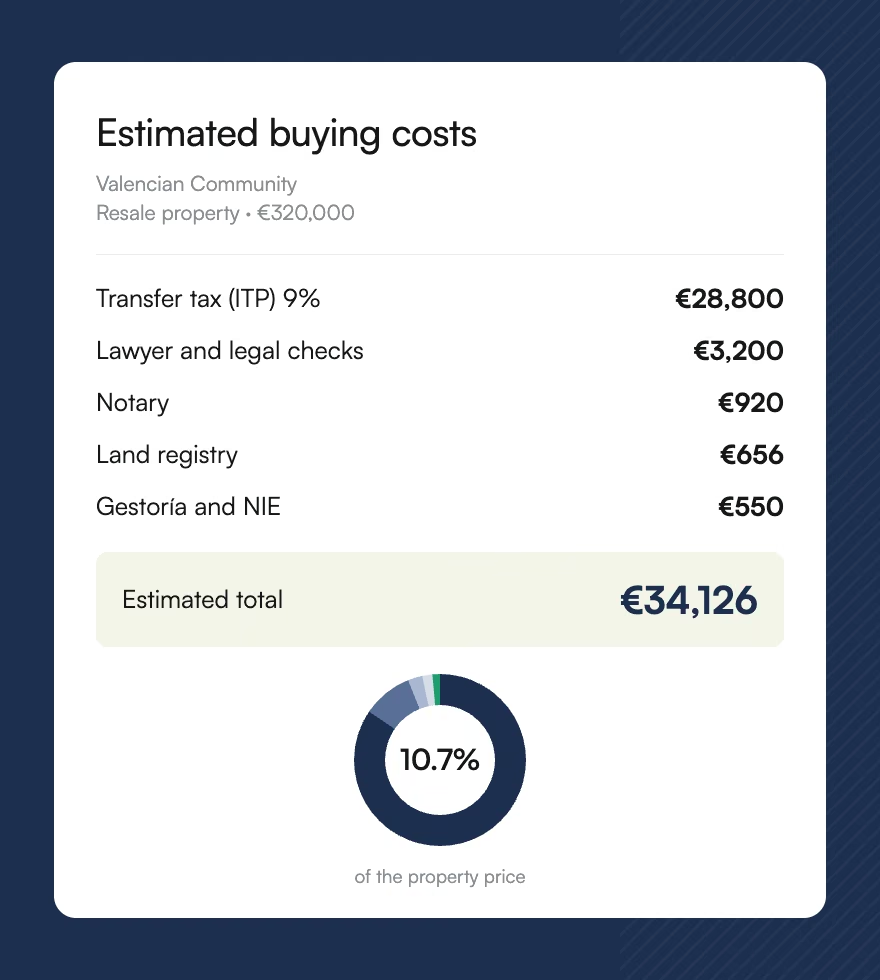
The cost of a holiday home does not stop at the purchase price. Spanish taxes apply to any property you own in Spain. As a non-resident owner, you must file an annual non-resident income tax return (Modelo 210) on the imputed income of a home you do not rent out.
Every year, you will have to pay IBI (Impuesto sobre Bienes Inmuebles), the local property tax in Spain. It varies from town to town and does not exceed €2,000 a year. If you rent the property out, you will be subject to Spanish income tax. As a non-resident (fewer than 183 days a year spent in Spain), the rate on rental income is 19% if you live in the EU or EEA and 24% otherwise, for example in the UK or the US. You will usually also need to declare this income in your country of residence, where the double taxation treaty with Spain gives relief for the Spanish tax paid.
In conclusion, you will choose your future holiday home mainly according to your preferred destinations and type of property. To help you with your search, you can call on professionals who know the Spanish property market.
Source: Arkadia
Marion Guillet is director of operations at the Alveo group, which Alveo Search is part of. She coordinates the teams and oversees the quality of the client journey. She shares her advice on how to prepare a property project, plan the formalities of settling in and live in Spain.

Our resources for buying in Spain