Français
 English
Renovating a property in Spain: a guide for foreign buyers

- Market context: foreigners bought 15% of homes in 2023 and mortgage lending fell by more than 22% between 2022 and 2023 (INE). The average price is around €2,000/m², and 25% of homes are over 40 years old.
- Cost of works: labour accounts for 40% of a quote, at €25 excl. VAT per hour. Expect €450/m² for a light renovation, €900/m² for high-end work, €28,300 on average and €30,000 to €50,000 for 100 m².
- Tax deductions: Spanish income tax (IRPF) allows 20% (base up to €5,000 a year), 40% (€7,500 a year) and 60% (€15,000 in total), depending on the energy saved.
- Licences: a licencia de obras mayores (major works licence) is needed as soon as the structure or façade is affected; expect 3 to 4% of the budget, or €250 to €300 according to Idealista.
- Key point: a mortgage covers up to 80% of the valuation, with the renovation share capped at 30% of the loan. Renovating 100 m² takes 3 to 4 months, while the licence can sometimes take a year.
You have decided to buy in Spain, to live there, build your family home or let out a profitable flat? As the Spanish housing stock is ageing, you are probably thinking about renovation work without knowing where to start. This complete guide to renovating in Spain answers all the questions foreign buyers ask when they want a clear idea of what lies ahead: licences and permits, energy criteria, the budget to plan depending on the materials you choose, tax deductions and more. You will know everything about renovating property in Spain.
The Spanish property market in context
Foreigners, the kings of Spanish property
Even though it has slowed slightly in recent months, the Spanish property market remains very attractive, especially for foreign buyers. Local buyers, who often have less purchasing power than foreign investors, find it harder to cope with higher mortgage rates and stricter lending conditions. In this economic climate, foreigners come out ahead. They can absorb these increases more easily. Unsurprisingly, mortgage lending fell by more than 22% between 2022 and 2023, according to the latest official data from the National Statistics Institute (INE), and, again according to the INE, property purchases without a mortgage tripled in five years. This is linked to the boom in purchases by foreigners. They bought 15% of the homes on the market in 2023.
Why Spanish property appeals to foreign buyers
As regular readers of the Alveo Search blog know, buying property in Spain has many advantages for a foreign buyer.
- Prices per square metre are still very attractive: around €2,000 on average.
- Property taxes are relatively low.
- Community fees (gastos de comunidad) are relatively low.
- Rental yields are good: 6.5% on average according to the latest estimates.
- There is also the speed of property transactions, slightly less strict energy rules, growing rental demand and, finally, affordable renovation work.
To learn more, see our full article: “Spain, a property El Dorado for foreigners”. And if you are looking for a house to renovate completely or a city-centre flat that needs work, our team of specialists is here to help. Book an online call to tell them about your project: this first video call is free and with no obligation.
The renovation sector in Spain
Since the COVID-19 pandemic, a renovation fever has gripped homeowners, in Spain as elsewhere. Modernising, adding comfort and feeling good at home have become essential. In Spain, after growth of 3.2% in 2022, home renovation activity was expected to dip slightly in 2023, according to the National Association of Ceramics and Building Materials Distributors (Andimac). This dip is put down to an overall fall in consumption and higher interest rates, which slow home buying. Even so, once people take the step of buying a property, they always think about renovating it. As for tenants, they prefer homes they can picture themselves in, with a comfortable daily life. Landlords have understood this. The good news is that renovation work in Spain is not that expensive and that 25% of Spanish homes are over 40 years old. So it would be a shame to miss out. Here is our analysis.
Why choose Spain for your renovation project: the benefits of renovating in Spain
Renovating costs less in Spain
In case you had any doubts, we can confirm it: renovation work in Spain is affordable. So if you are planning to renovate your new seaside home on the Costa Blanca, or your future flat-share investment in central Alicante, keep the following in mind:
- Labour costs: Labour accounts for around 40% of the total amount of a quote. Here, Spain stands out with attractive rates. This helps foreign investors modernise properties that are still “in their original state”, as the saying goes. Expect around €25 excl. VAT per hour for a tradesperson according to habitissimo.es (data from a network of 240,000 construction professionals). Prices are often below this average outside the big cities, and they fall as the size of the job grows. On the other hand, they can be higher in big cities or for urgent work.
- Cost of works per square metre: At the end of 2023, light renovations in Spain cost roughly €450 per square metre. This can reach €900 per square metre for bigger projects with high-end materials, according to industry specialists.
- Average renovation prices in Spain:
- The average renovation costs €28,300.
- A full renovation of a 100 m² home costs between €30,000 and €50,000.
- Note that these prices are estimates. The quote must be drawn up by a professional, and it can vary considerably depending on the work to be done, the region and the quality of the materials chosen.
How the international situation affects renovation prices
One caveat: the COVID-19 pandemic, the war in Ukraine and inflation have hurt the renovation sector in Spain, as in the rest of Europe. Before the war with Russia, many building and renovation materials came from Ukraine (copper, aluminium, glass, etc.). When exports stopped, new suppliers had to be found, who were less competitive or raised their prices. Higher energy costs also feed through to the renovation market. Prices are therefore quite volatile today. That said, rest assured: buying materials in Spain is still cheaper, especially tiles and ceramics, which are made locally. The economic situation in Spain (with inflation at 3.5%) also keeps prices very competitive compared with other European countries. Finally, and this is good news, prices should fall as inflation slows.
Our tips for cutting renovation costs
To reduce the cost of your project:
- It is a basic rule, but always worth repeating: it is essential to ask for several quotes and compare them, as prices can vary significantly from one professional to another.
- Combine the work: doing several improvements at once may seem more expensive at first, but pays off in the long run. For example, when you replace the surfaces in the kitchen or bathroom, it makes sense to renew the plumbing to avoid future problems and extra work.
- Use the work as a chance to replace the windows with better-insulated models, even if you see no immediate need. It will save you money in the long run. Rules are changing all over Europe, and even if Spain is more lenient for now, it pays to plan ahead.
- When choosing materials, look out for clearance offers. It is a cheap option, especially if the property is to be let.
- Hire a professional to oversee the work. Thinking you will save money by overseeing the work yourself is an illusion, especially if you are buying from abroad, as many of our clients do.
At Alveo Search, we have a network of professionals we can put you in touch with. Count on us and contact us to tell us about your purchase and renovation project.
The benefits of renovating in Spain
Besides lower purchase and renovation prices, renovating in Spain has other benefits.
Renovating your property increases its value
A full renovation is an investment. It always increases the value of the property. It is simple mechanics. The money you put in will come back to you and increase your capital gain when you sell. In Spanish it is called ganancia patrimonial, and we have written a practical guide on it, which you can read here. Also, renovated flats sell faster than those that need work. The idea of renovation can put off some buyers, who prefer to pay more for a home that is ready to move into.
Renovating in Spain: greater rental potential
Again, it is logical: when you renovate, you inevitably increase the rental potential of your property investment in Spain. It is even a key step to maximise rental returns.
- More appeal for potential tenants: in Spain, where the market is competitive, a property that meets today's standards of modernity and comfort will stand out more easily and attract more potential tenants.
- The pandemic changed habits, and comfort has become essential. By modernising your property, you will meet the expectations of local and international tenants and avoid empty periods.
- You can raise the rent: with quality improvements, you can justify higher rents and target more “profitable” types of tenants, such as expats.
Renovating in Spain is therefore a smart investment. For more advice or to discuss your project in detail, contact us: that is what we are here for.
Renovating a property in Spain: house flipping, the new trend
For a few months now, a new trend has been sweeping through the Spanish property sector: house flipping or flipping inmobiliario (literally “turning a house over”). Alveo Search explains what it is and why this trend appeals to more and more buyers. The idea of house flipping is simple and already quite common in the United States: you buy a property in poor condition, renovate it and sell it again very quickly. The goal: maximise profits in record time. The trend has reached Spain because of the growing number of foreign buyers and strong demand for homes in city centres, where the housing stock is often outdated. But for the strategy to pay off, you need to choose the right property. On this point, you can rely on Alveo Search. It is our job. Our offices are on the ground and our advisers know the market inside out. They can pick properties and neighbourhoods with strong potential and negotiate good terms for you. To tell them about your project, book a call online with them. This will give your project the best chance of success.
Is it more expensive to renovate or to build?
Renovating a property from top to bottom is generally cheaper (and much quicker, which helps) than taking on a building project. However, if the property needs major structural changes, it may be cheaper to knock it down and rebuild. To decide, it is important to consider, beyond the obvious costs, factors such as the property's sentimental value, its potential, the time you have for the project and so on. Every case is unique and must be assessed.
Renovation work in Spain: attractive tax deductions
Since late 2021, some renovation work in Spain has qualified for support. As in other European countries, it is mainly projects that improve energy efficiency that are rewarded, chiefly under the Recovery, Transformation and Resilience Plan (PRTR). It is funded by NextGenerationEU, the EU's post-COVID-19 recovery plan, which focuses on investing in projects that support the green transition of member states. Here is what you need to know about the tax measures for IRPF (personal income tax) in Spain, which applies to Spanish tax residents. They cover work carried out until 31 December 2026 (31 December 2027 for the 60% deduction):
- 20% deduction for work that cuts heating and cooling demand by at least 7% (maximum base of €5,000 a year).
- 40% deduction for work that cuts non-renewable energy consumption by at least 30% (maximum base of €7,500 a year).
- 60% deduction for residential buildings where work cuts non-renewable energy consumption by at least 30% (maximum base of €15,000 in total).
Budget and financing for your renovation in Spain
Obviously, there is no renovation without a clear and honest assessment of your budget. It is the key to a stress-free project.
Estimating renovation costs and tax deductions
- Estimate the cost of the work you are planning accurately, following the advice above.
- Take into account the tax deductions you may be entitled to, which we have just covered. They will lighten your budget and may influence the type of work you do.
Financing options for your renovation in Spain
As with buying property in Spain, owners have two options to pay for their works: from their own funds or with a loan. To answer a question our clients often ask: yes, mortgages from Spanish banks can include the cost of the works for renovating or improving a property. To include the cost of the works in a mortgage, the bank will usually assess the renovation project and the value of the property once the works are done. This may involve inspecting the property and a detailed estimate of the renovation costs. Keep in mind that:
- When a mortgage is taken out to fund both the purchase of the property and the renovation work, the bank lends up to 80% of the valuation, and the renovation amount is usually limited to 30% of the total loan.
- The advantage is that you only take out one loan and get a lower interest rate than with a personal loan.
- The drawback is that it increases the total loan amount and the risk of over-indebtedness. Banks assess this risk, which is why not all of them offer this option.
- The market value of the property will increase after the renovation. Over the years, this will offset the extra cost of the works.
One point to note: if you are not a Spanish tax resident, Spanish banks will be less generous with you. To find out more, see our article on mortgages: “How to get a mortgage in Spain: the complete guide”.
Renovation work in Spain: which rules do you need to know?
Energy standards in Spain: rules that are still favourable
Elsewhere in Europe, the energy efficiency of homes has been hotly debated in recent months.
- In Spain, the situation is a little different. There are no lead or asbestos diagnostics, and for now, no law prevents energy-hungry properties from being let or sold. For investors, this is a plus.
- It is true that since June 2013, Spain has required energy performance certificates to sell or let a property. However, according to a study by CoHispania, a specialist in property valuation and sustainable housing, more than 53% of properties for sale or rent in Spain do not have a valid energy certificate.
Renovation licences and permits: which authorisation do you need?
Before starting renovation work, it is important to understand what it involves in terms of regulations and to comply with local law. These rules vary in each of Spain's 17 autonomous communities, which makes the process a little complicated. But with the right support, there is no major problem ahead. The starting point is this: any change that affects the load-bearing structure of the building requires a licence or works permit. These authorisations are needed for extensions or additions, such as enlarging the building, including adding a room, a terrace or an extra floor.
- You must apply to the ayuntamiento (town hall) for a licencia de obras mayores for major works such as: work that changes the exterior of the property (façade, windows or roofs, for example); significant changes to the plumbing, electrical or heating systems. Changes to the use of the building also need official approval, for example turning a commercial space into a home. Note: the time it takes to get a major works licence can be long, sometimes very long, up to a year in some cases. Bear this in mind, especially if you are paying rent in the meantime.
- The licencia de obras menores (minor works licence) is required for work that changes the living conditions, such as changing the layout or knocking down a partition wall. Bear it in mind if you want an open-plan kitchen in your living room or to change the number of bedrooms. The application must be made to the town hall and requires a technician's involvement.
We can only advise you to check with the local authorities and an architect for precise information on your specific case.
How much do renovation licences cost?
Prices vary depending on the licence you need and the municipality where the work, and therefore your application, takes place. The general rule is as follows: the cost of licences is between 3 and 4% of the overall budget. According to Idealista, the leading property portal in Spain and southern Europe, you should budget between €250 and €300 for most licences in Spain.
Building permits
We will cover this briefly, but if you want to build a house, you should know that getting a permit takes a long time. Our guide “From buying the land to getting the keys: how to build a house in Spain” is available online and explains the whole process of building a property in Spain. In short, the municipality where your land is located will issue a building licence and oversee the whole project from a legal point of view. It sets the rules and limits on what you can and cannot do.
Planning your renovation project
No renovation without careful planning. Improvising often leads to unexpected costs. Do not rush in, and do not take on a project out of proportion.
Assessing the property
Before buying a property to renovate in Spain, it is crucial to assess it thoroughly.
- Hiring an architect or a building engineer seems essential to us for an accurate assessment.
- Carry out a detailed inspection of the building's structure, the condition of the electrics and plumbing, and any damp or insulation problems. Check with the specialist you have hired that the property complies with local building and planning rules.
- Factor in potential renovation costs and compare them with your overall budget to make sure your project is viable. The aim is not only to avoid financial surprises, but also to make sure the renovated property will meet your expectations (comfort, safety, value on the Spanish property market).
What renovation work should you consider in your new property in Spain?
Here are the priority works to consider to improve your property and increase its value, whether for your own use, for resale or for letting:
- Rethinking the space: sometimes, knocking down a wall between the kitchen and living room or building storage into the walls can change everything. Try to identify the structural changes that could add value to the property.
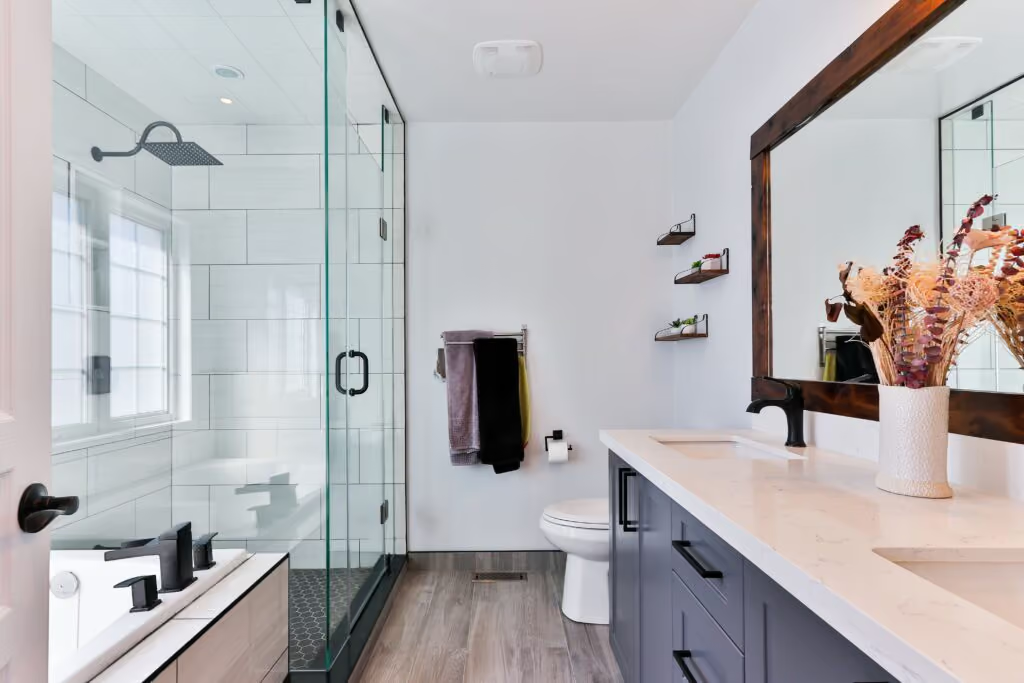
- Modernising the kitchen and bathroom: these key renovations always increase a home's value. Choosing modern fittings is always a good idea. It improves comfort, increases the capital gain when you sell and reassures tenants. Sometimes, building in the appliances or replacing the bath with a shower tray is enough to modernise a property.
- Improving energy efficiency: installing double glazing, improving thermal insulation and upgrading heating or air conditioning is always wise. In Spain, many properties still have no heating (Spaniards are used to living without it) and no air conditioning (because the housing stock is ageing).
- Paint and finishes: a refresh with paint and quality finishes can brighten up a space at low cost and so increase its market value.
- Maintenance and repairs: it is essential to check and maintain structural and functional elements such as plumbing, electrics and the roof. If you overlook them, it can cost more in the long run (when you have to repair a leak and the damage it caused, when it could have been avoided).
- Outdoor spaces: in Spain, making the most of terraces, gardens and balconies greatly increases a home's value.
- Technology upgrade: fitting your flat or house with smart home technology is not compulsory, but it is a smart move. Especially in big cities that attract young people and professionals, and when you want to let a so-called “high-end” property.
- If you have a very small budget, some improvements can still make a difference. For example, consider redoing the floors in the living areas (average cost for a 20 m² living room: €600) or installing PVC windows (between €100 and €400 depending on quality and size). Fitting a shower tray (between €700 and €1,200) instead of an old bath or repainting the living room walls (allow €200 for a 20 m² living room) are also good ideas that will add value to your property.
Alveo Search has offices in the main cities of mainland Spain and the islands, and our team can put you in touch with trusted professionals for an accurate assessment and specific recommendations. Get in touch.
How long does it take to renovate my property in Spain?
Timing matters, but it can vary greatly from one project to another. Allow a few weeks for minor work and up to six months for a large-scale project. As a rough guide, renovating a home of about 100 m² should take 3 to 4 months if the project runs without major setbacks.
Managing renovation work in Spain: choosing professionals and overseeing the site
How to find an architect in Spain
If you plan to buy a seaside house to renovate and choose the wrong architect, the dream can quickly turn into a nightmare. This is even more true if you are buying from abroad and cannot visit the site regularly. In other words, caution is the watchword. Our tips for finding the right professional for your property:
- Turn to a property adviser you trust: they can point you in the right direction.
- Check the references of the professionals you are in contact with.
- Meet your architect before starting the project.
- Trust your instincts and do not commit if you are not comfortable.
Overseeing the work
Every renovation and every job, however small, needs to be monitored. Here, prevention is better than cure, as any mistake will cost you more. If you are abroad, hold regular check-ins with your architect. Do not hesitate to ask regularly for videos and photos of the work.
The buying process in Spain
It is not the main subject of this article, but if you want to buy a property in Spain, there are a few things to bear in mind, even if you are looking for a flat or house to renovate completely.
Finding a property
This is our job. For this step, you need to:
- Set clear criteria so you do not waste time: for example, knowing whether you are ready to take on renovation work is essential.
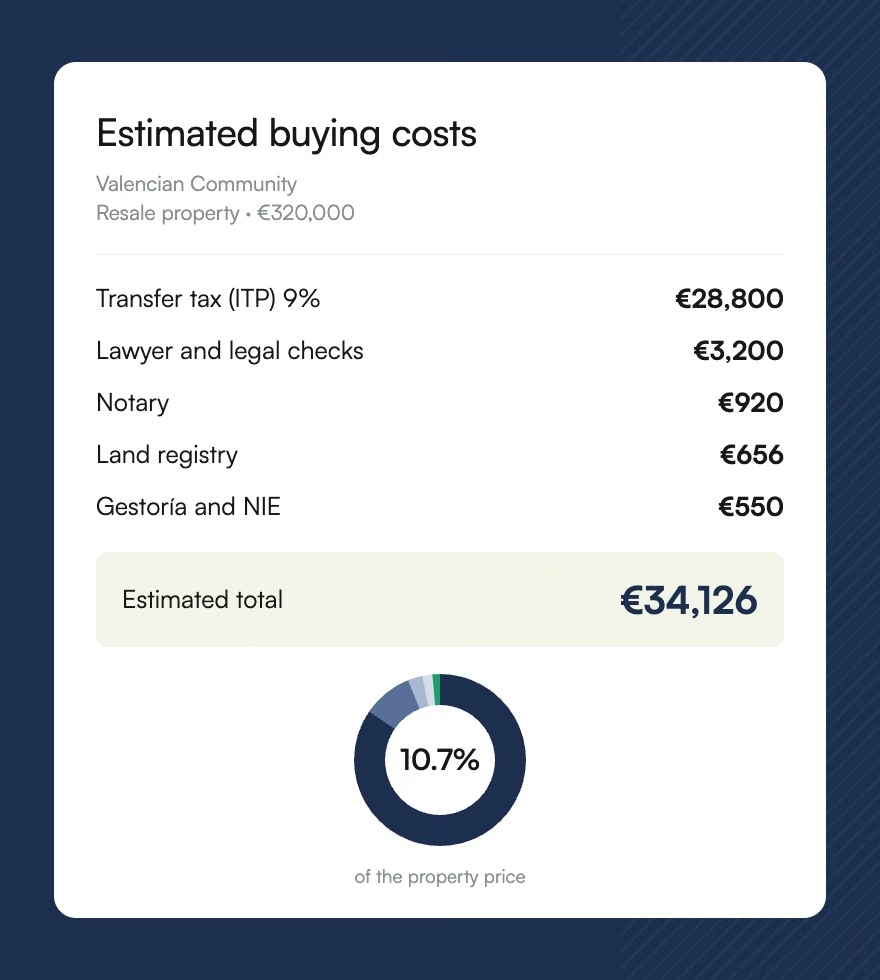
- Set your budget, taking into account all the costs of your project: the price of the property itself, any works, lawyer's and notary's fees, estate agency fees if any, and taxes. For more on the taxes involved in buying property in Spain, see our complete guide: “Everything you need to know about property taxes in Spain”.
- Arrange viewings.
Our advice: hand your project over to us. We can even handle it for you without you having to travel. Book a call online, we look forward to discussing it with you.
The legal and administrative process
Here, in broad outline, are the legal and administrative steps you will go through to become a property owner in Spain.
- Financing: buyers can choose a mortgage in their home country or in Spain. Conditions vary depending on tax residence and the bank.
- Paperwork: you must get an NIE, the foreigner identification number (to find out how, read our practical guide to the NIE), and open a Spanish bank account.
- Buying process: this includes administrative and legal checks, reserving the property, signing a contrato de arras (the preliminary contract) and completing the sale before the notary.
- Documents needed: prepare an ID document, an NIE and various certificates relating to the property.
To go further, read our article: “How to buy a property in Spain: the complete guide”.
CONCLUSION
Renovating in Spain offers considerable advantages in terms of cost and ease of execution. It is also an effective option for foreign investors looking to maximise the return on their investment.
FAQ
Do I need a permit or licence to renovate a property in Spain?
Yes, renovating in Spain may require different types of permit, including a building permit for structural changes or a minor works permit for simpler renovations. It is crucial to check the specific requirements with the local town hall before starting work.
How do I get a works permit for a renovation in Spain?
To get a building permit, it is best to consult a local architect who can help you submit the plans and documents required to your local town hall.
What are the risks of renovating without a permit in Spain?
Renovating without a permit can lead to heavy fines, an order to restore the property to its original state, or even legal action.
Are there grants or financial aid for renovation in Spain?
Tax deductions are available to Spanish tax residents for projects that improve energy efficiency.
Average renovation costs in Spain
Renovation costs in Spain vary widely depending on the region, the type of work and the quality of the materials chosen. On average, expect between €30,000 and €50,000 for a 100 m² property.
Average renovation time in Spain
How long a renovation takes depends on the scale of the work. Minor projects can take a few weeks, while full renovations can last several months. In general, allow 3 to 4 months for a 100 m² home.
Thomas Rouer is the founder of Alveo Search and the CEO of the Alveo group. Based in Spain for almost ten years, he develops property services designed for the specific needs of foreign buyers.
His expertise covers every aspect of buying property in Spain: understanding the market, searching for and selecting properties, negotiation, financing, paperwork, tax and securing the purchase process.

Our resources for buying in Spain