Français
 English
Retiring in Spain: pros and cons for British and American retirees

- Documents required: the NIE (foreigner identity number) and a residence document: an EU registration certificate for EU citizens, or a residence visa followed by a TIE card for UK and US citizens, applied for in Spain at the immigration office or police station.
- Before you leave: give your pension providers your new address and bank details, arrange for your state pension to be paid abroad (International Pension Centre in the UK, Social Security Administration in the US) and expect to return a life certificate from time to time.
- Tax and health: you are tax resident in Spain if you spend more than 183 days a year there or have your economic or family interests there. For health, the EHIC or UK GHIC covers a temporary stay; an S1 form gives UK and EU state pensioners access to Spanish public healthcare.
- Spanish pension: in 2026, the minimum is €936.20 a month without a dependent spouse and €1,256.60 with one (14 payments a year), after 15 years of contributions in Spain, including two in the 15 years before retiring.
- Key point: Spain ranked 9th in the 2022 Global Retirement Index.
Moving to Spain: your two essential documents

According to the annual ranking of the Global Retirement Index, in 2022 Spain was the 9th best country in the world to retire to. Surprised? We are not!
What this ranking does not say is that you need two documents to live in Spain. Two keys. If you want to live there, you must get both.
The NIE: your Spanish identification number
The foreigner identity number (Número de Identidad de Extranjero), better known as the NIE, is one of the essential documents for any move to Spain. It is the number that identifies you legally with the Spanish authorities. Find out every step to get your NIE.
TIE card or EU certificate: proof that you live in Spain
The residence card (TIE) proves that a non-EU citizen, such as a British or American retiree, lives legally in Spain. You need it to settle in Spain, for example to register your address or receive your pension there. First get a residence visa (usually the non-lucrative visa for retirees) from the Spanish consulate in your country, then apply for the card within a month of arrival at the immigration office (Oficina de Extranjería) or police station (EU citizens apply for an EU registration certificate instead, which includes their NIE). You will usually need:
- A valid passport (or national ID card for EU citizens) and a copy of it
- The completed application form (EX-17 with a recent photo for the TIE, EX-18 for the EU certificate) and proof that the fee has been paid.
So if you want to retire in Spain, it is very important to have these two documents, as the authorities will ask for them often.
Retiring to Spain: the key formalities before you leave

If you want to move to the Spanish coast or to any other country, three key formalities must be completed before you leave.
- Changing your address and bank details
- The first step before moving abroad is to give all your pension providers (state, workplace and private pensions) your new address and bank details.
- Having your pension paid abroad
- The second step is to arrange for your state pension to be paid abroad, with the International Pension Centre (UK) or the Social Security Administration (US). The UK State Pension and US Social Security benefits can both be paid into a Spanish bank account.
- Life certificates
- A life certificate lets your pension provider check that you are still alive, so that it can keep paying your pension.
While you still live in your home country:
- there is usually nothing to do, as life certificates concern pensions paid abroad. Only send one if your provider asks you to, using the form it sends you, completed and signed.
Once you live in Spain:
- Your pension provider sends the life certificate to your address in Spain.
- Have it signed by an authorised witness, as explained on the form (for the UK State Pension, a professional such as a doctor, solicitor or bank officer who is not a relative).
- Once it is completed, return it to your pension provider within the deadline given, by post or online if the provider allows it: see its website.
Retiring in Spain: how British and American retirees are taxed
Spanish tax depends on one key criterion: the taxpayer's tax residence. Spanish law treats as tax resident anyone who spends more than 183 days a year in Spain, or whose economic or family interests are in Spain.
If you become tax resident in Spain, you pay income tax in Spain, including on your pensions. The double taxation treaties between Spain and the UK, and between Spain and the US, decide which country taxes each type of pension, and US citizens keep filing a US tax return. To find out more, read our article on taxes for retirees in Spain.
Living in Spain: what you need to know about Spanish healthcare cover
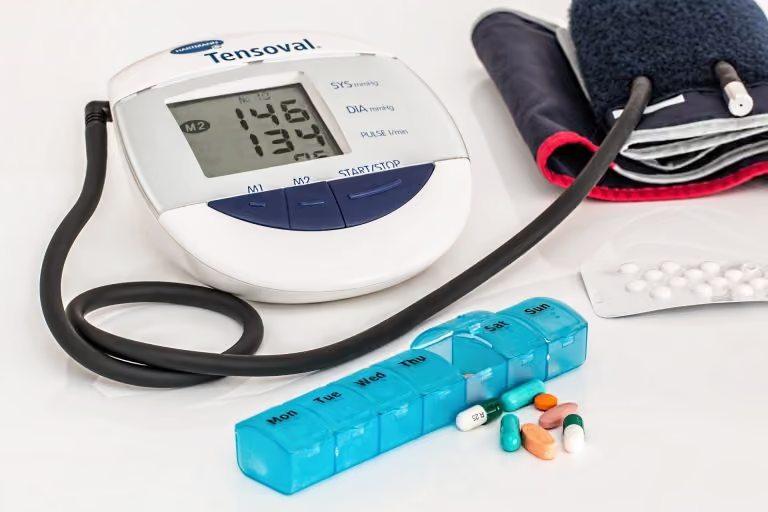
Spanish healthcare is split between a public and a private system. Private care gives you choice and speed, but there is no guarantee that it will be better than the public service.
To learn more about how healthcare works in Spain, read our article on the Spanish healthcare system.
1/ Temporary stays in Spain: the EHIC or the UK GHIC
If you are insured in an EU country, the European Health Insurance Card (EHIC) is the option to use; UK residents use the free UK GHIC. It gives access to necessary care in Spanish public facilities during a temporary stay. American visitors need travel or private health insurance.
To get one, apply to your health insurer or, in the UK, through the NHS website (the card is free).
2/ Living in Spain for good: registering with Spanish public healthcare
If you receive a UK or EU state pension and settle in Spain for good, an S1 form gives you access to public healthcare through the Seguridad Social (Spain's social security system).
Ask for the S1 before you leave (in the UK, from NHS Overseas Healthcare Services), then register it with the INSS in Spain. There is no S1 for US retirees: they need private health insurance, which is also required for the residence visa. For more details, see health cover for retirees in Spain.
Retiring in Spain: an unbeatable quality of life!
Goodbye grey skies, hello sunshine. Spain enjoys a Mediterranean climate. Average temperatures are generally high, around 20°C, and spells of rain and cold are rare.
Spanish friendliness is another big advantage. If you want to improve your Spanish, take a look at our tips for learning Spanish.
Finally, Spanish food is generous and full of specialities: paella, cured meats, tortilla, tapas and montaditos.
Where to retire in Spain
Here is a short overview to help you decide.
- Barcelona is for you if you like a lively city: discover Barcelona and its neighbourhoods.
- Alicante and the surrounding area are a good choice: focus on Alicante and the towns around it.
- Denia and Jávea are examples of places to live on the Costa Blanca (see our page on Denia).
- The Canary Islands are the place to go for the climate: find out more about the Canary Islands.
If you still have doubts, contact us!
Retiring in Spain: answers to the 10 most common questions
1. Which bank account will my pension be paid into?
You can usually choose between an account in your home country and a Spanish bank account: this is the case for the UK State Pension and US Social Security benefits.
2. What is the minimum pension in Spain?
In 2026, the minimum Spanish retirement pension at 65 or over is €936.20 a month with no dependent spouse and €1,256.60 with a dependent spouse, paid 14 times a year. It only concerns people entitled to a Spanish pension.
3. How many years of contributions are required?
You generally need 15 years of contributions in Spain to qualify for a Spanish pension, including at least two within the 15 years just before you retire.
4. What about inheritance tax in Spain?
Inheritance tax rates can vary widely depending on the family relationship and the region. For more information, see our article on inheritance.
5. Do I have to tell my home country that I am moving abroad?
There is no compulsory register, but tell your tax office and pension providers: in the UK, HMRC (form P85). US citizens keep filing US tax returns and can join the State Department's STEP programme.
6. Can I use my mobile phone in Spain?
With an EU mobile plan, there have been no roaming charges in Spain since 2017. UK and US plans are not covered by this rule: check your operator's charges or get a Spanish SIM card.
7. Is it difficult to set up an internet connection in Spain?
To set up an internet connection in Spain, you are usually asked for just 3 documents: your NIE, your ID and your Spanish bank account details. To find out more, see our internet guide.
8. Can I drive in Spain with my licence and my car from home?
An EU licence remains valid. A UK licence can be used for 6 months after you become resident, then exchanged for a Spanish one; a US licence cannot be exchanged, so you will need to pass the Spanish test. A car brought from abroad must also be registered in Spain.
9. Is tap water safe to drink in Spain?
Tap water is safe to drink, but some foreigners find the taste unpleasant.
10. Which vaccinations do I need?
No specific vaccination is required to live in Spain. Once registered with the public health system, you can get the vaccines offered to residents of your region.
And that's it: you now know everything you need to move to Spain and enjoy a happy retirement there. If you would like to find out more about buying property in Spain, you can look at our services or visit our blog for more information.
Thomas Rouer is the founder of Alveo Search and the CEO of the Alveo group. Based in Spain for almost ten years, he develops property services designed for the specific needs of foreign buyers.
His expertise covers every aspect of buying property in Spain: understanding the market, searching for and selecting properties, negotiation, financing, paperwork, tax and securing the purchase process.


Our resources for buying in Spain