Français
 English
Spain's Roman cities: treasures of the past

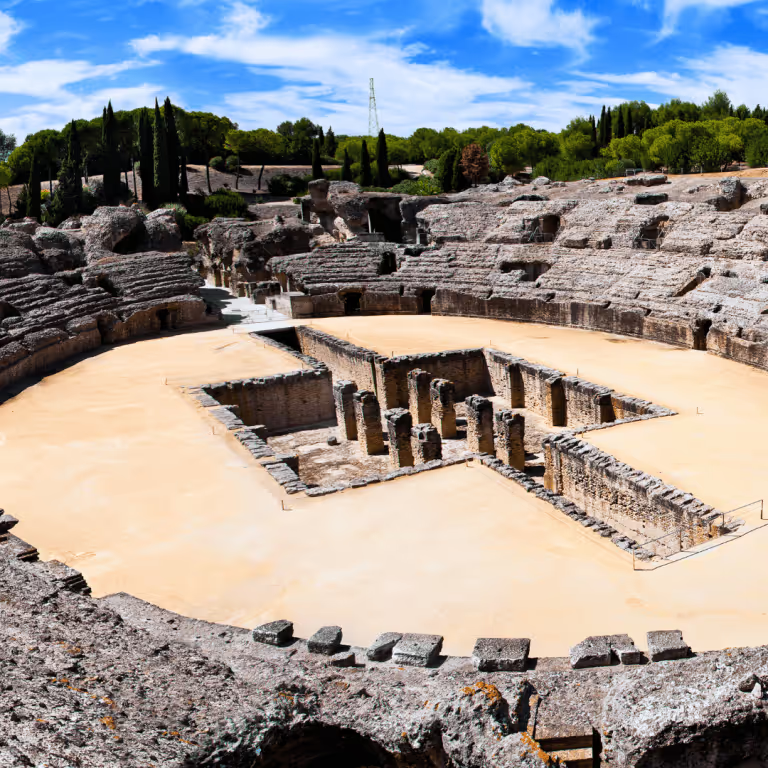
- Italica (Seville): a site of nearly 52 hectares, where the emperors Trajan and Hadrian were born. Its amphitheatre could hold 25,000 spectators; you can see the sewer system and patio villas decorated with mosaics, including the Casa de la Exedra.
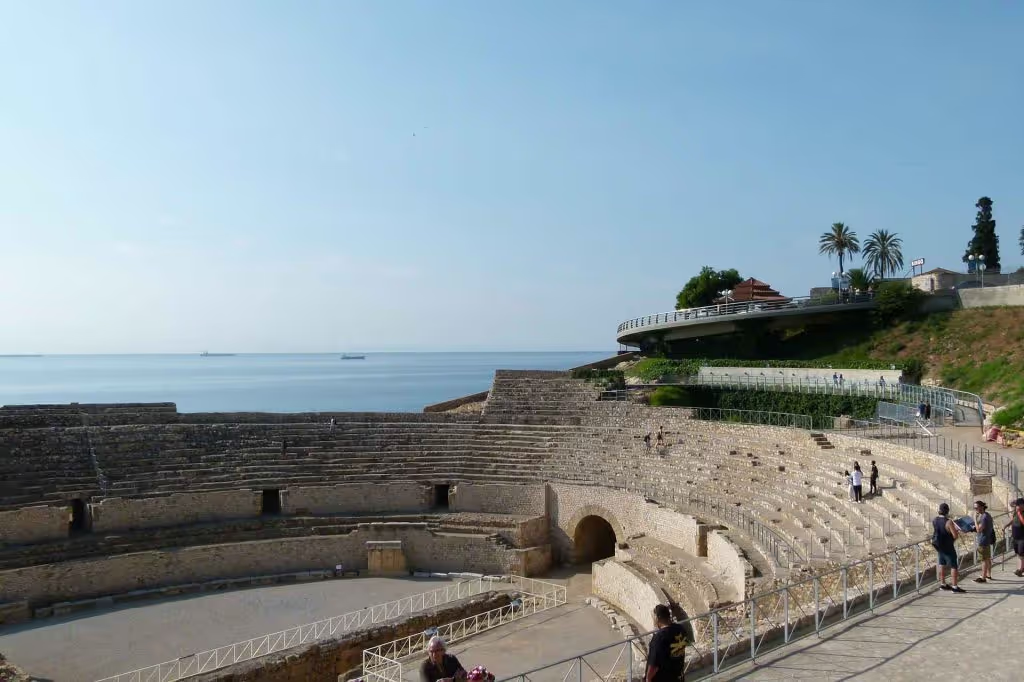
- Tarraco (Tarragona): an archaeological ensemble listed as a UNESCO World Heritage Site in 2000. You can start your visit at the El Pallol cultural centre, with its model of the 2nd-century city, before the walls, the seaside amphitheatre and the circus.
- Corduba (Cordoba): Augustus granted it the rank of Colonia Patricia. The city declined from the 3rd century: what remains is a temple near the town hall, a wall in the Alcázar, a mausoleum, and remains of the theatre and the aqueduct in the archaeological museum.
- Mérida and Baelo Claudia: Mérida still has its theatre, which hosts the International Theatre Festival every summer, an amphitheatre, the Temple of Diana and a museum designed by Rafael Moneo. Baelo Claudia, in Cadiz, lived from fishing and salting fish.
- Key point: Lucus Augusta (Lugo), founded in 25 BC, has the only Roman wall that survives around its full circuit, a UNESCO site, and a bridge more than 100 metres long over the Miño.
The Roman Empire left its mark on ancient Hispania. Today, we can recall this part of history by visiting the ancient Roman cities of Spain, built by the powerful empire that ruled the Mediterranean.
The best Roman cities in Spain
Italica (Seville)
It is one of the great Roman cities of Spain, where the emperors Trajan and Hadrian were born. You may have heard of Italica because scenes from the famous series Game of Thrones were filmed there.
The site covers nearly 52 hectares and stands out for its amphitheatre, one of the largest built by the Romans, with room for 25,000 spectators. Leaving the city walls behind, you enter the urban area of ancient Italica, where you can see the sewer system and the water supply.
But the most striking sight here is the Roman villas built around patios and decorated with mosaics. The Casa de la Exedra is the best-preserved example of a Roman house in Italica. Amazing!
Tarraco (Tarragona)
The archaeological ensemble of Tarragona was added to the UNESCO World Heritage List in 2000. This clearly shows the importance of Tarraco among the Roman cities of Spain.
It is worth starting your visit to the city at the El Pallol cultural centre. There you can see the Roman model of 2nd-century Tarraco, which makes the city's history easier to understand.
Among the Roman sites to see in the city, the walls and the Roman amphitheatre, right by the sea, stand out. Although less impressive, you can also visit what remains of the ancient circus of Tarraco.
Corduba (Cordoba)
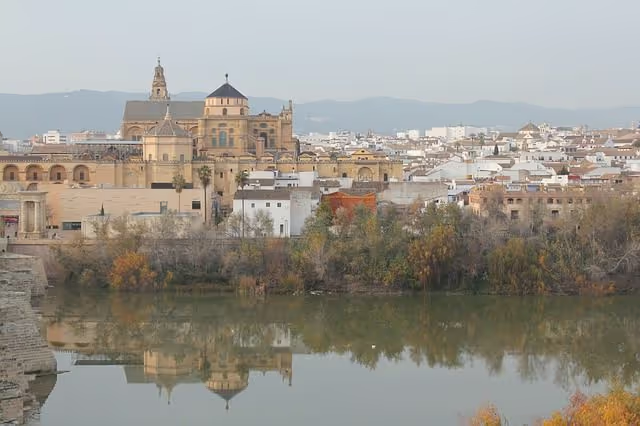
When we think of Cordoba, we all picture a Muslim city, a mosque and houses with beautiful patios. But before all that, Cordoba was one of the most important Roman cities in Spain.
Augustus granted it the rank of Colonia Patricia, the highest a city in the Roman Empire could hold. The city extended its walls and was embellished. But from the 3rd century, it began to decline, and today little remains of what must have been one of the most beautiful Roman cities in Hispania.
There are not many places in Cordoba linked to its Roman past. But if you are visiting the city and are interested in this part of its history, you can look for the Roman temple next to the town hall. Inside the Alcázar de los Reyes Cristianos, in the Patio de las Mujeres, one of the walls is part of the Roman enclosure. At the end of Calle Concepción, in the Jardines del Duque de Rivas, there is a well-preserved Roman mausoleum. In the archaeological museum, you can see the remains of the ancient theatre and of the aqueduct.
Mérida (Badajoz)
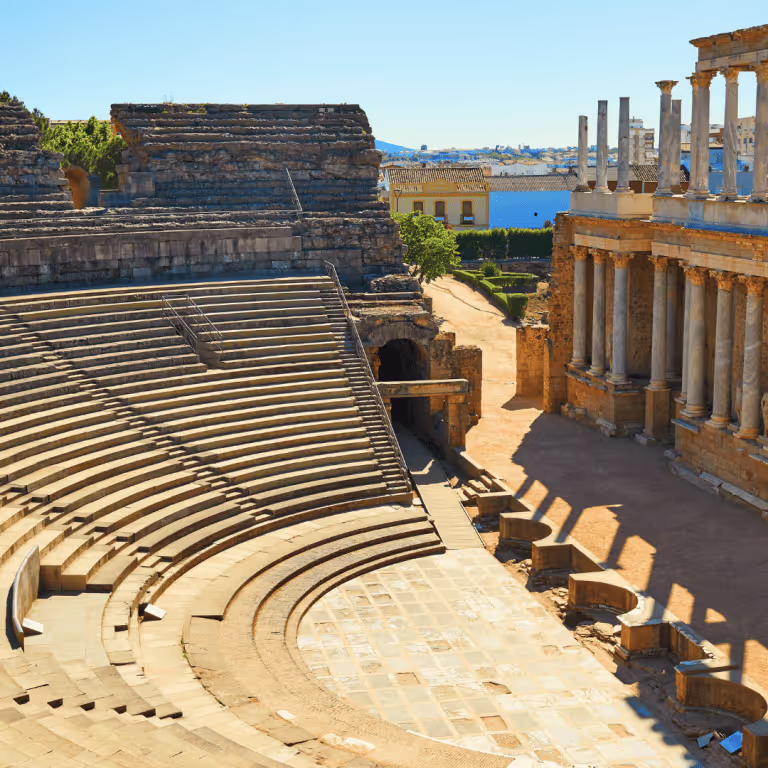
It is probably the Roman city in Spain that receives the most tourists and the best known outside Spain. Among the places to see in Mérida, its theatre stands out, a space steeped in history where the Mérida International Theatre Festival is held every summer.
The attractions of ancient Emerita Augusta don't stop there. On a visit to the Roman city that stood in this corner of Hispania, don't miss the amphitheatre, the Temple of Diana or the superb museum designed by Rafael Moneo. In this museum, you can see one of the most characteristic elements of Roman art: the superb mosaics recovered from the sites of Mérida.
Baelo Claudia (Cadiz)
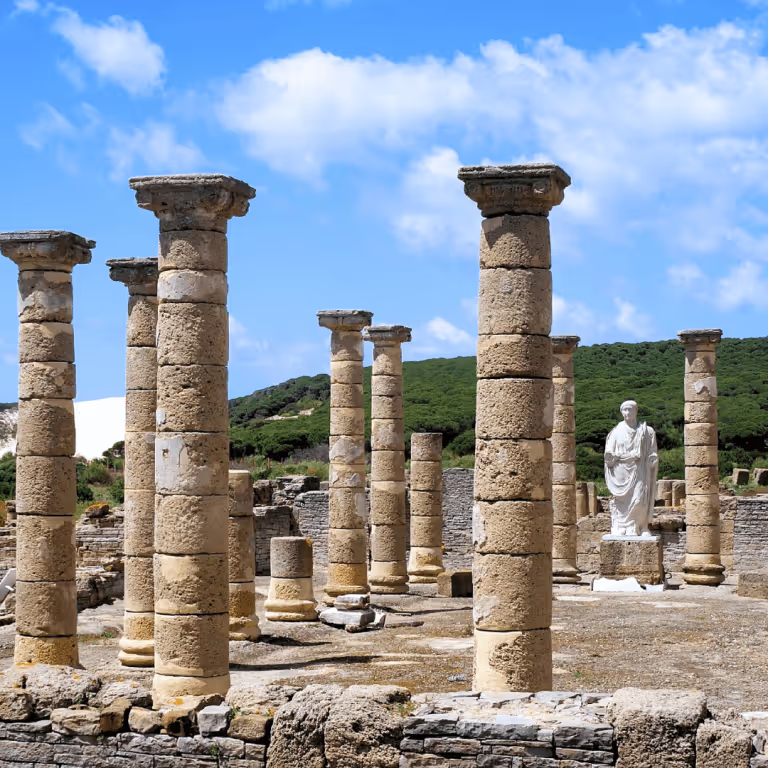
One of the most unusual Roman cities in Spain is without doubt Baelo Claudia. It was built by the sea, and today you can visit it next to one of the most beautiful beaches in Spain, Playa de Bolonia.
It is one of the Roman cities of Spain whose role was mainly commercial. The place was devoted to fishing and salting fish, and was the port linking it with ancient Tingis in North Africa.
To the south, near the sea, you can see the salting factories and the workers' houses. To the north, the theatre, the baths and the forum, the best preserved in ancient Hispania.
Lucus Augusta (Lugo)
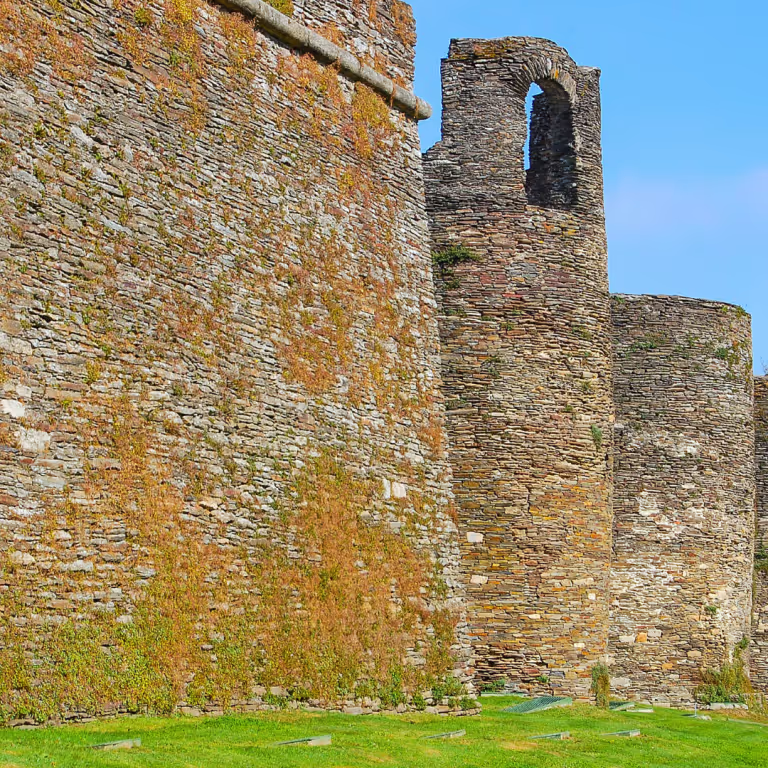
Founded by the Romans in 25 BC, the city of Lugo is the oldest in Galicia and one of the most important Roman cities in Spain. Its wall is the only one built by the Roman Empire that keeps its entire circuit, which earned it a place on the UNESCO World Heritage List.
Lucus Augusta must certainly have been a great city, but today there are few remains of its Roman past inside the wall. Those remains are well worth seeing. Among them is the Domus de Mitreo, an ancient Roman house known for the mosaic on its walls.
Don't miss the Roman bridge over the Miño, more than 100 metres long. Its structure is still Roman, although the bridge has been altered over the centuries.
Would you like to buy an apartment or a house in one of these magnificent Spanish cities? Contact us!
Source: estaentumundo
Thomas Rouer is the founder of Alveo Search and the CEO of the Alveo group. Based in Spain for almost ten years, he develops property services designed for the specific needs of foreign buyers.
His expertise covers every aspect of buying property in Spain: understanding the market, searching for and selecting properties, negotiation, financing, paperwork, tax and securing the purchase process.

Our resources for buying in Spain