Français
 English
Valencia's old town: one of the largest in Europe
- Origins: Valencia was founded by the Romans in 138 BC as Valentia Edetanorum; Muslims lived there from 714 to 1238, until they were expelled by Jaume I.
- Estación del Norte: opened on 8 August 1917, designed by the architect Demetrio Ribes after work began in 1907, it covers 15,000 square metres. It was declared a Historic-Artistic Monument in 1961, then a Bien de Interés Cultural (Asset of Cultural Interest) in 1983.
- Plaza de Toros: opened on 3 August 1851 before it was finished, completed eight years later, with room for nearly 17,000 spectators; a fire damaged it on 21 September 1946.
- Squares: Plaza del Ayuntamiento has changed its name many times; in 1930, Plaza de la Reina got the city's first traffic light, operated by hand.
- Lonja and Mercado Central: the Lonja de la Seda, built at the end of the 15th century, is a UNESCO World Heritage Site; the market covers 8,160 square metres and brings together nearly 400 traders.
- Key point: the old town packs twenty centuries of urban history into a small area.
Valencia's old town: one of the largest in Europe
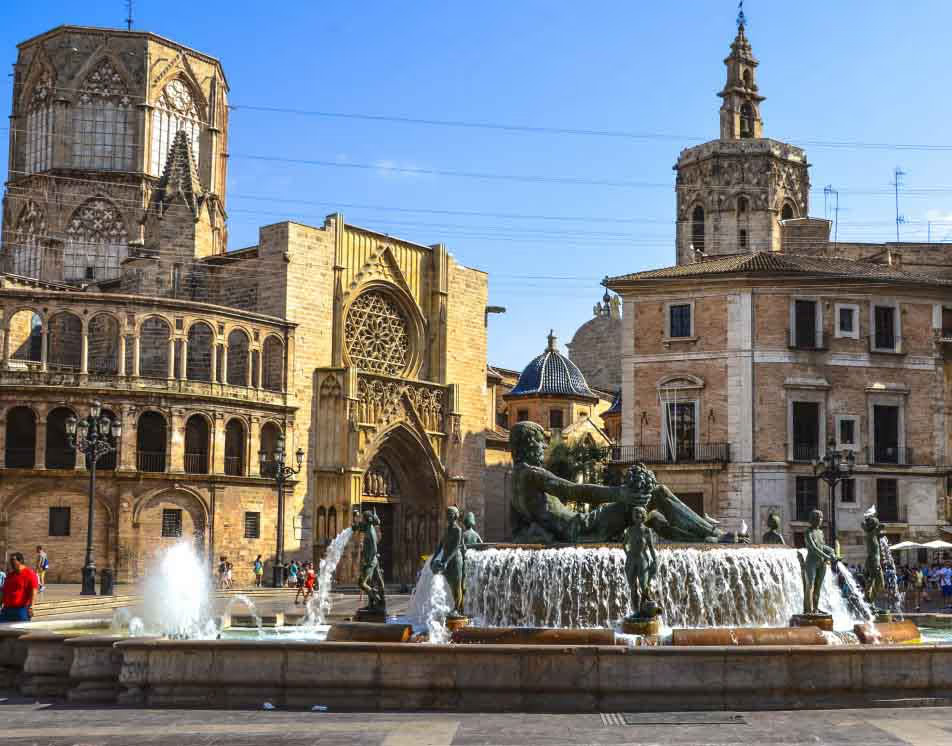
The city was founded by the Romans in 138 BC as "Valentia Edetanorum". They built the Forum in Plaza de la Almoina, where a museum now lets you visit the ruins from that period.
The Visigoths arrived, and soon afterwards Muslims lived in the city on the Turia from 714 to 1238. It was Jaume I who expelled them after conquering Valencia.
See also our 13 key facts about Valencia.
In the old town, several monuments deserve a special mention in this article because of their history or the stories behind them:
- Estación del Norte:
- Plaza de Toros:
- Plaza del Ayuntamiento:
- Plaza de la Reina:
- Plaza de la Virgen:
- La Lonja de la Seda:
- Mercado Central:
Estación del Norte:
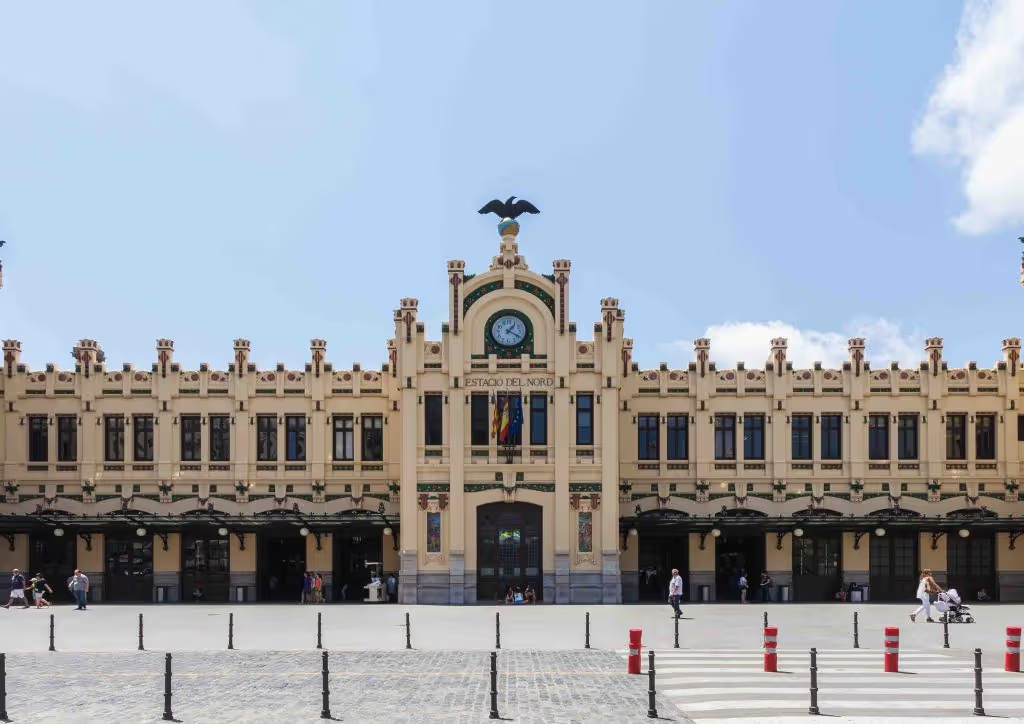
It opened on 8 August 1917 thanks to the work of craftsmen, industrialists, artists and, of course, its architect, Demetrio Ribes. Work began in 1907 and lasted a decade. The station covers 15,000 square metres and its façade, decorated with plant motifs, oranges and orange blossom, is inspired by the Valencian huerta.
In 1961, it was declared a Historic-Artistic Monument and in 1983 a Bien de Interés Cultural (Asset of Cultural Interest).
Plaza de Toros:
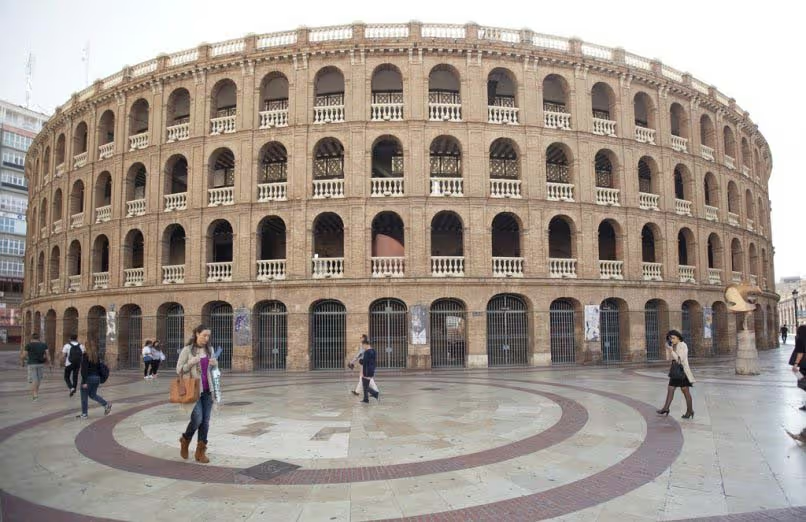
When it opened on 3 August 1851, only the barriers, the inner barriers and five stands had been built. The reason: to raise funds to finish the construction. Officially, the work was completed eight years later. At first, it was the largest bullring in Spain, with room for nearly 17,000 spectators. On 21 September 1946, a fire damaged a large part of the building, which was quickly restored.
Plaza del Ayuntamiento:
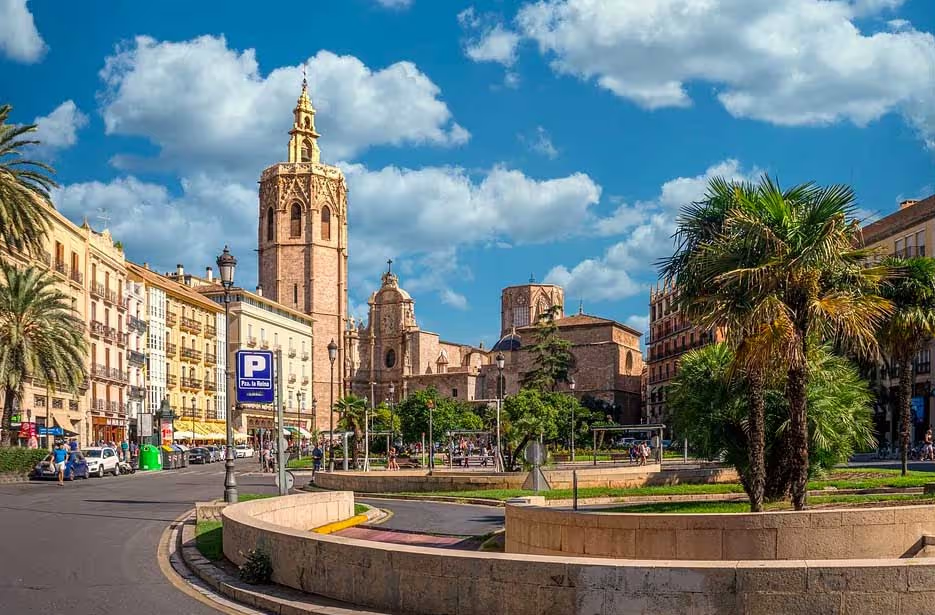
It is one of the squares in Valencia that has most often changed its name. It was originally called Bajada de San Francisco, then Espartero, and later it was dedicated to Queen Isabel II. After the 1868 revolution, it was named Plaza de la Libertad, then Plaza de Emilio Castelar, del Caudillo, del País Valenciano and finally del Ayuntamiento.
Plaza de la Reina:
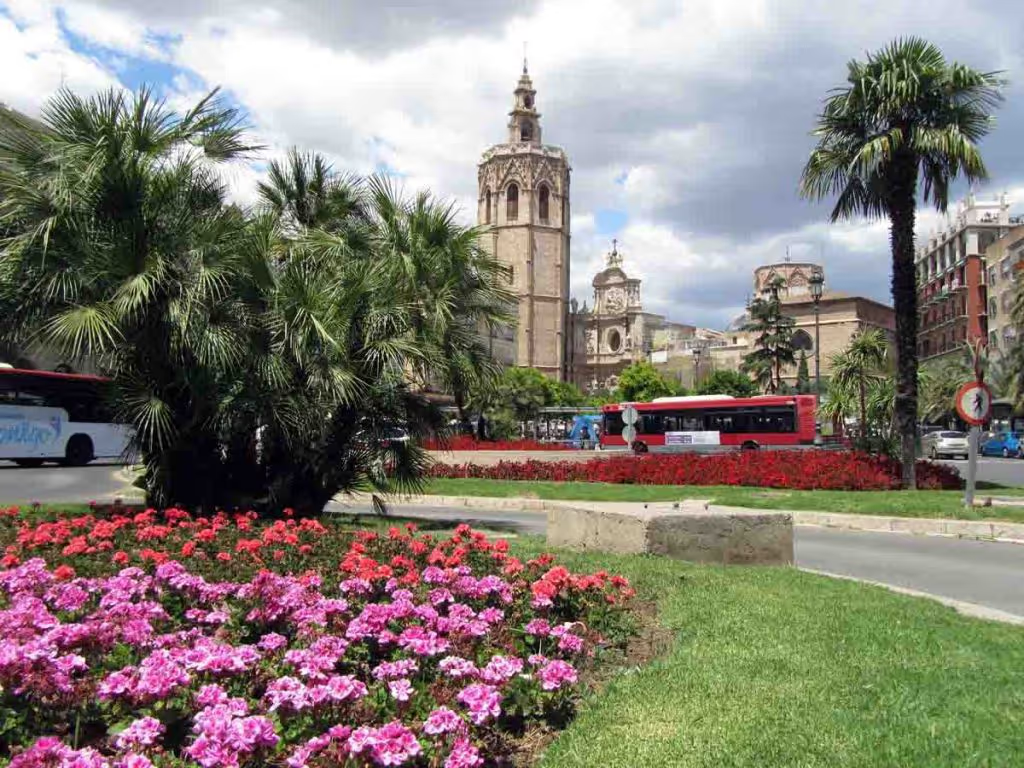
Plaza de la Reina is dedicated to the first wife of King Alfonso XII, Queen María de las Mercedes of Orléans. In 1930, Valencia's first traffic light was installed there. It was a light signal operated by hand by the city police of the time.
Plaza de la Virgen:
In the centre of the square, there is an inscription from the 20th century, written in Latin, about the founding of the city by the Romans. The text is the work of the historian José Esteve Ferriol. Nearby are the Basílica de los Desamparados, where five Roman tombstones were found during its construction, and the Fuente del Turia, sculpted by Manuel Silvestre Montesinos.
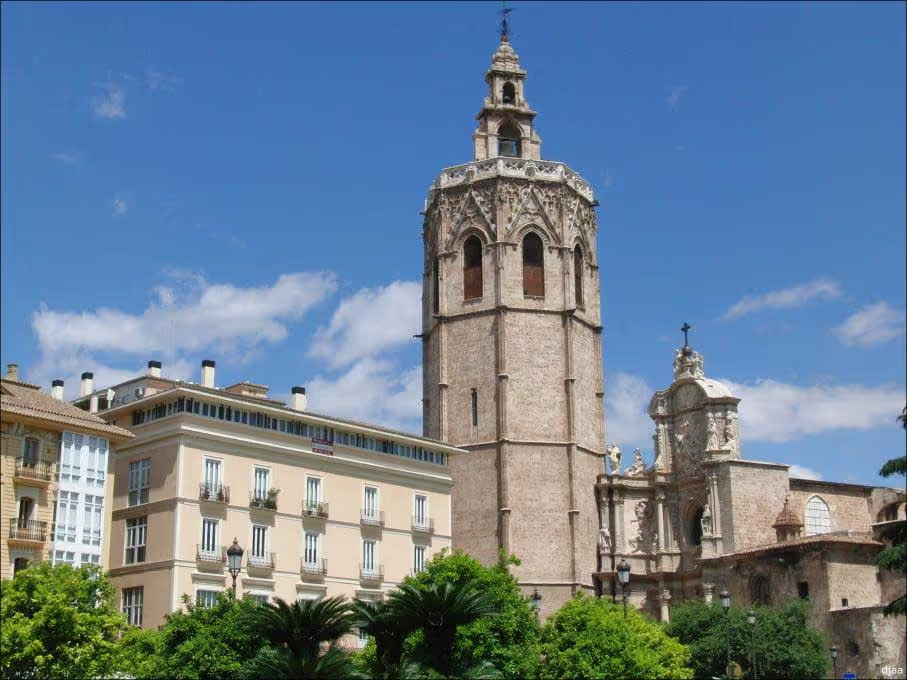
La Lonja de la Seda:
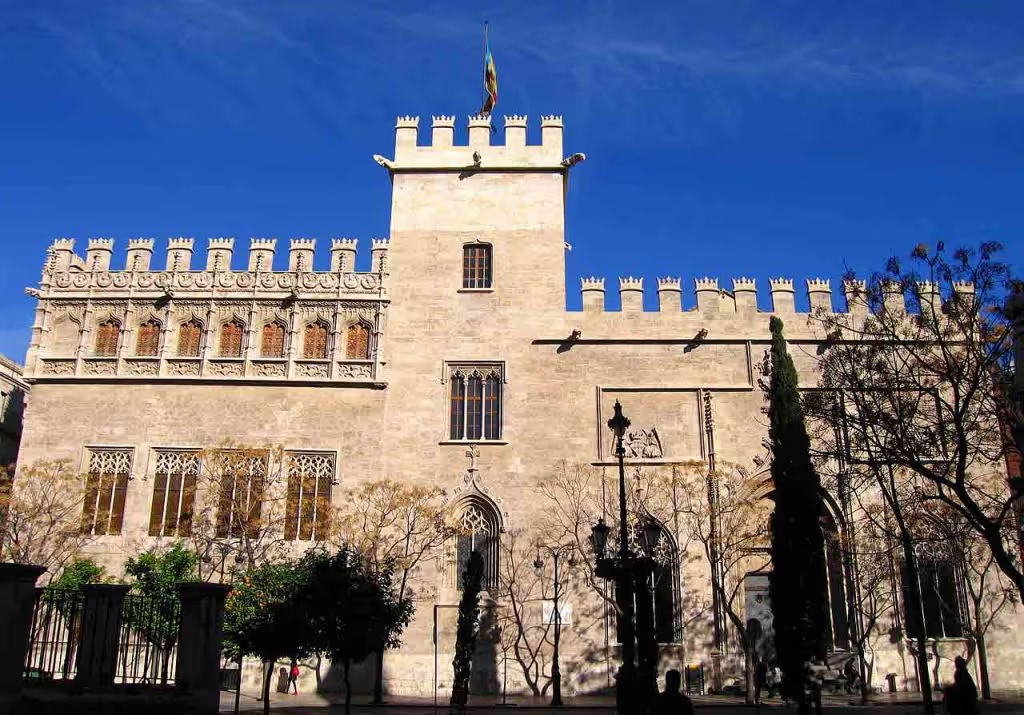
A building from the end of the 15th century. In 1931, it was declared a National Historic and Artistic Monument and was later added to UNESCO's World Heritage List.
Mercado Central:
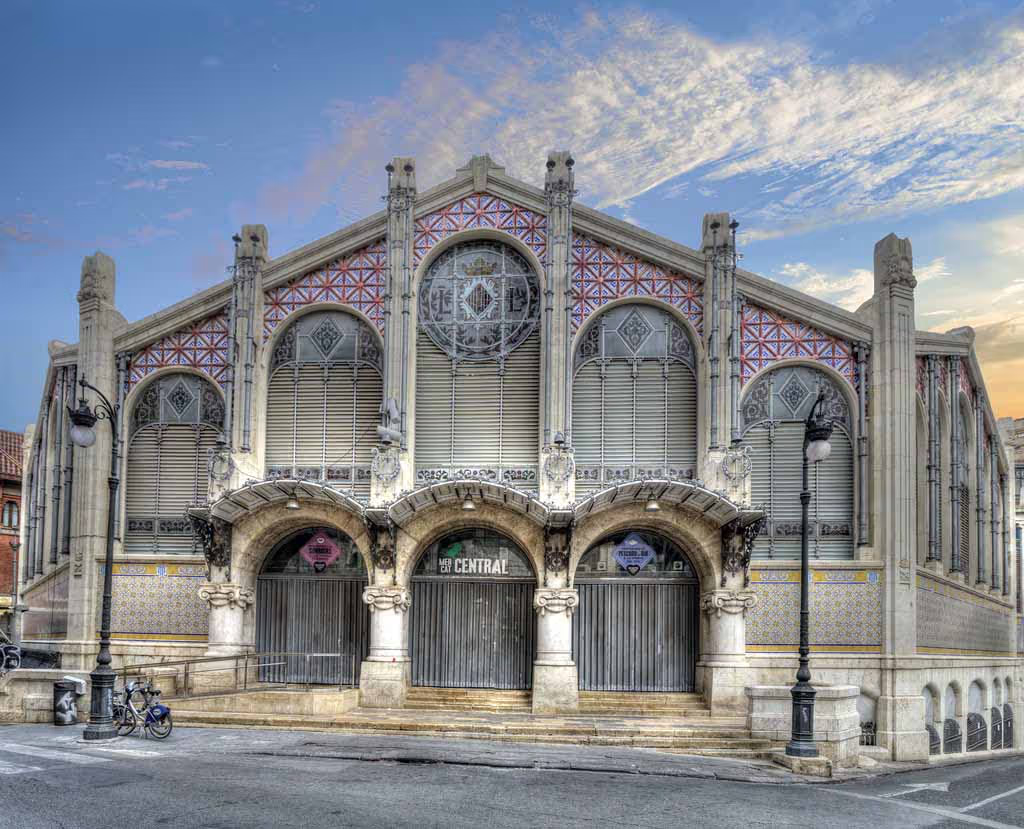
The British broadcaster BBC considers Valencia's Mercado Central one of the most beautiful in the world. It is the largest fresh produce market in Europe, bringing together nearly 400 small traders. It is one of the largest in Europe, covering 8,160 square metres.
The old town also has plenty of other places not to miss, such as the Palacio del Marqués de Dos Aguas, the Plaza Redonda, the narrowest building in Europe on Plaza Lope de Vega, the Santa Catalina church, the Serranos and Quart towers, the San Nicolás de Bari church with its frescoes and the Mercado de Colón.
If you would like to invest in a flat or a house in Valencia, contact us!
Source: Top Valencia
Thomas Rouer is the founder of Alveo Search and the CEO of the Alveo group. Based in Spain for almost ten years, he develops property services designed for the specific needs of foreign buyers.
His expertise covers every aspect of buying property in Spain: understanding the market, searching for and selecting properties, negotiation, financing, paperwork, tax and securing the purchase process.

Our resources for buying in Spain