Français
 English
Best places to buy a holiday home in Spain

- Market share: second homes account for 10% of housing demand, a level not seen since 2017. Spain has 3 million of them, and more than 40% are in coastal areas.
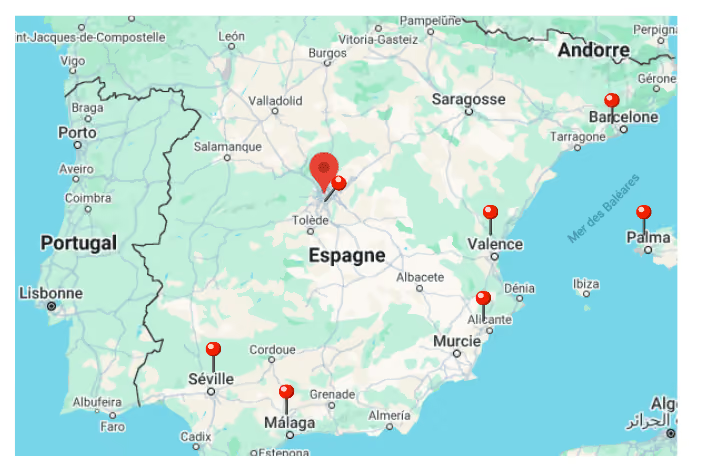
- Regional ranking: according to Fotocasa, the Community of Madrid comes first with more than 580,000 units, ahead of Andalusia (412,000), Catalonia (409,000) and the Valencian Community (340,000 in 2023).
- Madrid and Barcelona: Chamberí sells at €7,100/m² and Salamanca at €8,450/m², while La Latina stays below €3,000/m². In Barcelona, the Eixample reaches €5,600/m², Gràcia €4,900 and Nou Barris under €2,500.
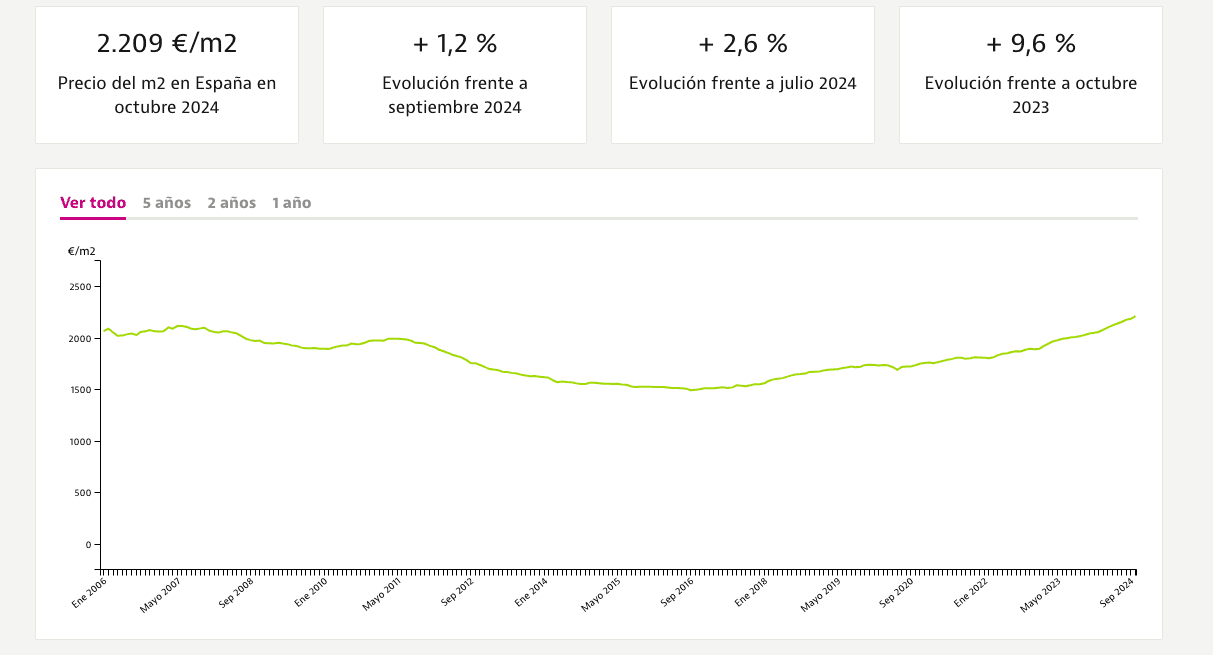
- Coast and islands: L'Escala and Roses are at €2,900/m², Begur at €3,800. Valencia averages €2,700/m², Seville €2,300, Malaga province €3,400 and Mallorca €4,600. The national average was about €2,200/m² in November 2024.
- Key point: Catalonia is a favourite with foreign buyers: around half of the second homes bought in Spain by French buyers, for example, are there. Eight questions to ask first: location, services, activities, market, risks, access, rental potential and future plans.
Interest in second homes in Spain has not been this strong since 2017. They now account for 10% of housing demand. Since the pandemic, renting or buying a little piece of paradise to get away from it all has become a dream, and even a goal, for a growing number of Spaniards and foreign buyers alike. So where are the best places to buy a holiday home in Spain? The editorial team at Alveo Search explains.
Why choose Spain for a second home?
An unbeatable quality of life
Spain is world-famous for its relaxed lifestyle, its food and a climate that lets you enjoy the outdoors all year round. The country also has a rich cultural and natural heritage, first-class museums and many traditional events.
- The country ranks 18th in the Numbeo ranking.
- A huge cultural heritage: museums (the Prado, the Guggenheim), festivals (Seville's Feria, Valencia's Fallas) and historic sites such as the Alhambra.
- Varied nature and 8,000 kilometres of coastline.
- Rated by the Bloomberg Healthiest Country Index as a very healthy country.
A cost of living that is still affordable
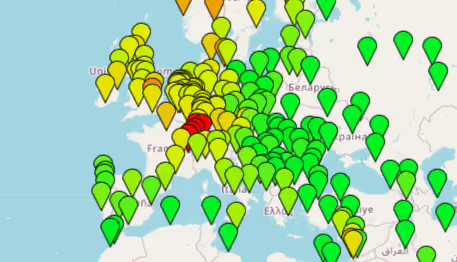
At the end of 2024, Spain's cost of living is attractive, even in the big cities. Madrid is a good example, with an index of 50 points, lower than London or Paris.
Property prices
There are properties for every budget and in every area. Read our article: Where to buy in Spain on your budget. In November 2024, the average price per square metre was about €2,200.
Easy to reach from the rest of Europe
Spain borders France and is linked to the rest of Europe by road and rail. Many low-cost airlines also run regular, affordable flights between the UK, northern Europe and the main Spanish cities. The rail network is efficient: Madrid to Barcelona, for example, takes only 2 hours 30 minutes.
What are the 8 key questions to ask before buying a second home in Spain?
Before making your decision, consider several key points to avoid disappointment. Here are the 8 essential questions to ask:
- Which location? Think about the kind of area you want: sunshine, cooler weather, a big city, the beach, the mountains or the countryside.
- What access to services? Proximity to healthcare, transport, supermarkets, pharmacies and restaurants.
- What activities are available? Museums, cinema, sport, local leisure.
- How is the property market doing? Get to know the local market and the rental potential. Our experts can guide you: book a call online.
- What about environmental risks? Check local risks (flooding, etc.).
- How easy is it to get there? Check access by car, train or plane.
- Can the property be rented out? Study the rental yield and the local rules on holiday lets.
- Does the property fit your future plans? Think about long-term use and how your life may change.
The best places to buy a second home in Spain in 2024
So, where should you buy a second home in Spain?
In Spain, more than 40% of holiday homes are in coastal areas, but according to a recent study by the property portal Fotocasa, it is the Community of Madrid that takes first place, with more than 580,000 second homes. Second place goes to Andalusia, with more than 412,000 holiday homes, and bronze goes to Catalonia and its 409,000 second homes. The Valencian Community is gaining ground, with 340,000 second homes in 2023. Demand in these 4 areas has grown strongly since Covid.
A second home in the Community of Madrid: ideal for city lovers
So it takes the top spot: the Madrid region is home to nearly 580,000 of the country's 3 million second homes. The capital has plenty to offer foreign buyers who want a base in Spain and enjoy city life. Madrid is a big metropolis with a dynamic lifestyle at the heart of the peninsula. It is a European capital with every service, yet it has a village feel.
Madrid residents enjoy plenty of green spaces, the most famous being the Retiro park, world-famous museums, buzzing nightlife, mouth-watering restaurants, and nature just a few minutes' drive away. To find out all about the lively Spanish capital, read our article: “Living in Madrid: the complete guide for expats”.
Since the rise of remote working, the city has attracted a growing number of foreign investors who choose multi-purpose properties: a second home, rented out for short stays, that can also serve as a base for working remotely.
The Chamberí and Salamanca districts, expensive to buy (€7,100 and €8,450 per square metre respectively), appeal to this type of investor, but Madrid also has properties for smaller budgets. In La Latina, for example, a lively, historic neighbourhood in the heart of the city loved by the film director Almodóvar, you will find properties under €3,000 per square metre.

Barcelona and Catalonia
Unsurprisingly, Barcelona and the Catalan coast are among the top destinations for second homes, for Spanish and foreign buyers alike. Around half of the second homes bought in Spain by French buyers are in this region.
It has many strengths:
- The sea and the mountains are close by;
- Extensive transport links make it easy to reach the rest of Spain, Europe and the world;
- Catalonia borders France, which makes it easy to reach by road from the rest of Europe;
- It has a large international community, which makes it easy to build a social life.
- Barcelona itself is economically very dynamic;
- It has countless restaurants and bars and a vibrant cultural life.
Which areas should you choose for a second home in Barcelona? In the Catalan capital, the Eixample (€5,600/m²) and Gràcia (€4,900/m²) districts are popular with foreigners.
But there are still very affordable neighbourhoods, such as Nou Barris. In this up-and-coming area in the north of the city, you can buy for under €2,500/m². To picture what your daily life could look like, read our full guide “Living in Barcelona: the complete guide”.
Our advice: avoid very touristy areas such as the Ramblas, or you may regret your choice.
Elsewhere in Catalonia and on the Costa Brava, several charming towns are ideal for a second home. Villages such as L'Escala (€2,900/m²), Roses (€2,900/m²) or Begur (€3,800) have plenty to offer lovers of nature and Catalan culture. The rugged coastline, the coves, the quiet fishing villages, the authenticity, the quality and cost of living: in our view, the Costa Brava has no flaws. Our experts have written a complete guide on the subject: “Living on the Costa Brava, an enchanting coast”.
If your heart is set on Barcelona and its region, book an appointment online with our specialists for the area. They will handle your project from A to Z.
A second home in Valencia: the “best city in the world”
Valencia offers 300 days of sunshine a year, beautiful beaches, strong green credentials and good value for money. Average price at the end of 2024: €2,700/m². More information: Living in Valencia: the complete guide.

Alicante
Alicante and the Costa Blanca attract many foreign buyers. Strengths: beaches, Mediterranean climate, attractive cost of living. Popular areas: El Campello, San Juan. To find out more: Alicante and Living in Alicante: the complete guide.

Andalusia (Malaga, Seville)
Andalusia attracts many buyers. Its strengths: sunshine, history, atmosphere, easy access and areas popular with international buyers. Málaga and Seville are popular choices for second homes.
Málaga
Malaga combines beaches, quality of life and a varied choice of property. Average prices in the province: €3,400/m². Guide: Living in Malaga.

Seville
Seville offers a rich architectural heritage and a strong Andalusian atmosphere. Average price: €2,300/m².
Balearic Islands (Mallorca, Menorca)
The Balearic Islands have nearly 50,000 second homes, Mallorca being the most sought after. Average price in Mallorca in 2024: €4,600/m². Menorca remains more affordable and unspoilt.
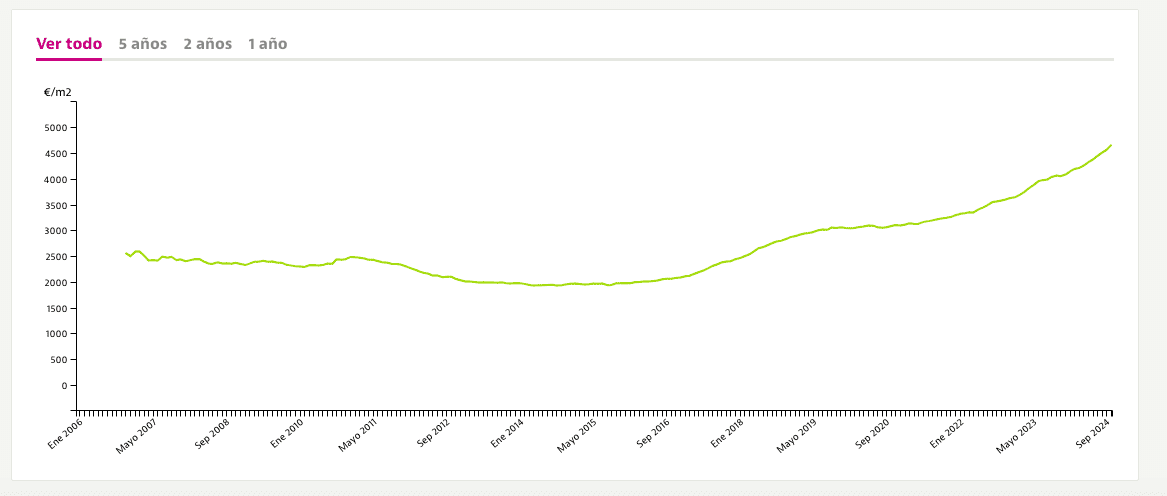
Conclusion: according to the Alveo Search experts, Madrid, Barcelona, Valencia, Alicante, Malaga, Seville, Mallorca and Menorca are the best places to buy a second home. Their surroundings offer nature with services close at hand.
Thomas Rouer is the founder of Alveo Search and the CEO of the Alveo group. Based in Spain for almost ten years, he develops property services designed for the specific needs of foreign buyers.
His expertise covers every aspect of buying property in Spain: understanding the market, searching for and selecting properties, negotiation, financing, paperwork, tax and securing the purchase process.

Our resources for buying in Spain