Français
 English
Living in Alicante: the complete guide for expats

Living in Alicante means choosing a Mediterranean city with the sea, city services and direct flights to the UK and northern Europe. The neighbourhood, your budget and your family or work situation will weigh in the choice.
- Climate: AEMET climate normals for the Alicante-Elche Aeropuerto station (1981-2010) show an average annual temperature of 18.2 °C and 2,953 hours of sunshine; plan for the heat and for how well the home stays cool.
- Housing: in September 2026, average asking prices reached €2,743/m² to buy and €13.9/m² a month to rent, with differences between neighbourhoods.
- To check: daily journeys, access to schools or healthcare for your profile, comfort of the home and flood risk at the exact address.
Alicante combines a city centre, beaches and residential towns spread along the Costa Blanca. The right choice depends on your work, your budget, how much you need to get around and how easily you want to travel home. This guide separates the city of Alicante from nearby towns and from destinations further away in the province. For general formalities, see also our guide Living in Spain.
Why live in Alicante?
Setting and lifestyle
Life in Alicante revolves mainly around the outdoors. The Mediterranean climate is particularly mild, with an average annual temperature of 20°C. Winters rarely drop below 15°C, so you can sometimes enjoy the beach from early spring. [1, 2]
The atmosphere is cosmopolitan: nearly 20% of the population is of foreign origin, and the international community is well established. The city offers a balance between the energy of a provincial capital and the relaxed feel of a seaside resort, with walks along the Explanada de España and friendly evenings out.
The sea, services and a sizeable city
INE counts 366,221 inhabitants in the municipality of Alicante and 2,030,037 in the province on 1 January 2025. The city combines shops, healthcare facilities, a university, port activity and access to the coast. Postiguet beach is next to the centre; Playa de San Juan, La Albufereta and the beaches of neighbouring towns offer other settings.
Pros and cons of living in Alicante
What budget do you need to live in Alicante?
Cost of living in Alicante compared with the UK
The Numbeo figures for Alicante and for the UK were updated in October 2026. They are based on user contributions: they give orders of magnitude, not quotes or a budget suited to every household. Numbeo estimates monthly costs excluding rent at about €733 for a single person and €2,670 for a family of four in Alicante.
- A meal in an inexpensive restaurant comes to €15 in Alicante, against €19.10 on average in the UK in Numbeo's data.
- A cappuccino is estimated at €1.98 in Alicante, against €4.29 in the UK.
- Basic utilities for an 85 m² flat (electricity, water, heating or air conditioning and rubbish collection) are estimated at €124.94 in Alicante, against €288.16 in the UK.
- A monthly public transport pass is estimated at €23.50 in Alicante, against €95.50 in the UK; actual fares depend on the network and on discounts.
- Numbeo's indices put the cost of living excluding rent at 51.24 for Alicante and 68.2 for the UK; including rent, they are 38.19 and 50.8. Numbeo converts UK prices into euros, and the UK indices are its 2026 mid-year figures. These indices show an average gap, but they do not replace a comparison of personal budgets.
Housing, the first cost to work out
Based on the average asking price of €13.9/m² a month in Alicante in September 2026, a simple calculation gives about €695/month for 50 m², €973 for 70 m² and €1,251 for 90 m². These are indicative multiplications: a seafront listing, a renovated or furnished home and a year-round rental are not directly comparable. Add any bills not included, travel, energy and moving-in costs.
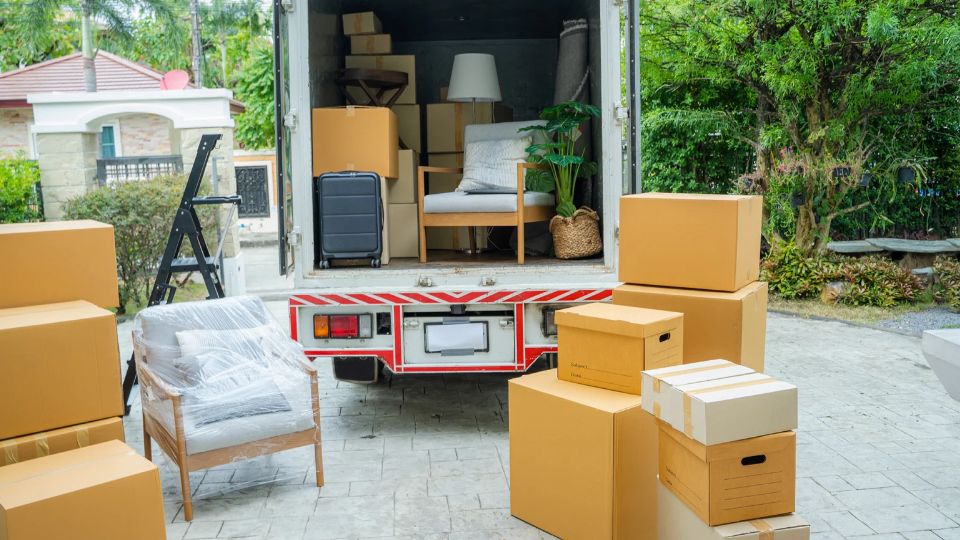
For a first budget, separate monthly spending from arrival costs: temporary accommodation, removals, deposit, equipment and paperwork. Keep a financial cushion for the first few weeks so you can compare neighbourhoods without having to accept an unsuitable home too quickly.
Income, tax and purchasing power
Your standard of living depends on your net income, your housing and where you work. Before accepting a job, compare the salary offered with affordable rents and the cost of the commute. If you work remotely from Spain for a foreign employer or clients, have your social security and tax situation checked before the move. The Valencian Community's special tax regime and the applicable rules depend on your situation; do not assume your home country's tax treatment carries over.
Where to live in Alicante, depending on your profile?
Price alone is not enough to choose a neighbourhood. First locate your work, the schools you are considering, the healthcare services and the journeys you will make each week. The prices below are Idealista listings from September 2026; they describe areas, not each building.
The centre, Benalúa and residential neighbourhoods
The centre suits you if you want to walk to shops, restaurants, transport and cultural venues. Activity, noise and the features of old buildings vary from street to street. Benalúa, Carolinas and Campoamor offer other residential options, with local shops and links to the centre. Check the insulation, lift, light and the condition of the common areas.
In September 2026, Idealista showed €3,655/m² to buy in the Centro district and €2,028/m² in Campoamor-Carolinas-Altozano. For rentals, average listings were €14.3/m² in Centro and €12.6/m² in Campoamor-Carolinas-Altozano. For the same floor area, the gap can weigh heavily on the budget.
Playa de San Juan, El Cabo and La Albufereta
Playa de San Juan and El Cabo attract people who want to live near the sea with access to the tram, shops and leisure areas. La Albufereta is another coastal area linked to the centre by the TRAM. Being near the coast does not guarantee a quick journey to your job, though: test the route, the timetables and the last service.
In Playa de San Juan-El Cabo, Idealista asking prices in September 2026 reached €3,867/m² to buy and €15.9/m² a month to rent. That is about €309,360 for 80 m² to buy or €1,113 a month for 70 m² to rent, simply by applying the average per square metre.
El Campello and the towns of the metropolitan area
El Campello may suit those looking for a more residential life near the sea while staying linked to Alicante by the TRAM. Sant Vicent del Raspeig appeals especially to students and people who want to live near the University of Alicante campus. Other towns in the province, such as Santa Pola, Torrevieja or Dénia, offer different settings, but journeys to Alicante and access to specialist services must be assessed separately.
Do not choose a town based only on a holiday visit. Do the shopping, take public transport at rush hour and locate the school, pharmacy, health centre and shops you will use all year round.
Buying or renting in Alicante
Purchase and rental prices by neighbourhood
In September 2026, the Idealista report on sale prices in Alicante showed €2,743/m², up 6.6% over one year. The report on rents showed €13.9/m² a month, up 5.9% over one year. Idealista measures asking prices, not the final amounts of signed sales or leases.
- Whole city: at €2,743/m², an 80 m² home would come to about €219,440; at €13.9/m², 70 m² would come to about €973/month.
- Centro: €3,655/m² to buy, or about €292,400 for 80 m²; €14.3/m² to rent, or €1,001/month for 70 m².
- Playa de San Juan-El Cabo: €3,867/m² to buy, or about €309,360 for 80 m²; €15.9/m² to rent, or €1,113/month for 70 m².
- Campoamor-Carolinas-Altozano: €2,028/m² to buy, or about €162,240 for 80 m²; €12.6/m² to rent, or €882/month for 70 m².
- Virgen del Remedio-Juan XXIII: €1,388/m² to buy, or about €111,040 for 80 m²; €10.2/m² to rent, or €714/month for 70 m².
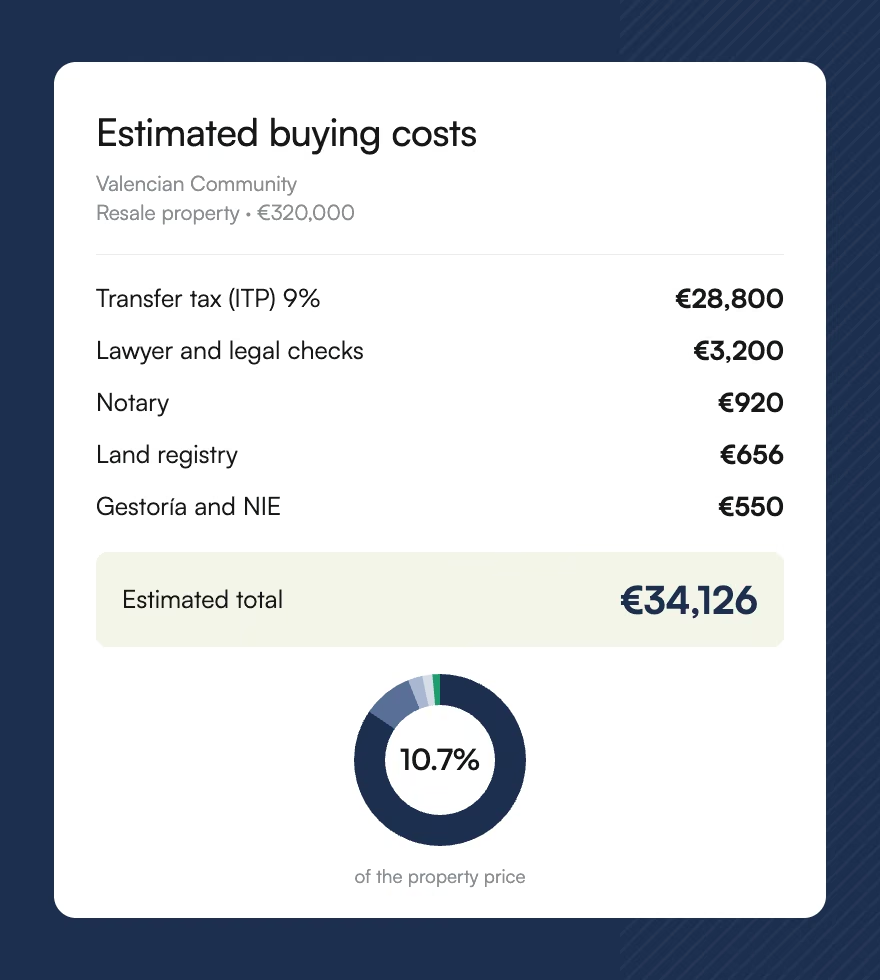
These simulations are for comparing orders of magnitude. The floor, lift, condition of the building, works, view, terrace and legal status of the property change its price. For a purchase, also plan for fees and taxes, which depend in particular on whether the home is new or resale. See our guide to taxes when buying property in Spain and, if needed, our guide to mortgages in Spain.
Renting before buying
A year-long rental lets you test the orientation, noise, journeys and pace of the neighbourhood before you commit. Check the type of contract, its length, the deposit, bills, furniture and renewal terms. During the viewing, check the windows, ventilation, hot water, air conditioning, signs of damp and the internet connection. For a temporary let, make sure the contract matches the intended length and use.
Buying to live in or to invest
Buying can make sense if you already know Alicante and your plans are stable enough. Before signing, check the property documents, community fees, works already voted or planned, the equipment and whether the property suits your intended use. If your plan relies on holiday lets, do not assume they will be allowed: check the national, regional and municipal rules and those of the owners' association at the exact address. Our guide to the tourist rental licences in Spain sums up the points to check. To discover the local market and our support, see also our page on property in Alicante.
Working in Alicante or working remotely from the city
The local job market
Tourism, hotels, retail and services are among the activities in the local economy. The port, logistics, healthcare, education and the university also provide jobs in the metropolitan area. Vacancies and pay levels vary with the profession and experience; look at the jobs actually open before you leave and compare their location with the neighbourhoods your budget allows. To prepare your search, see our guide Working in Spain.
Remote work and self-employment
Remote work can let you move to Alicante without looking for a local job straight away. Check, however, that your employer allows you to work from Spain, and get the consequences for residence, tax and social security clarified. For your home, test the connection quality at the exact address, the sound insulation and whether you can set up a workspace.
Family life in Alicante
Alicante and nearby towns offer several settings for families, from the city centre to coastal neighbourhoods. Playa de San Juan and El Cabo may suit you if you want the beach and tram links. La Albufereta sits between the coast and the centre. El Campello can be an option for families who want a more residential setting. Carolinas, Benalúa and San Blas are other neighbourhoods to compare by budget, school and commute.
Choosing a school and organising journeys
Families can look at state schools, concertado schools and private schools. Languages of instruction, available places, admission dates and transport or canteen services vary by school. See the official Generalitat Valenciana portal on pupil admission and enrolment and ask the schools directly about any extra costs.
See also our guide to the Spanish school system and our guide to British and international schools in Spain.
The school's location can matter more than an extra room. Do the journey at drop-off and pick-up times, check tram or bus connections and see how close after-school activities and childcare are.
Retiring in Alicante
For retirement, start with the services you will really need: health centre, pharmacy, shops, transport and places to walk. The centre may suit you if you want to get around on foot; La Albufereta and Playa de San Juan offer a coastal setting; El Campello, Santa Pola or Torrevieja are options to consider if you prefer a town separate from Alicante. Dénia and other towns further north are a different distance away: compare their healthcare and transport links before treating them as part of the metropolitan area.
Choose an accessible home, with a lift and few steps, and test the journey to your usual care. The official directory of health centres by health department helps you find facilities. If you receive a pension from another country, your rights to Spanish healthcare cover will depend on your situation. For some pensioners, the S1 form is used to register with the health system of the country of residence; Your Europe explains the EU rules. Prepare these steps before you leave and read our guide Retiring in Spain.
Staying in different seasons lets you test the heat, noise, getting around and the availability of services outside the tourist season. Also consider whether you want to live in a city that is lively all year round or in a quieter town, where you may use a car more often.
Getting around and travelling home
Airport and direct flights
Alicante-Elche Miguel Hernández airport is linked to the city by the C6 bus; the city council reports a bus every 20 minutes during the day and an hourly night service. See the city's information on the C6 link between Alicante and the airport and the access options published by Aena.
Aena lists direct routes to many airports in the UK and northern Europe. Routes, airlines and frequencies can vary through the year; check your travel dates in Aena's official list of destinations.
Train, tram and daily travel
Renfe runs direct trains from Alicante to Madrid and Barcelona. To continue by rail to France and the rest of Europe, plan for a change and check the full route when you travel: timetables and cross-border links change. See the pages Alicante-Madrid and Alicante-Barcelona.
The Alicante TRAM serves several parts of the city as well as Playa de San Juan, El Campello and other coastal towns. Check stops, timetables and fares on the official website of the TRAM d'Alacant. A car can be useful if your work, schools or family activities are spread out; compare its cost with the journeys you really need to make.
Culture, beaches and nature around Alicante
Postiguet beach is near the centre, while San Juan and La Albufereta offer other places to swim within the municipality. Santa Bárbara castle overlooks the city from Mount Benacantil. The province also offers trips to Tabarca, the Santa Pola salt flats and the towns of the Costa Blanca. To build a balanced daily life, look for places you can reach without a car from your future home, not just weekend destinations.
Markets, local festivals, restaurants and sports are part of neighbourhood life. Before signing, check when the area gets lively and which events are held nearby: a street that is quiet by day can be busier in the evening or during festivals.
Preparing your move to Alicante
Paperwork
Prepare your ID, proof of income and school or medical documents before you leave. The NIE is useful for many formalities, but it does not replace registering your residence. For a stay of more than three months, EU citizens must complete the formalities that match their situation, and UK and US nationals need a visa or residence permit; Your Europe explains residence rights. Also think about registering on your town's municipal register (padrón), the bank, energy contracts and insurance. See our guide on getting an NIE in Spain.
Learning Spanish and finding your bearings
Speaking Spanish makes exchanges easier with landlords, the authorities, colleagues and health professionals. A regular class, a sport or an association lets you practise and meet residents over time.
Taking a scouting trip
If possible, visit Alicante in two different seasons. Test your journeys to work, school, the airport and healthcare. Compare several homes, do your shopping in the neighbourhood and check the indoor temperature at the end of the day. This trip helps you tell a pleasant holiday from a daily life that really suits your plans.
Your move to Alicante
Thinking of living in Alicante? Define your budget, journeys and needs for school or healthcare, then compare several neighbourhoods and towns. If your plans include a purchase, our team can help you refine your search criteria. Describe your project and read our buyer testimonials.
Thomas Rouer is the founder of Alveo Search and the CEO of the Alveo group. Based in Spain for almost ten years, he develops property services designed for the specific needs of foreign buyers.
His expertise covers every aspect of buying property in Spain: understanding the market, searching for and selecting properties, negotiation, financing, paperwork, tax and securing the purchase process.

Our resources for buying in Spain