Français
 English
Living on the Costa Brava: towns, prices and lifestyle

- The area: the Costa Brava runs along 206 kilometres of coastline, from Blanes to Portbou, with 8 natural parks. It welcomed more than 7.4 million visitors in 2023. Castilian Spanish and Catalan have both been official languages since 1979, and schools teach mainly in Catalan.
- Cost of living: prices in Girona are 0.8% higher than in Madrid and 13% higher than in Valencia, excluding rent. A family of four needs €1,600 to €3,000 a month.
- Property: the province of Girona averages around €3,250/m² in 2025, against €4,500 to €6,000/m² in Cadaqués. A two-bedroom flat starts at €200,000 and a detached house at €300,000. Rental yields are between 5% and 7%.
- Schools and paperwork: schools teach mainly in Catalan, and the region has several international schools. Plan ahead for your NIE, vehicle registration and registering with your country's consulate (often in Barcelona).
- Key point: the region combines easy access (AP-7 motorway, Girona station, airport) with an excellent quality of life, but jobs are hard to find and Catalan dominates.
Introducing the Costa Brava: an ideal destination for expats
The Costa Brava literally means “the steep coast” or “the rugged coast” in Catalan. It is known for its rocky cliffs, which form countless small coves as they drop into the blue waters of the Mediterranean. Nicknamed “the Wild Coast”, it lies in the north-east of the peninsula.
Often wrongly confused with Barcelona or the south of France, which it lies very close to, the Costa Brava has its own identity and is full of secrets and mysteries. The best places for expats moving there with a family or to retire, infrastructure, quality and cost of living, leisure and property: here is everything you need to know if you want to live on the Costa Brava.
History of the Costa Brava
The history of Catalonia is complex. To live on the Costa Brava, it helps to understand how the region has evolved.
- Antiquity and the Middle Ages: shaped by the Romans and the Visigoths, Catalonia gained autonomy under the Crown of Aragon.
- Union with Spain: in the 15th century, the marriage of the Catholic Monarchs brought Catalonia into Spain.
- War of the Spanish Succession: in the early 18th century, decrees abolished Catalan institutions and laws.
- 19th century: Catalonia led the way in Spain's industrialisation.
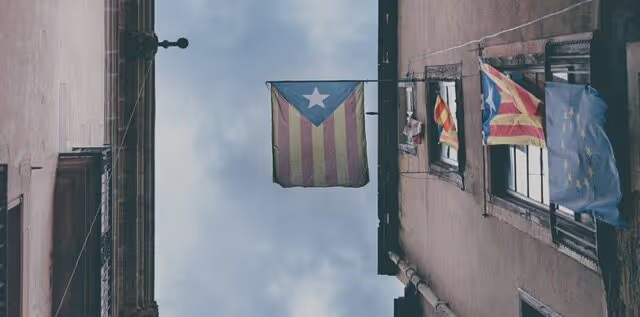
- 20th century: under Franco, cultural repression and the ban on Catalan strengthened Catalan national feeling.
- 21st century: the independence movement peaked with the 2017 referendum and the unilateral declaration of independence, which Spain did not recognise. 2023: Catalonia is still not independent.
Two languages, one region
On the Costa Brava, two official languages have existed side by side since 1979: Castilian Spanish and Catalan, which has gained more and more weight in recent years. In Catalonia, schools teach mainly in Catalan.
Geography of the Costa Brava
The Costa Brava forms a natural border with the Côte Vermeille to the north, while to the south it meets the Costa del Maresme. It stretches from Blanes in the south to Portbou, near the French border. It covers the districts (comarques) of Alt Empordà, Baix Empordà and La Selva along the coast, and Pla de l'Estany and Gironès inland. Girona is the capital of Gironès and one of the best-known towns of the Costa Brava worldwide, thanks in particular to its cathedral and its airport.
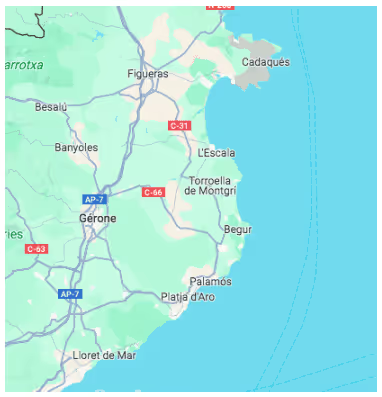
Caption: map of the Costa Brava
Source: Google
The Costa Brava and tourism
The Costa Brava attracts travellers from all over the world. In 2023, it welcomed more than 7.4 million visitors. Tourism keeps the region alive, but it is also a threat to this natural paradise.
The benefits of living on the Costa Brava for expats
Its coastline is spectacular, its villages have an old-world charm, and its climate, food and people are “delightful”. In short, the Wild Coast has plenty going for it.
Nature on the Costa Brava: wild coves, natural parks and an unspoilt coastline
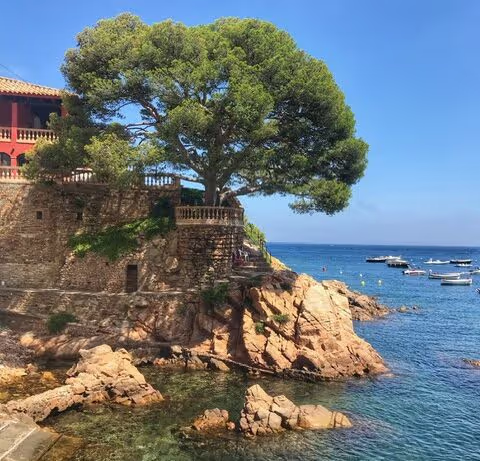
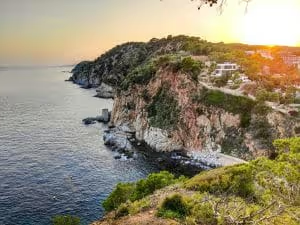
The Wild Coast means 206 kilometres of coastline dotted with clear-water inlets, cliffs alternating with dunes, endless hidden coves and 8 carefully protected natural parks. The region has everything for lovers of nature, outdoor sports and lazy days. It is an asset for passing tourists, but also for expats who want to live on the Costa Brava.
Climate on the Costa Brava: ideal weather for living by the sea all year round
Winters are mild, summers are hot and the air is clean. The region enjoys an ideal Mediterranean climate, perfect for outdoor activities all year round, from swimming to hiking. It is great for families with children, or for staying active in retirement.
The cultural life of the Costa Brava
No risk of boredom here. Living on the Costa Brava means enjoying a rich cultural life. Art lovers can follow in the footsteps of Pablo Picasso and Salvador Dalí, who both lived in the white village of Cadaqués. Music lovers can enjoy the festivals that follow one another all summer, including:
- The Porta Ferrada international festival in Sant Feliu de Guíxols;
- The Castell de Peralada international festival;
- The Torroella de Montgrí international music festival.
For theatre, the Girona festival is a leading event.
Culture lovers can find the region's cultural programme by clicking on this page.
Food on the Costa Brava
Ferran Agulló, a Catalan poet, gave the Costa Brava its name and championed Catalan cooking. Today, people who live on the Costa Brava can enjoy this food lover's paradise. The region is famous for its seafood, fresh fish, local dishes and renowned wines. Its cooking reflects its cultural and geographical heritage, with specialities such as suquet de peix (fish stew), rice with spider crab and truita de bullit.
Our tips for food lovers:
- El Celler de Can Roca in Girona: creativity and Catalan tradition.
- Restaurant Miramar in Llançà: run by Paco Pérez, an icon of Mar d'Amunt cooking, between Cap de Creus and Cap Cerbère.
Is your mouth watering?
Living on the Costa Brava: close to France
The Wild Coast borders France and is close to it in both distance and culture. With France next door, the rest of Europe is within easy reach by road or rail, a real plus if you want to live on the Costa Brava or simply invest in Spain.
Only a few kilometres from the south of France, this Catalan region shares cultural, artistic and culinary influences with its neighbour.
Getting around the Costa Brava: transport and access
The Costa Brava has good transport links. It is well served by roads and motorways (notably the AP-7, which runs along the Mediterranean coast). Several bus lines link the main towns of the region. Girona station also has rail links to Barcelona and France, as well as high-speed services (AVE, Alta Velocidad Española). International flights operate from Girona-Costa Brava airport, which makes Girona an ideal base.
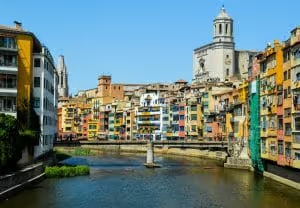
Caption: Girona
Source: Unsplash
Drawbacks of the Costa Brava
Even if life here is largely idyllic, there are a few downsides. Here are the drawbacks we think you should consider if you want to live on the Costa Brava.
- Finding a job can be difficult. To find out more about work and read all the advice from the Alveo Search editorial team on this important subject, see our article: “Working in Spain: the complete guide”.
- Catalan dominates, which some may see as a drawback.
Living on the Costa Brava: life can be expensive
Be aware that the Costa Brava attracts many tourists and expats, so it is somewhat more expensive than other regions of Spain. Expats with an income from abroad (pensions or salaries) will often have more purchasing power than locals. To give you an idea, prices in Girona are 0.8% higher than in Madrid and 13% higher than in Valencia (excluding rent). We will come back to this in more detail.
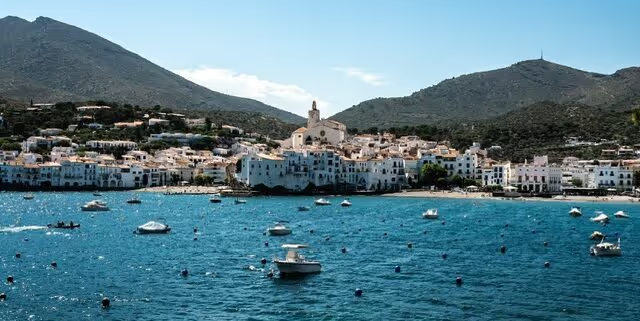
Caption: Cadaqués
Source: Pexels
Daily life on the Costa Brava: the setting
An excellent quality of life
Living on the Costa Brava means a relaxed daily life spent outdoors, summer and winter alike. It also means being surrounded by welcoming people, whether the warm local community or the expats, who are mostly very open. Moving there is also choosing a multicultural environment, which can only be enriching.
There are too few official indicators to give an exact quality of life index for the area, but it is good. It is even excellent for climate (90 on a scale of 0 to 100), healthcare (85 out of 100) and pollution (25, so very low). These figures are calculated by the Numbeo website, based on data collected from people living there.
The expat community on the Costa Brava
Here is a tip to help you settle in if you plan to live on the Costa Brava:
- Eventbrite: use this platform to organise or join local events.
What budget do you need to live on the Costa Brava?
To live on the Costa Brava, a family of 4 needs €1,600 to €3,000 a month, depending on the location and lifestyle. Moving away from the big centres and tourist towns lowers costs, which is worth considering on a small pension or a tight budget.
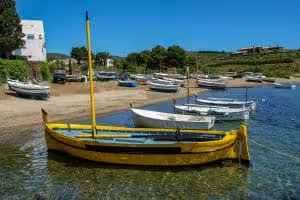
Caption: Cadaqués
Source: Pexels
Healthcare on the Costa Brava
If you choose to live on the Costa Brava, you will have no trouble getting good medical care. Residents of the region can count on excellent hospitals and medical centres. To find out more about how the healthcare system works and the steps to access it, read our article: “Healthcare in Spain: our complete guide”.
Among the best hospitals:
- Hospital Universitari de Girona Dr. Josep Trueta. It was ranked among the best in 2023.
- Hospital Universitari de Bellvitge.
Schools on the Costa Brava: what you need to know
Local schools are ideal for younger children, including those of expat families living on the Costa Brava. Here are the top-ranked schools in Girona:
- Colegio Institució Familiar Educació Les Alzines: the best school in the area, a state-funded private (concertado) religious school for girls.
- Colegio Montessori Palau Girona: a private and expensive school (about €700 a month), teaching in three languages (English, Castilian Spanish, Catalan). School transport, meals and after-school activities cost extra.
- Colegio Maristes Girona: a mixed, religious concertado school (state-funded private)
- Colegio Santa Eugenia: the best state school, taking children up to the end of primary school.
To learn more about education in Spain, we recommend our in-depth guide: “The school system in Spain”.
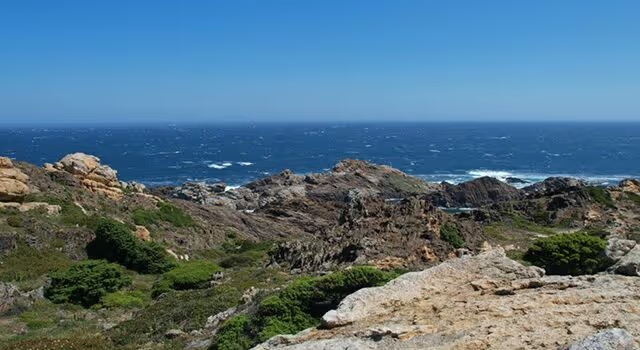
Caption: Costa Brava coastline
Source: Unsplash
Living on the Costa Brava: lifestyle and everyday well-being
Why move to the Costa Brava with your family?
On the Costa Brava, you can say goodbye to everyday stress. Quality of life is the number one reason families choose it, and it is hard to argue with.
Mild weather, nature, culture, little traffic, calm or lively towns, first-class healthcare, schools, sports facilities and shops for a healthy, balanced lifestyle, and more. You have everything on your doorstep.
Where to live on the Costa Brava with a family?
Roses, Lloret de Mar and Calonge are the favourites of Valentino, our Costa Brava expert. Girona is also a good choice for those who prefer city life.
Living on the Costa Brava: where to send your children to school?
The region also has several international schools offering a good education in several languages.
For families who want to live on the Costa Brava, these schools offer good-quality options.
To learn more, read our article: “The school system in Spain”.
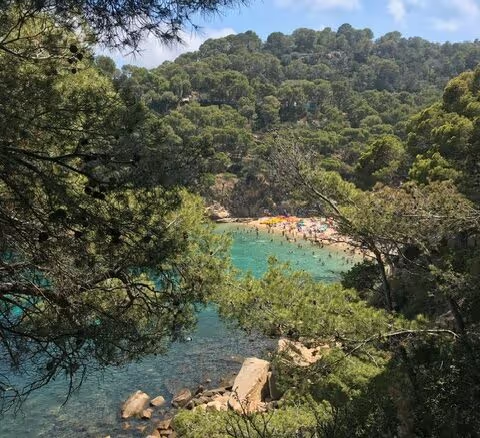
Caption: cove
Source: Unsplash
Why retire to the Costa Brava?
The region offers cutting-edge healthcare, golf courses and a wide range of leisure activities (water sports, hiking, cultural heritage). Living on the Costa Brava means looking after:
- Your mental and physical well-being: the sea boosts serotonin, dopamine and oxytocin levels. The sun and its vitamin D protect your immune system.
- Your social life: there are many foreign retirees, and plenty of ways to make friends through meet-ups, activities and shared meals.
In short, the Costa Brava is a paradise for starting a new, active life after 67.
Where to retire on the Costa Brava?
Here is our top 4 of the best places to live on the Costa Brava in retirement.
- Girona is the jewel of the Costa Brava, ideal for retirees with its rich historic heritage.
- Begur, known for its medieval castle and picturesque beaches, offers a quiet life and stunning views of the Mediterranean.
- L'Escala is famous for its beaches, its food (especially anchovies) and its traditional festivals.
- Roses and Calonge, an hour's drive apart, offer a range of activities such as coastal walks, water sports and golf courses, with easy access via Girona-Costa Brava airport.
Living on the Costa Brava: what paperwork do you need?
On the administrative side, if you want to live on the Costa Brava, registering with your country's nearest consulate (often in Barcelona) is recommended. You will also need to register your vehicle and apply for an NIE number (foreigner identity number). Plan ahead!
If you are looking for information on moving to Spain, read our complete guide: “Moving to Spain: the complete guide for future expats.” You will find answers to all your questions there.
What to do on the Costa Brava?
Our top 3 most beautiful beaches on the Costa Brava
- Calella de Palafrugell: set in a charming fishing village lined with whitewashed houses.
- Platja d'Aiguablava: near the town of Begur, Aiguablava is famous for its crystal-clear water and the dense greenery that seems to have been placed there to shelter the cove.
- Cala Estreta, Palamós: this small wild cove is well worth the trip. Less than ten kilometres from the town of Palamós, in the heart of the Cap Roig natural area, it is surrounded by pine trees and cliffs.

Unmissable sights
Here is our top 6 of must-see places, whether you want to live on the Costa Brava or just spend a few days there.
- Girona: a beautiful historic city that was even a filming location for “Game of Thrones”.
- Cap de Creus: in the north of the Costa Brava, this natural park is perfect for hikers.
- Tossa de Mar: its old town is charming, and so are its beautiful beaches.
- Figueres: inland, it is famous as the birthplace of Salvador Dalí.
- Begur: the town is known for its 15th-century castle.
- Cadaqués is a jewel of traditional charm that you cannot miss.
Property on the Costa Brava
If you plan to live on the Costa Brava, the region offers a wide range of properties, from modern flats to traditional villas. The property market is attractive.
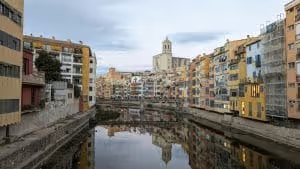
Caption: Girona
Source: Unsplash
Purchase prices
Purchase prices in the province of Girona are rising, with an average of around €3,250/m² in 2025, according to data from specialist property portals. Prices vary widely between towns: it is in Cadaqués that you will find the most expensive properties, at between €4,500 and €6,000/m². For example, a two-bedroom flat starts at €200,000, while a detached house for family holidays starts at around €300,000.
We asked Valentino, our expert for the region, what you need to know if you want to buy on the Costa Brava. Here is his answer:
“The average price is between €2,500 and €3,500/m²”. For a two-bedroom flat, expect to pay from about €200,000, and for a detached house for family holidays, from €300,000.
Rental yields
Rental yields in Spain are good, sometimes very good. The average is around 7%. On the Costa Brava, you could expect a yield close to this national average, or more if you choose well.
Holiday rentals
Rental yields on the Costa Brava remain attractive, usually between 5% and 7%. This is close to the Spanish national average, but can be higher in well-chosen tourist areas.
To find out more about holiday lets such as Airbnb, read our article: “Tourist rental licence in Spain: the complete guide”.
Sources:
FAQ: common questions about living and settling on the Costa Brava
What is the cost of living on the Costa Brava?
The cost of living can be a little higher on the Costa Brava than in Spain's big cities, but it remains reasonable, with excellent value for money for property and services. For a family of 4, expect €1,600 to €3,100 a month, depending on where you live and your lifestyle.
What are the best towns to live in on the Costa Brava?
Towns such as Girona, Tossa de Mar and Cadaqués are popular for their beauty, history and quality of life.
Are there international schools on the Costa Brava?
Yes, the region has several international schools offering a good education in several languages.
What is the climate like on the Costa Brava?
The Costa Brava has a Mediterranean climate, with hot summers and mild winters. Ideal for outdoor living in every season.
What leisure activities can you enjoy on the Costa Brava?
The Costa Brava offers a wide range of activities: water sports, hiking in the natural parks, cultural visits (museums, festivals), golf, local food, traditional markets and more.
Is it easy to find a job on the Costa Brava?
The job market is competitive, especially in tourism, property and services. Speaking Spanish is essential, and there are more opportunities for bilingual or specialist profiles.
What are the transport options on the Costa Brava?
The region is well served by buses, trains and main roads. Girona-Costa Brava airport offers domestic and international connections. A car is still the most practical way to explore the region and the surrounding area.
Planning to buy a property in Spain?
Get a call back from one of our experts on the ground.
Thomas Rouer is the founder of Alveo Search and the CEO of the Alveo group. Based in Spain for almost ten years, he develops property services designed for the specific needs of foreign buyers.
His expertise covers every aspect of buying property in Spain: understanding the market, searching for and selecting properties, negotiation, financing, paperwork, tax and securing the purchase process.

Our resources for buying in Spain