Français
 English
Living in Andalusia: where to live and what it costs
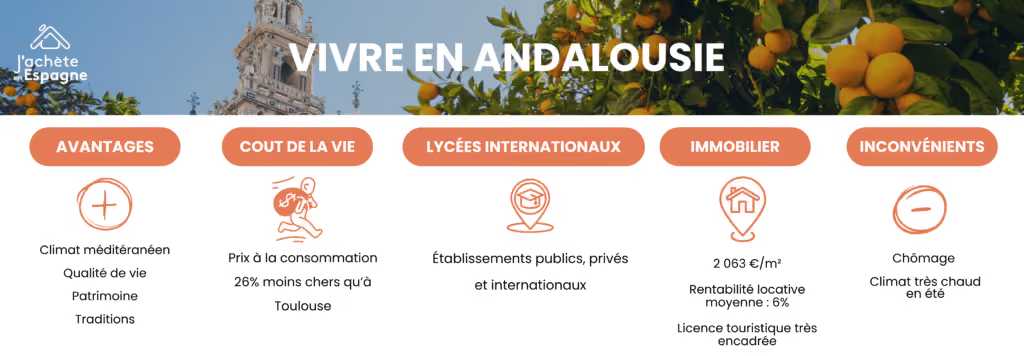
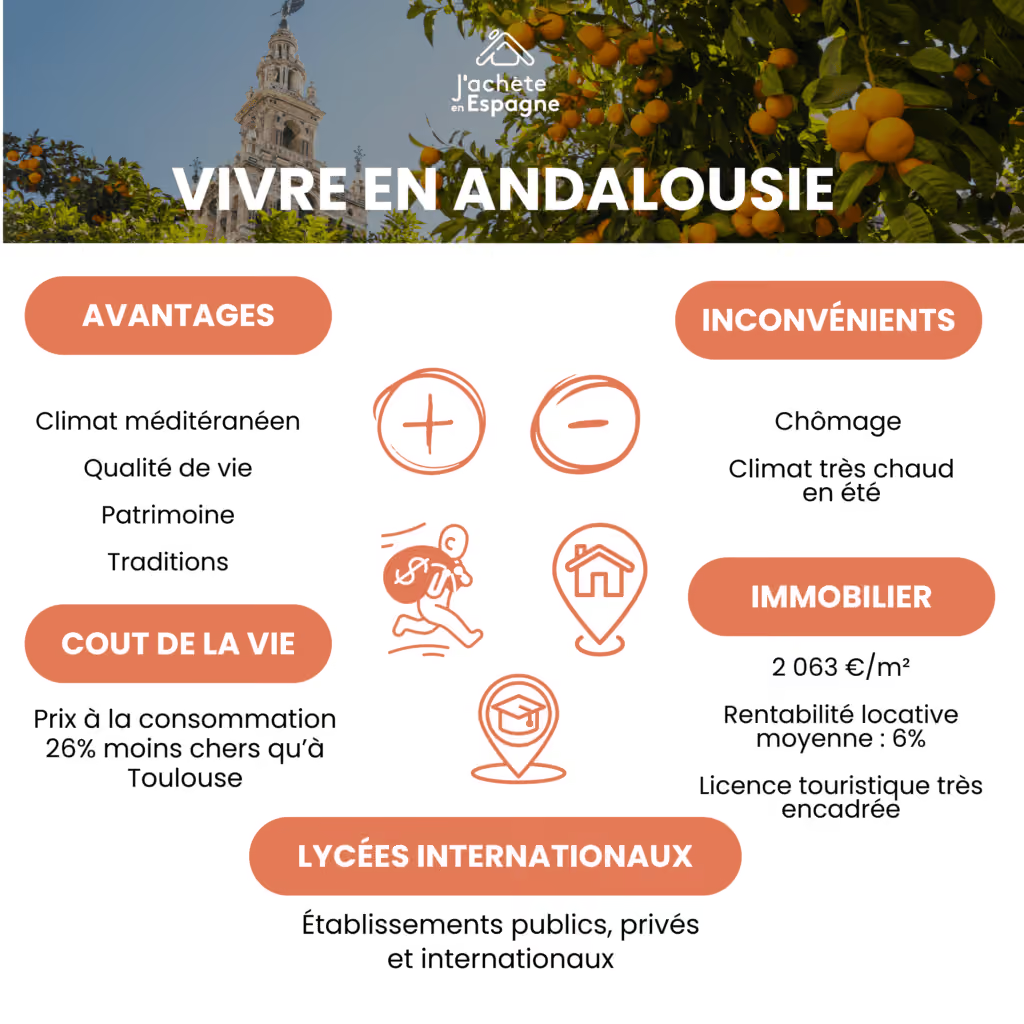
- Region: the second-largest autonomous community by area (87,000 km²) and the largest by population, with more than 8.5 million inhabitants.
- Budget: a family of four spends around €2,300 a month in Seville excluding housing, plus about €1,000 in rent for a central two- or three-bedroom flat. Allow €1,200 to €1,500 a month per person for a modest lifestyle.
- Standard of living: average annual income is €23,150 per person, against €25,896 nationally, and unemployment stood at 18.1% in the second half of 2023.
- Property: €2,063/m² in September 2023, ranging from €3,037/m² in Málaga to €1,525/m² in Seville and €1,357/m² in Granada. Rent costs €10/m² on average, with a regional rental yield of 6% according to Fotocasa, and up to 7.8% in Vera.
- Key point: an affordable region with a mild climate, where finding a local job remains difficult.
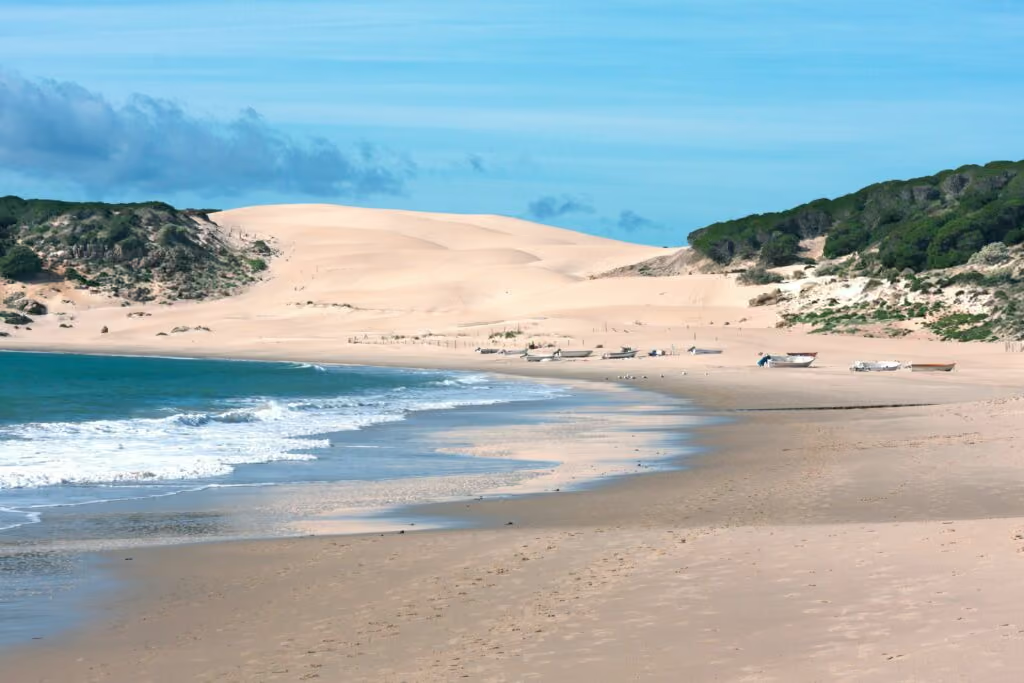
Did you know that the Tarifa area, at the southern tip of the Spanish peninsula, is home to one of the most beautiful beaches in Spain? Probably not. Bolonia beach is one of Andalusia's little-known treasures, and there are hundreds of others. Andalusia is much more than flamenco, sunshine and tapas. It is Spain in miniature: endlessly varied nature, a rich cultural and architectural heritage and a long history. Here is a closer look at Spain's most captivating region.
General information
Andalusia is one of Spain's 17 autonomous communities, the second-largest by area (87,000 km²) and the largest by population, with more than 8.5 million inhabitants.
It lies in the south of the Spanish peninsula, between sea and mountains. The Atlantic Ocean, the Mediterranean, the Alboran Sea, the Sierra Morena, the Baetic mountains and the Guadalquivir river: nature is everywhere in Andalusia.
Its name comes from the Arabic term Al-Andalus used for the lands under Muslim rule before the 15th century.
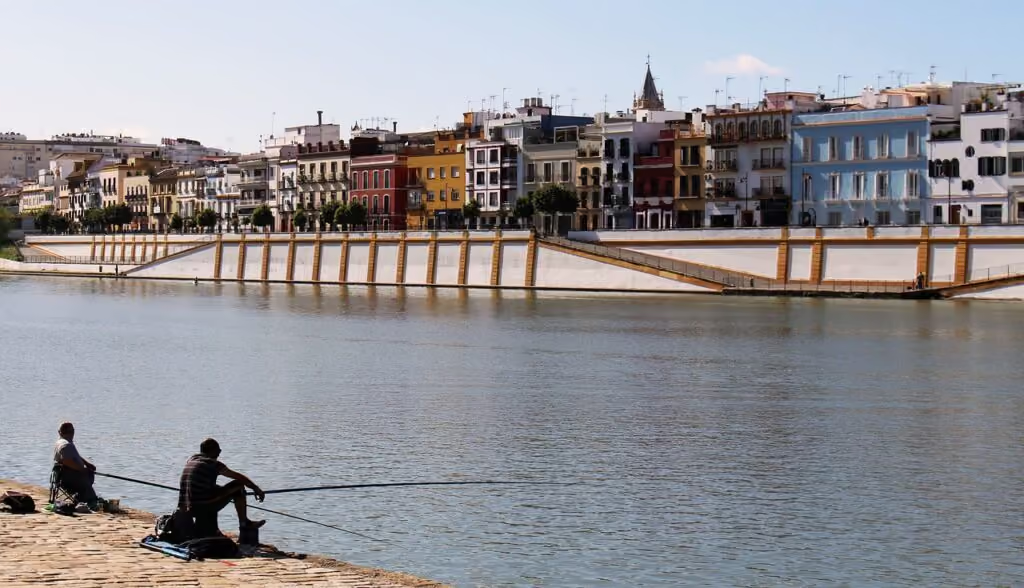
Its capital has been Seville since the 13th century, and since May 2023 the city has been run by José Luis Sanz, of the Partido Popular (centre right).
The history of Andalusia
In a word, as we will come back to it at length: Andalusia was built and shaped by different peoples in successive waves. The Iberians, the Romans, the Moors and the Catholic kingdoms each ruled the region in turn, and all of them helped make it the welcoming melting pot it is today.
Its cultural heritage and its people bear the mark of these different influences.
Andalusia and tourism
Andalusia is one of the most visited regions in Spain. Tourism is one of the region's main economic drivers. It is the fourth most visited autonomous community after Catalonia, the Balearic Islands and the Canary Islands. Most tourists head for the coast. Nature tourism has been booming since the Covid-19 pandemic.
In 2022, it welcomed more than 30 million tourists over the year. According to SAETA (Andalusia's tourism statistics and analysis system), they generated more than €22 billion. In 2023, there were 11.5 million in the summer months alone, 3 million more than the region's population.
The advantages of living in Andalusia
Andalusia attracts many foreign residents, as the padrón (municipal register) shows. Each city has its own appeal:
So why move to southern Spain? The region suits most expats perfectly: retirees, families and digital nomads. Welcomed with a smile and great warmth by Andalusians, they enjoy a simple, balanced life, often spent outdoors.
Five-star quality of life, affordable cost of living, nature on the doorstep, a fascinating culture, good connections with the rest of Spain and Europe, and more. Expats have to look hard to find any downsides.
The Mediterranean climate
It is the number one reason, the one expats mention most often. The Andalusian climate keeps you warm, even in winter. In Spain's southernmost region, the average annual temperature is 18°C, and Andalusia enjoys more than 300 days of sunshine a year. In the heat, the sea breeze will be your best ally. It cools the nights, especially on the coast.
Quality of life
It is excellent in many respects: the weather, already mentioned, but also the feeling of safety, the health system, the low cost of living, low pollution, good public transport and more. Daily life in Andalusia is very pleasant.
The quality of life index is close to 170 in the capital, Seville, and 183 in Málaga, according to the latest data from the crowd-sourced website Numbeo, updated in October 2023. Málaga comes out ahead thanks to smoother traffic and better air quality. The city is smaller and sits by the sea.
All these favourable indicators make the region a popular choice for expats.
Ready to start your property project in Andalusia? Book a call with our experts based in the region. This first call is free and without obligation, and it will help you see things more clearly.
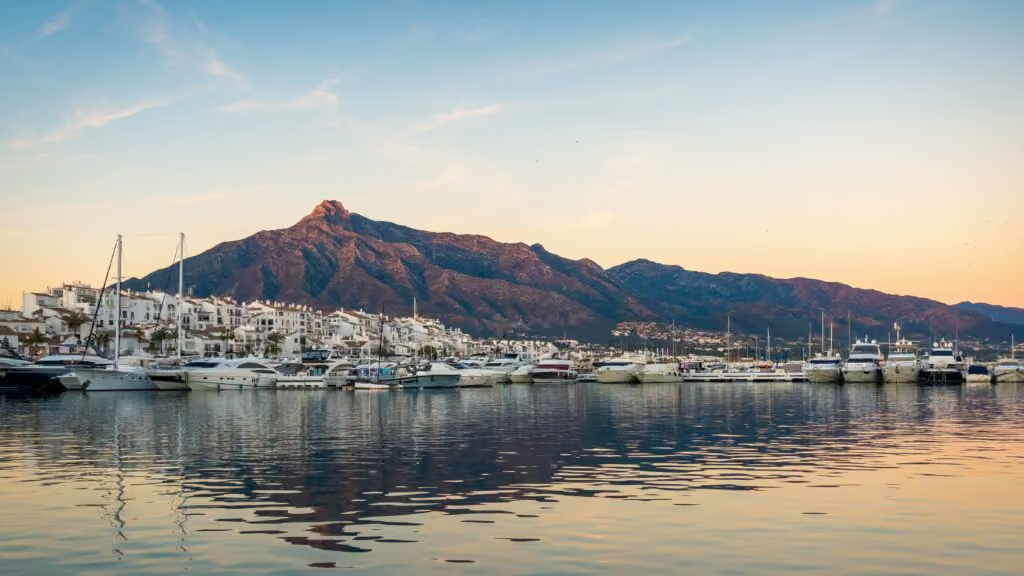
Standard of living
Daily life in Seville costs less than in many other European cities of a similar size. Of course, the further you go from the big cities, the cheaper life gets.
To be completely fair, Andalusians have a low standard of living, among the lowest in Spain. Quality of life and standard of living in Andalusia depend mainly on your situation: locals and expats do not live in the same way. An expat lucky enough to earn a salary from abroad, a retiree or a digital nomad will live comfortably, much better than the local population. In its latest wage survey, published in June 2023, Spain's National Statistics Institute reports that in Andalusia, average annual income is €23,150 per person, against €25,896 a year nationally.
What budget do you need to live in Andalusia?
- A family of four will spend around €2,300 a month in Seville, not counting housing. Add around €1,000 in rent for a fairly central two- or three-bedroom flat.
- Allow €1,200 to €1,500 a month per person for a modest lifestyle. With €2,000 a month, you will live well.
Potential challenges
- If you work for a local company, the cost of living can be a challenge for an expat.
- Andalusia stands out in tourism and agriculture, but finding a job there is quite difficult. The unemployment rate is higher than the national average: 18.1% in the second half of 2023, against 11.68% nationally in the second quarter of 2023.
- Our advice: look for work before you move, and read our full guide: “Working in Spain: the complete guide”.
A breathtaking and remarkably rich natural heritage
Beaches
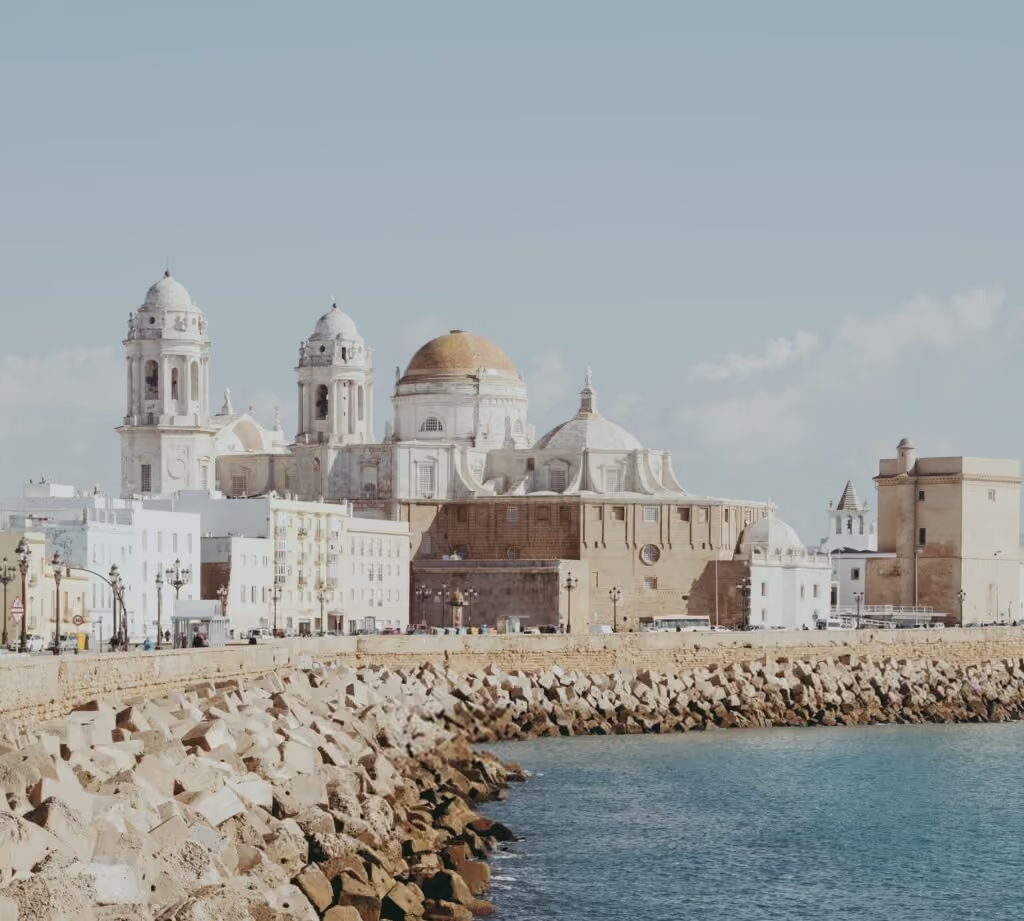
From north to south, the Costa de Almería, the Costa Tropical, the Costa del Sol and the Costa de la Luz all have wonders to offer: 1,000 kilometres of varied coastline, sometimes rugged and wild. Whether they face the Atlantic or the Mediterranean, Andalusian beaches are worth the trip. Here is our ranking of the 5 best beaches in Andalusia:
- Bolonia beach: near Tarifa, this beach is known for its fine sand dunes, crystal-clear water and peace and quiet. It is also home to the ruins of the ancient Roman city of Baelo Claudia facing the sea. The view is stunning.
- El Palmar beach: this golden sand beach facing the Atlantic is in Vejer de la Frontera. Surfers love it for the quality of its waves. It is also known for its magnificent sunsets. The wooden walkways linking the main road to the beach were built to protect the dunes. They earned El Palmar the “Q” label for tourism quality (safety, water quality, good management).
- Playa de los Alemanes: in Zahara de los Atunes, it is tucked between cliffs. Steeped in history, it was nicknamed the “Germans' beach” because it served as a rear base for the Germans during the Second World War.
- Las Calitas: these white sand coves and this breathtaking wild landscape lie around the Trafalgar lighthouse. Completely unspoilt, Las Calitas are beaches you should not miss.
- Playa de Malapesquera: in Benalmádena, between Málaga and Marbella, this beach is ideal for families living nearby. It is easy to reach, offers many water sports and has plenty of chiringuitos (beach bars), and its calm, shallow water makes it perfect for children.
To move forward with your property project in Andalusia, contact our team on the ground.
Andalusia's mountains
A land of contrasts, Andalusia offers superb peaks for lovers of mountains and the outdoors. The Sierra Nevada (3,479 metres) is, after the Pyrenees, the best-known mountain range in Spain, mainly because it overlooks the Alhambra, the famous Moorish palace in Granada. But there are many others, and the options for skiing, hiking or picnicking are endless. Huelva, Seville, Cadiz, Cordoba, Granada, Málaga, Jaén, Almería: each of these cities has Andalusian summits to explore.
The plains of inland Andalusia
For those who prefer the countryside, the Andalusian plains have a lot to offer. You will find large rural houses typical of southern Spain, the cortijos, and you will live in total peace. The plains are the least visited areas of the region.
Wine lovers will discover beautifully kept vineyards. The Andalusian climate and the near absence of frost make it possible to produce quality wines. Winemaking did much to spread the region's fame in the 16th and 17th centuries.
History and cultural heritage
Andalusia, the cradle of Spanish history
- Before the Romans arrived in the 3rd century BC, Andalusia was inhabited by the Iberians. Under Roman rule, the region prospered economically. In the 5th century, the decline of the Roman Empire made way for the Visigoths in the region.
- The second key period in its development began in the 8th century with the Moorish invasion, by Muslims from North Africa. The Muslim empire turned Andalusia into an influential cultural, artistic and intellectual centre in Europe. The region was the heart of Moorish rule in Spain, and this period left behind magnificent architecture that is now the region's great treasure. We will come back to it.
- In the Middle Ages, the Christian kingdoms of northern Spain launched a series of military campaigns to take Andalusia back from the Moors. This was the Reconquista. In 1492, the capture of Granada by the Catholic Monarchs marked the end of the Moorish period in Andalusia. This period produced a unique cultural blend: Spanish and Arab influences mixed, and this still shows today in Andalusian art, architecture and music.
- The Spanish Inquisition was set up by the Catholic Monarchs. Its task was to wipe out any trace of heresy. Many Jews and Muslims had to choose between conversion and expulsion.
- In the 20th century, the region industrialised and became one of the most popular tourist destinations in Spain.
Andalusia is therefore also a land of cultural contrasts, and these contrasts are precisely what make it unique.
Andalusia's cultural riches
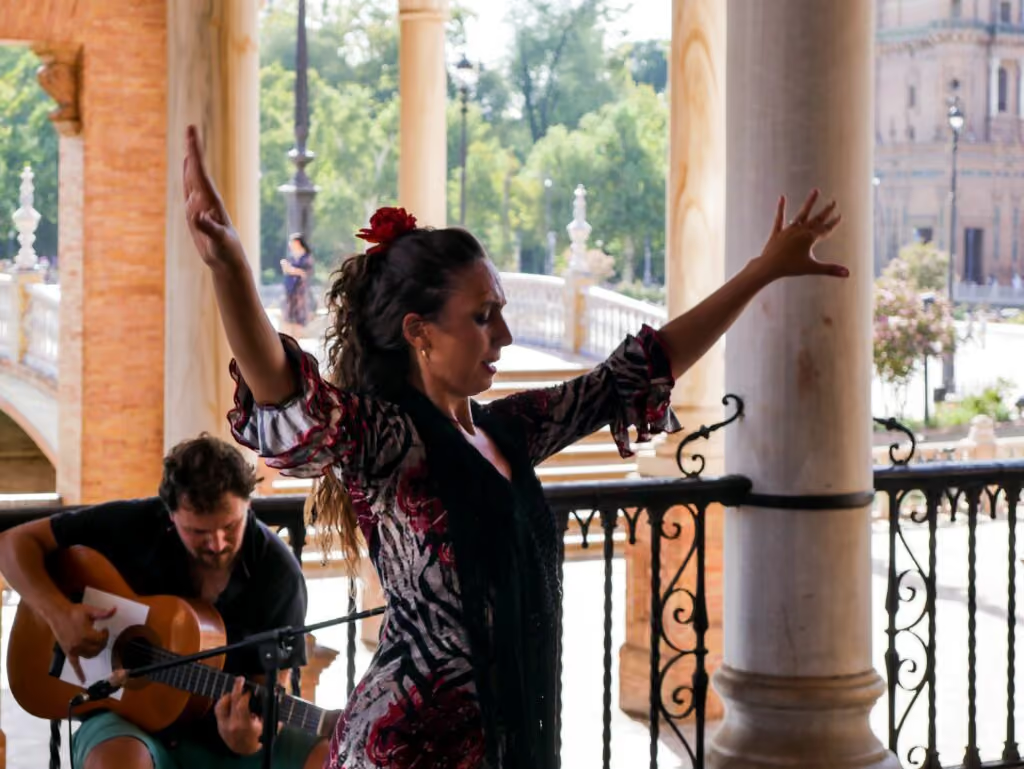
Extraordinary architecture, captivating flamenco, delicious food, traditions that bring Andalusians together and fascinate tourists and expats alike: the region offers a passionate and fascinating cultural mix.
- The Feria de Abril in Seville is the region's must-see festival. Originally (in the 19th century), the Feria was a livestock fair. Over the years, it became an unmissable festive event for locals and then for tourists. Horses, bulls, sevillanas (the women's traditional flamenco dresses), camperos (short Andalusian suits) and sombreros for the men, music and dancing: the streets of the city come alive for a whole week. More than 2 million tourists attended in 2023.
- Andalusian cuisine is far more than tapas: it is a feast of flavours. Do not miss salmorejo (a thick gazpacho served with egg and serrano ham), olla de trigo, a kind of chickpea and meat stew, rabo de toro, an oxtail stew for the bravest, and above all Andalusia's wines, which are delicious.
- Places you must visit:
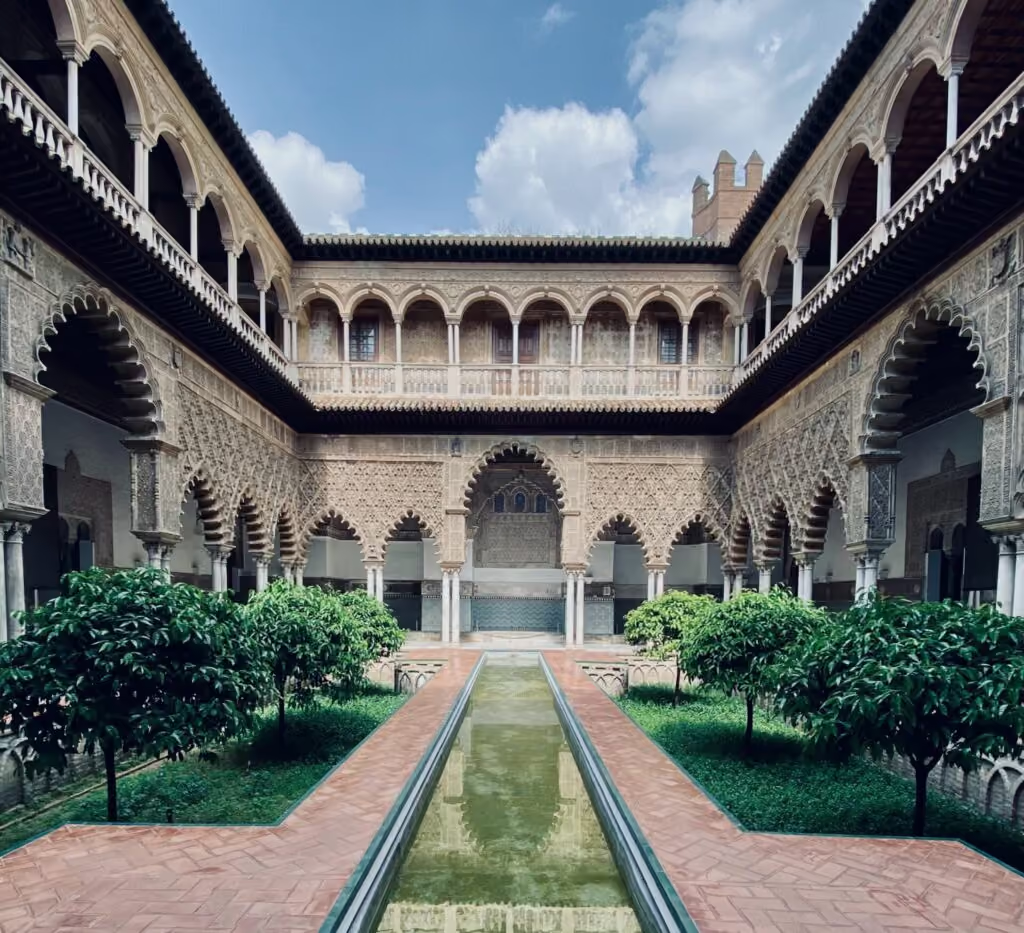
- The Alcázar, the royal palace in Seville: the King stays there when he is in Andalusia. Built by the Muslims and handed down from ruler to ruler, this fortified palace has been transformed many times over the centuries. Moorish, Renaissance and Baroque styles sit side by side.
- The Giralda: its Hispano-Muslim architecture and the superb panoramic view from this former minaret of Seville's mosque, now a bell tower, are well worth the visit.
- Seville Cathedral (Santa María de la Sede): it is the third-largest cathedral in the world and a UNESCO World Heritage Site. It holds the tomb of Christopher Columbus.
- Metropol Parasol, a modernist structure opened in the heart of Seville in 2011. Its strikingly original design looks like a group of mushrooms. It is 150 metres long and 28 metres high.
- The Alhambra: this architectural gem in Granada is, together with the Great Mosque of Cordoba, the most precious testimony to Moorish culture in the Iberian Peninsula. It is the most visited monument in Spain, with nearly 3 million visitors every year. “The red fortress” was built at the foot of the Sierra Nevada peaks. The palace, almost intact, was declared a UNESCO World Heritage Site in 1984. Its architecture is incredibly rich: the Alhambra blends Renaissance, medieval and Moorish styles in perfect balance.
- The Albaicín district in Granada: you are bound to come across a flamenco show around a street corner. That is the charm of this neighbourhood.
- The Alcázar of Cordoba: also well worth a visit, especially for its superb gardens.
- The Alpujarra, tucked into the Sierra Nevada mountains, is one of the most picturesque areas of Andalusia. Its white villages, green valleys and panoramic views make it one of the region's jewels.
To invest in Andalusia, or to buy elsewhere in Spain, book a video call with our advisers. They will help you see whether your project is feasible.
The best places to live in Andalusia
The region is vast and full of superb towns and villages, so a complete overview is impossible. We have chosen to focus on Andalusia's best-known cities.
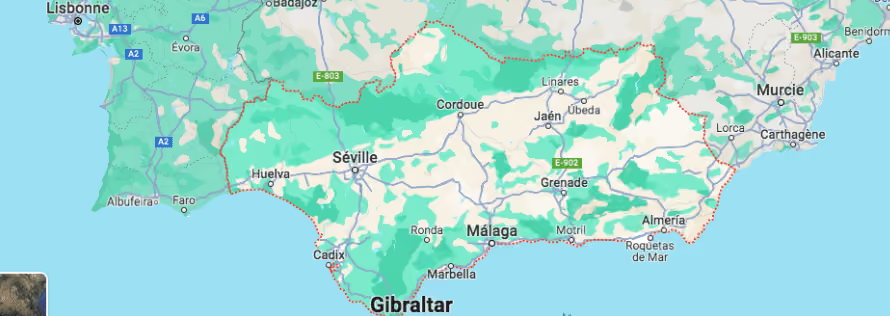
Source: Google
Seville or Málaga: ideal for family life
The Andalusian capital and the capital of the Costa del Sol, by the sea, are both perfect for family life. Your choice will depend on your habits and the daily life you want.
The first is more modern and lively, with fashionable bars and restaurants opening all the time. In January 2023, Seville had just over 693,000 inhabitants, according to official census data.
The second, Picasso's birthplace, is calmer and ideal for lovers of the seaside. It is home to 580,000 inhabitants and a growing number of foreigners. Foreign residents are indeed more and more numerous, while Spaniards are leaving the city. There are now more than 52,000 of them, according to the padrón (municipal register).
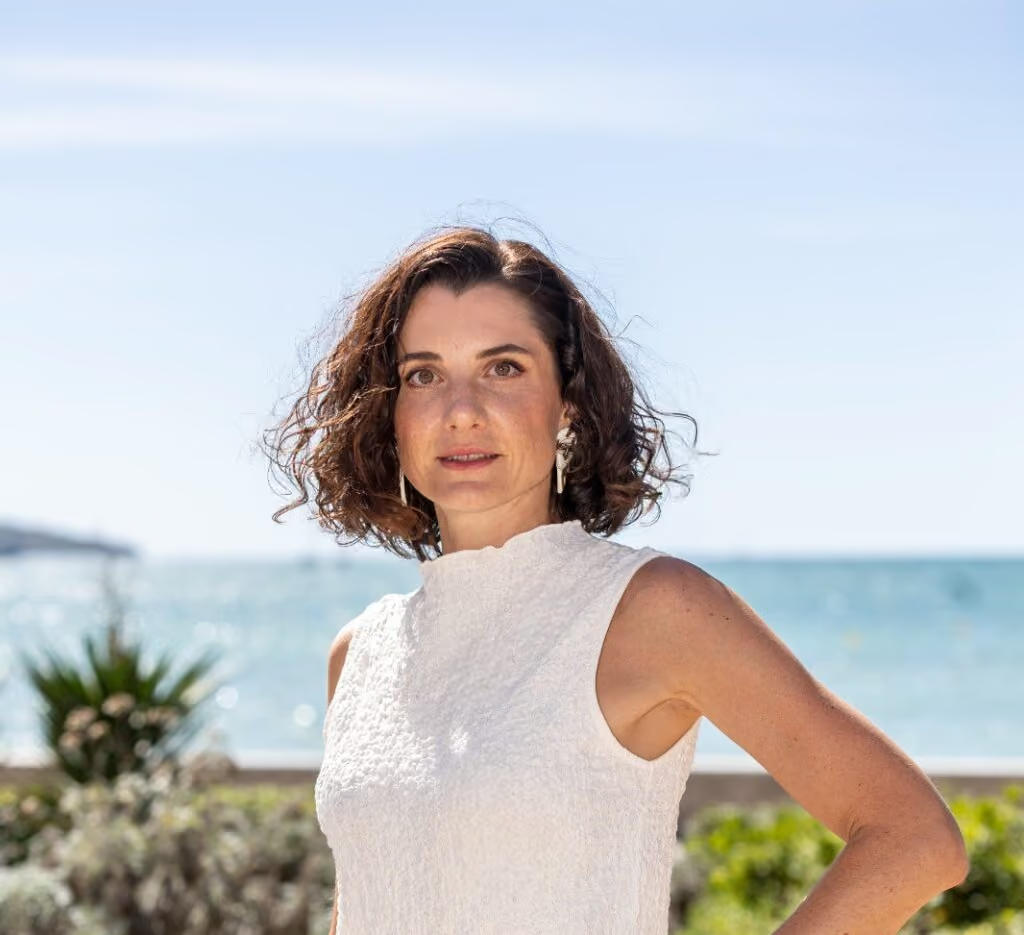
“Andalusians are very welcoming. Children are at the centre of attention, and family is a core value here. In Málaga, Rincón de la Victoria, near Benalmádena beach, or the seaside district of El Palo offer a peaceful setting, ideal for families, with lovely walks at the weekend. Many schools are open to diversity and cultural discovery: the Pratice N1 school welcomes children from all backgrounds and has a partnership with the city's museums for many after-school activities.”
For the best-rated schools in Seville and Málaga, see our section “Education and healthcare.”
Granada: the ideal Andalusian city for students
To study, choose Granada, the pearl of Andalusia! It is a lively university city with a young, dynamic atmosphere. The University of Granada welcomes 70,000 students a year. Daily life is very affordable, and the tradition of free tapas when you order a drink in a bar is real! That makes it a perfect destination for young people.
Enjoying retirement in Andalusia
As always, it depends on your temperament and the lifestyle you want. According to Marion Lissot, “Andalusia is ideal for retirement, and there is something for everyone: lovers of sea and sun, fans of nature and Andalusian culture, golfers, and party lovers who will enjoy the concerts in Fuengirola, the many restaurants and rooftop bars in Málaga and the sparkling nights out in Marbella. Very active retirees can enjoy water sports around Tarifa, swimming in the blue lakes of El Chorro, and more.”
If we had to pick just one town, Marbella and its surroundings would be our choice. If you want to do everything on foot in a holiday atmosphere all year round, it is the perfect town: ideal climate, close to Málaga international airport, lots of sports within easy reach (golf, hiking, swimming and more) and lively all year. You will enjoy a peaceful and active retirement there.
To make your dream of retiring to southern Spain come true, contact our team of property experts on the ground. They will help you buy the right property in Andalusia.
Education and healthcare
The Andalusian education system
As in the rest of Spain, the education system in Andalusia is good. State and private schools (we list the best below), renowned universities, major international schools: the range of education is complete.
Here are the most highly rated schools in Seville and Málaga, according to the reference platform Micole.
- Seville:
- Colegio San Pablo: a private religious school that aims for excellence. It offers school transport and after-school activities. Fees apply: allow up to €700 a month (depending on the services chosen).
- The British School of Seville: a private school near Seville. Teaching is bilingual and its methods focus on innovation. Fees range from €500 to €700 a month.
- Colegio José María Del Campo: a free state school, very well rated, which offers after-school activities.
- Colegio Pablo VI: a free school with an excellent reputation for children up to the end of primary. English and French are taught.
- Málaga:
- Colegio Maravillas: a semi-private school in Benalmádena. Teaching is bilingual in English. Fees are under €100 a month.
- Colegio Internacional Torrequebrada CIT: a private school in Benalmádena. Fees range from €300 to €700. Lessons are bilingual in English, and it offers a transport service.
- Colegio Sohail: a free state school in Fuengirola for children up to the end of primary. It offers after-school activities.
The health system in Andalusia
Foreign residents in Andalusia who are covered by the Spanish system have access to its public health service. As in the rest of the country, it is of excellent quality. They can also use private medical facilities.
To find out which formalities you need to complete to access it, read our guide: “Moving to Spain from the UK or US: the complete guide”.
As Spain's most populous region, it has more than a hundred medical facilities: 50 public hospitals and 58 private hospitals. There were more than 23,000 hospital beds in 2021.
Here are the region's three best hospitals according to Forbes magazine and Newsweek in their 2023 rankings.
Hospital Universitario Virgen del Rocío, Seville
It ranks 10th in Spain.
Address: Av. Manuel Siurot, s/n, 41013 Seville
Phone: +34 955 01 20 00
Hospital Universitario Reina Sofía, Cordoba
It ranks 25th in Spain.
Address: Av. Menéndez Pidal, s/n, 14004 Cordoba
Phone: +34 957 01 00 00
http://www.sspa.juntadeandalucia.es/servicioandaluzdesalud/hrs3
Hospital Quirónsalud Málaga
It ranks 50th in Newsweek's World's Best Hospitals 2023.
Address: Av. Imperio Argentina, 1, 29004 Málaga
Phone: +34 951 94 00 00
https://www.quironsalud.com/malaga
Alveo Search tip: before you move, get a European Health Insurance Card from your home country (the GHIC if you live in the UK). It lets you get treatment while you complete all the paperwork.
Our practical tips for settling into Andalusia
- Learn Spanish. It is the best advice we can give future expats. Many schools and language centres offer courses in every Andalusian city.
- Get out and about. Andalusians spend a lot of time outdoors and are known for being sociable. Bars are perfect places to get to know the locals.
- Take an interest in the local culture. There is no better way to fit in than to learn about the culture, soak it up and take part in local events.
- As we often say, do not overlook Facebook groups and online platforms such as Eventbrite. They are full of contacts, tips and meet-ups between expats. Go for it!
To buy a flat or a house in Andalusia, book a video call with our advisers based in the region. They will help you see whether your project is feasible.
Property in Andalusia
Purchase prices
The average price was €2,063/m² in September 2023. Málaga is by far the most expensive city, at €3,037/m². Allow about half that in Seville, €1,525/m², and a little less in Granada, €1,357/m². Prices fall as you move inland.
Rental prices
In Andalusia, renting cost €10 per square metre in September 2023. Rents are highest in Benahavís, in the province of Málaga: allow €16/m². It is a quiet municipality close to the coast but set inland. They are lowest in Baeza, in the province of Jaén: €4.30/m². It is a small town perched 700 metres above sea level with a remarkable heritage, part of which is listed by UNESCO.
With prices rising (+12.4% in one year), as everywhere in Spain, buying seems a better option.
Rental yields
According to the latest study by Fotocasa, the Spanish property portal, published in 2023, the average yield in Andalusia is very good: 6%. Málaga averages 5.6%. Vera, in the province of Almería, and El Ejido (Málaga) are the most profitable, with yields of 7.8% and 7.4% respectively.
Marion's tip: “Málaga is an ideal city to invest in: it has Spain's 3rd busiest airport, and the coast up to Marbella offers the best holiday rental yields (6 to 15%). Torremolinos, Benalmádena, Fuengirola, Mijas, Riviera del Sol, Calahonda and Marbella are all very attractive, and even in winter, tourists from northern Europe flock there. In the city of Málaga, holiday lets and medium-term lets work extremely well.”
Holiday lets
In Spain, holiday lets are tightly regulated. We have written a full article on the subject: “Tourist licences in Spain: the complete guide”.
Key point:
- Seville no longer issues them.
- As the rules are fairly unclear and keep changing, do not start a holiday rental project without talking to an expert.
Formalities
The formalities for settling in
If you are wondering which steps you need to take to settle legally in Andalusia, follow our guide: “Moving to Spain: the complete guide for future expats”.
To become a homeowner in Spain, contact us. Our teams will explain everything you need to know before starting this project and can support you from start to finish.
Good tax news in Andalusia
Andalusia is known for its favourable taxes for residents. Here is what to remember:
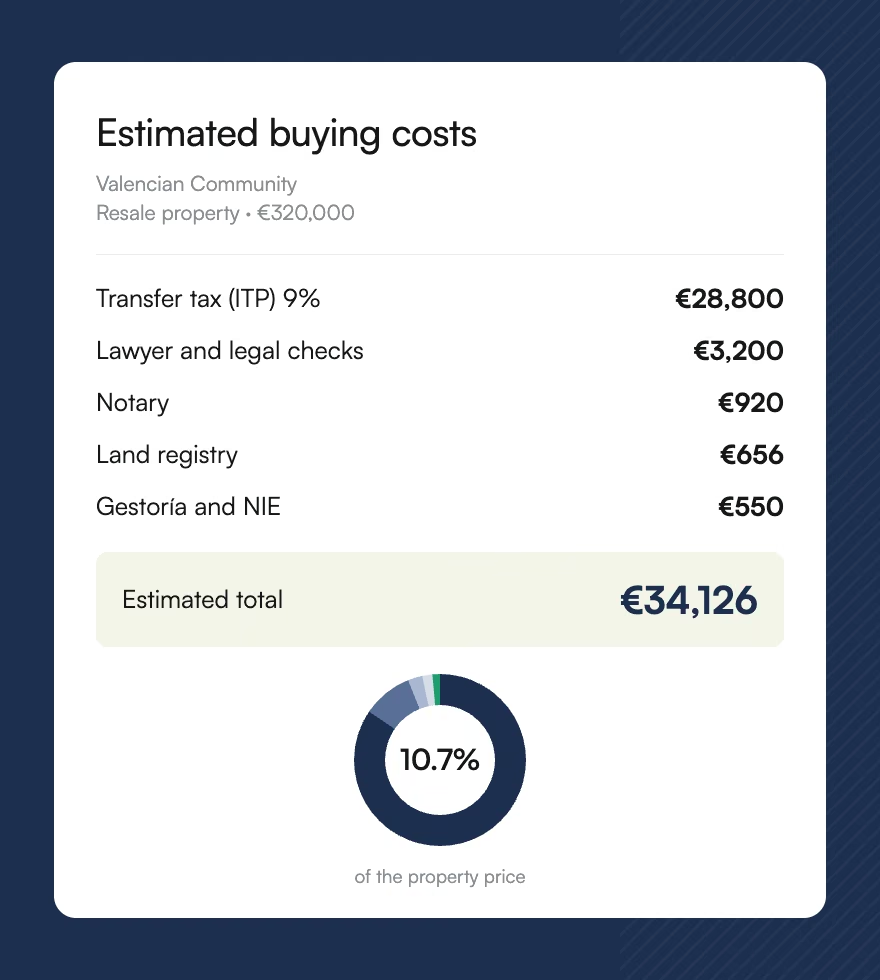
- ITP, the main tax due when you buy a resale property, is only 7%. To find out more about property taxes in Spain, see our practical guide: “Taxes on property in Spain.”
- Wealth tax abolished since 2022.
- Inheritance and gift tax almost abolished (in practice, a 99% reduction) since 2019.
Conclusion
Ideal quality of life, fascinating history, rich culture, nature on the doorstep, affordable property: no need to think twice. Make Andalusia your new home.
In short
FAQ
Where is it warmest in winter in Andalusia?
In winter, Andalusia is known for its mild, pleasant temperatures. Coastal areas such as the Costa del Sol are warmer in winter than inland or mountain areas.
What is the most beautiful part of Andalusia?
Andalusia is vast and full of magnificent places. Many consider the Alpujarra, tucked into the Sierra Nevada mountains, one of the most picturesque. Its white villages, green valleys and panoramic views make it one of Andalusia's jewels. We have a soft spot for the beaches of the Atlantic coast. The Mediterranean coast also offers breathtaking scenery.
What is the coldest month in Andalusia?
The coldest month in Andalusia is usually January, but temperatures rarely drop below 10°C.
What is the weather like in Andalusia in winter?
In winter, Andalusia has a mild, sunny climate. Days are usually sunny with pleasant temperatures, which makes it a popular destination for visitors escaping harsh winters elsewhere in Europe and for people who like to live outdoors all year round.
When does it rain in Andalusia?
Rain in Andalusia is more frequent in autumn and spring, but rainfall usually stays moderate.
Is Andalusia expensive?
In Andalusia, everyday costs, including housing, food and transport, are more affordable than elsewhere in Europe, which makes it an attractive option for many expats and travellers. Allow €1,200 to €1,500 a month per person for a modest lifestyle. With €2,000 a month, you will live well.
Planning to buy a property in Spain?
Get a call back from one of our experts on the ground.
Thomas Rouer is the founder of Alveo Search and the CEO of the Alveo group. Based in Spain for almost ten years, he develops property services designed for the specific needs of foreign buyers.
His expertise covers every aspect of buying property in Spain: understanding the market, searching for and selecting properties, negotiation, financing, paperwork, tax and securing the purchase process.

Our resources for buying in Spain