Français
 English
The cheapest places to buy property in Spain

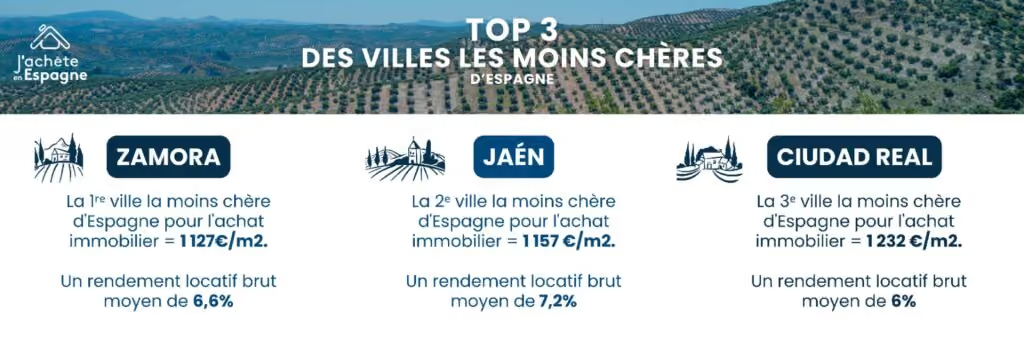
- The 2024 podium: Zamora comes first with €1,127/m², ahead of Jaén at €1,157/m² and Ciudad Real at €1,232/m², while the national average is just over €2,000/m² after rising by more than 7% in a year.
- Ciudad Real: located in Castilla-La Mancha, the cheapest region in Spain at €922/m², it has 75,000 inhabitants and lies 200 kilometres south of Madrid, one hour by train. Transfer tax (ITP) is 9% and the rental yield is close to 6%, against a national average of 6.4%.
- Jaén: Andalusian transfer tax (ITP) is 7% and the gross rental yield reaches 7.2%, fourth among provincial capitals. La Magdalena goes down to €751/m², San Felipe to €899 and Puente Tablas to €912; the university has 11,000 students.
- Zamora: 60,000 inhabitants, transfer tax (ITP) at 8%, a 6.6% yield and rents of €5.8/m² in spring 2024. The local job market is less dynamic, however.
- Key point: these inland cities are still overlooked: in 2023, they accounted for 4.3%, 2.4% and 1.4% of purchases by foreigners.
Dreaming of buying a property in Spain without breaking the bank? Your budget is limited and every property blog says prices are rising? That is true, but there are hidden opportunities, paths still to explore and areas that foreign buyers have not yet discovered. Investing in Spanish property in 2024 is still an excellent idea, as long as you know where to look. Alveo Search shares its top 3 cheapest and most promising cities to invest in Spain.
Property prices in Spain in early 2024
In Spain, a square metre sells for just over €2,000 on average. Even so, prices have risen sharply in recent years in “la Piel de Toro” (“the Bull's Hide”, one of Spain's nicknames). In just one year, they jumped by more than 7%across the country.

Property prices in Spain in February 2024. Source: Idealista
Despite the long series of rate rises decided by the European Central Bank to tackle post-pandemic inflation, the price per square metre did not fall in sunny Spain, as demand stayed strong. In several other European countries, by contrast, prices fell sharply as potential buyers held back. To find out more about the health of the Spanish property market, read our article: “Spanish property market trends in early 2024: everything you need to know”. With the context set, time for some nuance: in some Spanish cities, housing is still very affordable and can suit first-time buyers, investors looking to diversify their portfolio or anyone wanting a second home for less. These are the cities we have chosen to highlight today.
The podium of the cheapest provincial capitals
According to the latest data from the Pisos.com portal, at the end of February 2024, and matching data from Idealista, the cheapest cities are:
- Zamora, unbeatable at €1,127/m²;
- It is closely followed by Jaén: €1,157 per square metre according to Idealista.
- In third place on the podium is the lovely city of Ciudad Real, dear to Cervantes, at €1,232 per square metre.
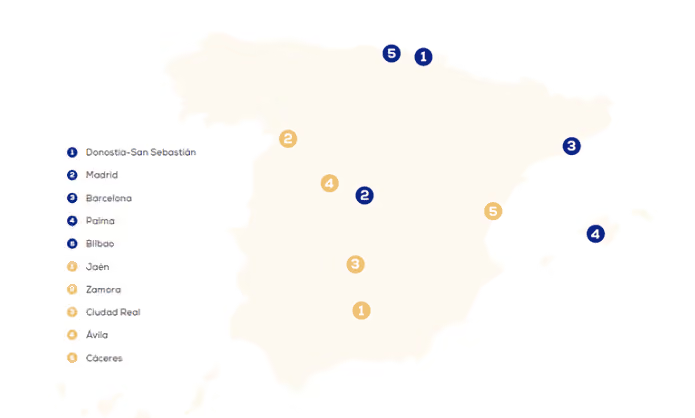
Caption: the most expensive (blue) and cheapest (orange) provincial capitals in Spain. Source: Pisos.com
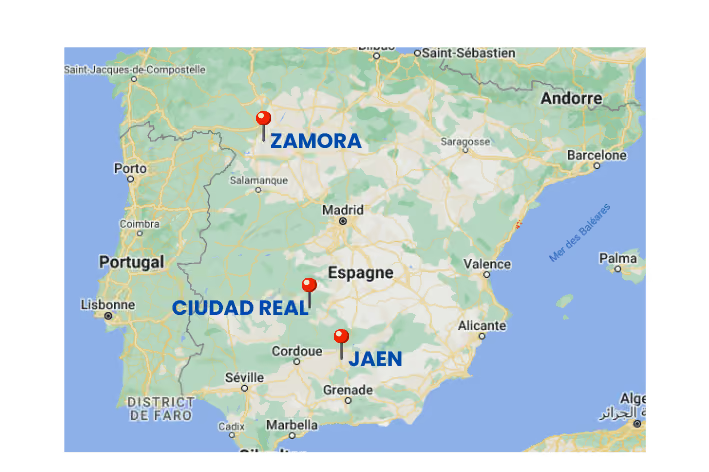
Caption: top 3 cheapest Spanish cities to buy in. An overview of the three cheapest cities in Spain and their many strengths, not only for property. If you would like to buy in these cities, still overlooked by international buyers, or anywhere else in Spain, contact us. Alveo Search supports English-speaking buyers on the ground in Spain.
Ciudad Real, third on the podium
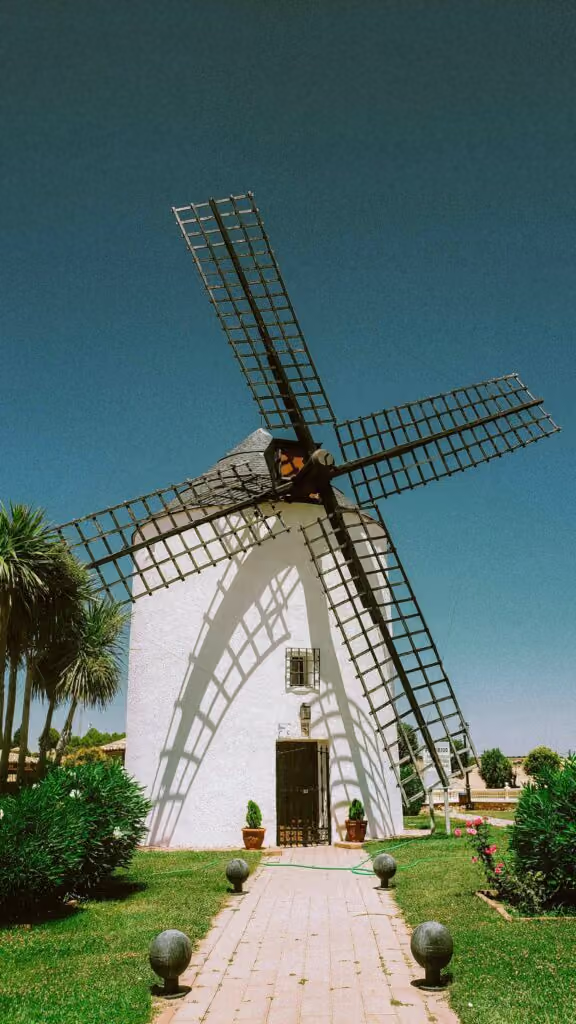
Castilla-La Mancha, the cheapest autonomous community in Spain
Ciudad Real, capital of the province of the same name, lies at the heart of the autonomous community of Castilla-La Mancha, the cheapest region in the country at the start of 2024 (€922 per square metre on average).

Although prices in the region rose by 3.5% in 2023, they remain far from their 2007 peak of €1,424 per square metre on average: a little over 35% below it, which leaves plenty of room for growth.
Property and returns in Ciudad Real
Let's get down to details.
- Purchase prices Ciudad Real is the third cheapest city on the Spanish property market: €1,232/m², which is €800 less than the national average. From 2011, property prices in the city were mostly heading down, but they started rising again after the Covid crisis. In March 2024, they were 4.9% higher than in the same period of 2023. In early 2024, they were still 34% lower than when the Spanish property bubble burst, when they peaked at €1,877/m² on average. As for the region as a whole, this points to good growth in the value of your property in the years ahead.
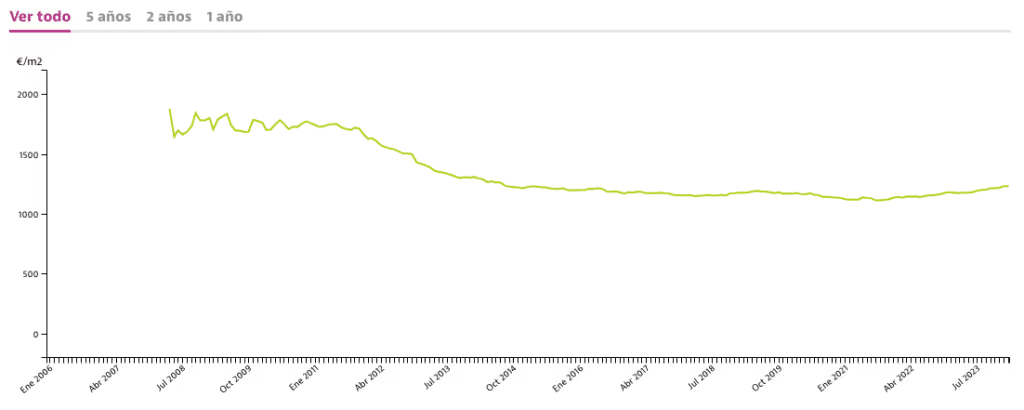
- Caption: property prices in Ciudad Real from 2006 to 2024. Source: Idealista. The cheapest neighbourhoods in the city, from cheapest upwards, are:
- Ciudad Jardín (€951/m²);
- La Morería (€1,069/m²);
- and Plaza de Toros (€1,098/m²).
- Property tax in the city When you buy a property in Spain, you have to pay ITP, the property transfer tax (Impuesto sobre Transmisiones Patrimoniales), generally within 30 working days of the purchase. Its rate depends on the autonomous community where you invest and ranges from 4% to 13%. In Castilla-La Mancha, ITP is 9%, one of the higher rates in the country. It is something to factor in when setting your budget and arranging your financing. To find out more about the buying process in Spain, read our guide: “How to buy a property in Spain: the complete guide”
- Rental yields in Ciudad Real In Ciudad Real, the rental yield is close to 6%, in line with the national average (6.4%). Over one year, rents in the city rose by almost 7%, which is a good sign. The residential areas around the university of Ciudad Real (which has 8,000 students) offer good buy-to-let opportunities with a low risk of empty periods. The university is near Puerta de Toledo. In this area, a square metre sells for €1,444 and rents for €6.9 (for comparison, the national average rent is €12.6/m²). Investors who get professional support can raise their rental yields considerably. Here, renting by the room could pay off well.
Key facts: geography, history and population of Ciudad Real
The city is ideal for property investment, and it has a number of other strengths that add to its potential. Ciudad Real is home to just over 75,000 people over 283 km². A city of tradition and culture, it is famous for being immortalised by Miguel de Cervantes in “Don Quixote”. He made it the setting of this classic of Spanish literature, and book lovers flock to visit it. Here are 3 key dates in the history of Ciudad Real:
- 1255, the founding of Ciudad Real: the city was founded by King Alfonso X of Castile as a Christian stronghold facing the Muslim territories during the Reconquista. The city was laid out around a large central square (the Plaza Mayor), which marked the start of its urban development.
- 1420, construction of the Cathedral of Santa María del Prado: the cathedral is one of the city's most iconic monuments. Gothic in style, it has been altered many times over the centuries but has always been a major cultural landmark for the city.
- 1808, the Spanish War of Independence: Ciudad Real played a leading role in this war against the Napoleonic occupation. In 1808, the city was the scene of resistance against the French troops.
One of the most important points to consider is the city's ideal location. It is only 200 kilometres south of the Spanish capital, and many professionals commute to Madrid by train. The journey takes barely an hour, a clear advantage for residents and landlords alike.
The economy of Ciudad Real
Far from relying on a single sector, Ciudad Real's economy is diverse and dynamic. It draws on a range of activities: wine growing and olive oil production are at the heart of local farming, while the food, metal and construction industries also have their place despite the modest size of the industrial sector. The regional university attracts students and researchers, which, as we have seen, boosts the property market as well as services and leisure options. Ciudad Real also has “inland” tourism, mostly domestic travellers, which is gaining ground. The province welcomed 10 million visitors in 2023.
Quality of life and cost of living
Life is good in Ciudad Real: quality of life is high and costs are moderate. Numbeo, the platform that compares the cost of living in cities around the world, tells us that:
- Consumer prices including rent in Ciudad Real are 36.0% lower than in Madrid
- Rents in Ciudad Real are 68.4% lower than in Madrid
In terms of quality of life, Ciudad Real scores well on safety (86), health care (80), climate (82), pollution (27) and traffic (20). Property is cheap even by Spanish standards: at €1,232/m², it costs around €800 less per square metre than the national average.
Where to live in Ciudad Real?
- El Pilar, for its peace and quiet and its parks;
- The centre, especially around the Plaza Mayor, ideal if you love authenticity and want all services within walking distance;
- And Las Casas, on the outskirts, for a daily life closer to nature.
Must-see places in and around Ciudad Real
- The Plaza Mayor and the majestic Cathedral of Santa María del Prado, the beating heart of Ciudad Real.
- If you love nature, you will enjoy Gasset Park, a haven of peace in the middle of the city.
- For history and art lovers, the Provincial Museum reveals the region's archaeological and artistic treasures.
- On the city's doorstep, Las Tablas de Daimiel National Park invites you to discover rare wetland ecosystems, while the stunning protected area of Cabañeros National Park amazes visitors with its biodiversity.
- The castle and impressive ruins of Calatrava la Nueva tell centuries of history and culture.
Jaén: the second cheapest city in Spain to buy property
The property market in Jaén
- Prices To become a homeowner in the lovely Andalusian city of Jaén, you only need to spend €1,157 per square metre. A 100 m² home will cost you just over €100,000 (30% less than in 2008, when prices peaked in the city). A great opportunity for buyers looking for a main home, a second home or a buy-to-let investment with strong potential.

- The cheapest neighbourhoods to buy in the city are:
- La Magdalena, at €751 per square metre, extremely low prices;
- San Felipe, €899/m²;
- And Puente Tablas, €912/m².
- Property tax in Jaén Jaén scores extra points on property tax. In Andalusia, transfer tax (ITP) is 7%. That is two percentage points less than in Ciudad Real, which is enough to make a real difference when you buy. To find out more about property tax in Spain, read our practical guide: “Property taxes in Spain”.
- Rental yields
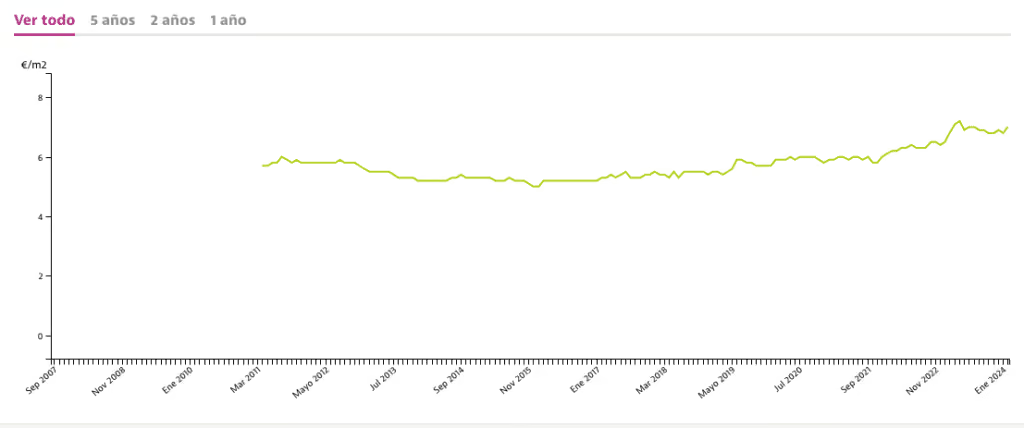
- Rents in Jaén since 2007. Source: Idealista
- With an average gross rental yield of 7.2%, Jaén is the fourth most profitable provincial capital in Spain (after Lleida, Murcia and Huelva), which makes it an excellent choice for investors. In the city, a flat rents for €7/m², €5.6 less than the national average. Rents have been rising since 2007, which is good news for owners. In 2023, they rose by 2.2%. As with Ciudad Real, Jaén is a university city. The university, in the north-east of the city, drives the property market. For a safe investment with boosted returns, this area is a smart choice. Well optimised (choice of address, type of rental, management and so on), an investment here can exceed a 10% gross yield.
- Planning to buy property in Andalusia? Book a call online with our experts.
Where to live in Jaén?
- The historic centre, for its heritage and liveliness;
- El Bulevar is ideal for families or retirees looking for both modern living and peace and quiet;
- La Guardia is an ideal place to live close to nature and enjoy more space.
Living well for less
Jaén is said to be the seventh cheapest city to live in Spain according to Traveler's ranking. The Andalusian city offers a good quality of life at a moderate cost. Day-to-day expenses, from housing to food (the local cuisine is delicious), are much lower than elsewhere in Spain, allowing a comfortable lifestyle without stretching your budget.
Andalusian heritage, between mountains and olive groves
Jaén lies in a hilly region known for its vast olive groves, which produce “the best olive oil in the world”, according to locals. The landscape is dominated by the Sierra de Cazorla and its green waters, which create breathtaking views. The city is steeped in history, shaped by the Roman, Arab and Christian influences behind its architecture and culture. We will come back to this in our top 3 must-see visits.
A dynamic economy
Jaén has a solid and dynamic economy.
- Farming, and olive oil production in particular, is the backbone of Jaén's economy. The region is the world's largest olive oil producer, which has earned it the nickname of “world capital of olive oil”. This farming activity has a strong influence on the local economy, from production to distribution and export (110,000 tonnes sold in December 2023 alone).
- Tourism: Jaén's rich historical and cultural heritage attracts visitors interested in its medieval history, castles, churches and Arab baths. Cultural tourism, along with rural and nature tourism in the surrounding nature parks, makes a significant contribution to the local economy. In 2023, 700,000 visitors discovered the province.
- The University of Jaén attracts 11,000 students and professionals, boosting the local economy and the property sector.
- Renewable energy: Jaén is investing in renewable energy, especially solar and wind power, making the most of its favourable climate and wide open spaces. This growing sector is a source of investment and new jobs for the future. In 2023, the city received €22 million in support from the Ministry for the Ecological Transition.
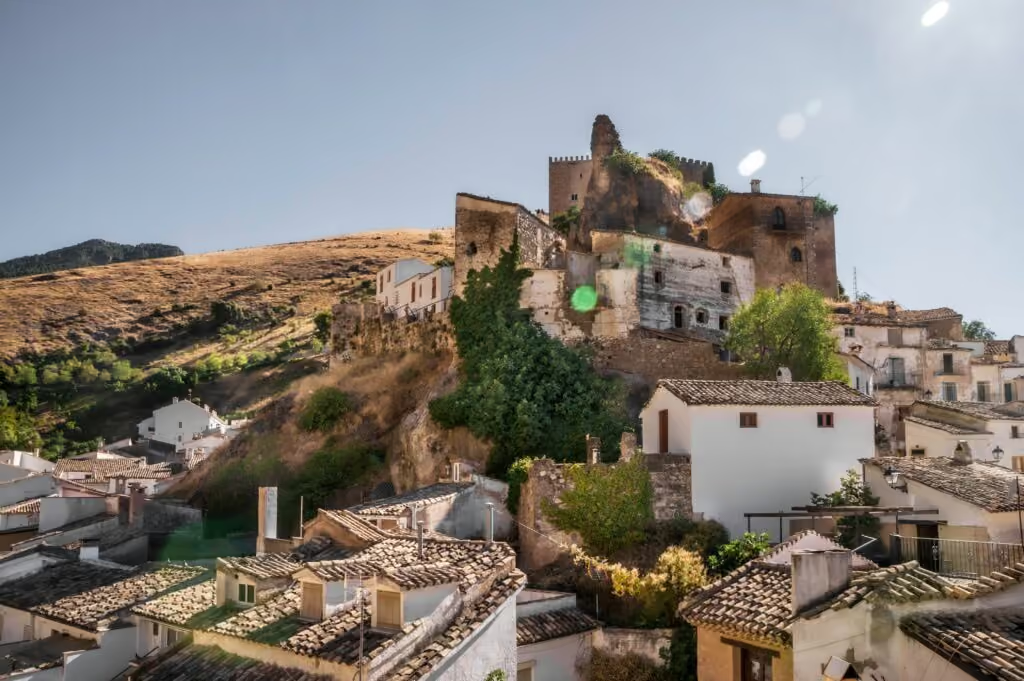
Top 3 must-see visits in and around Jaén
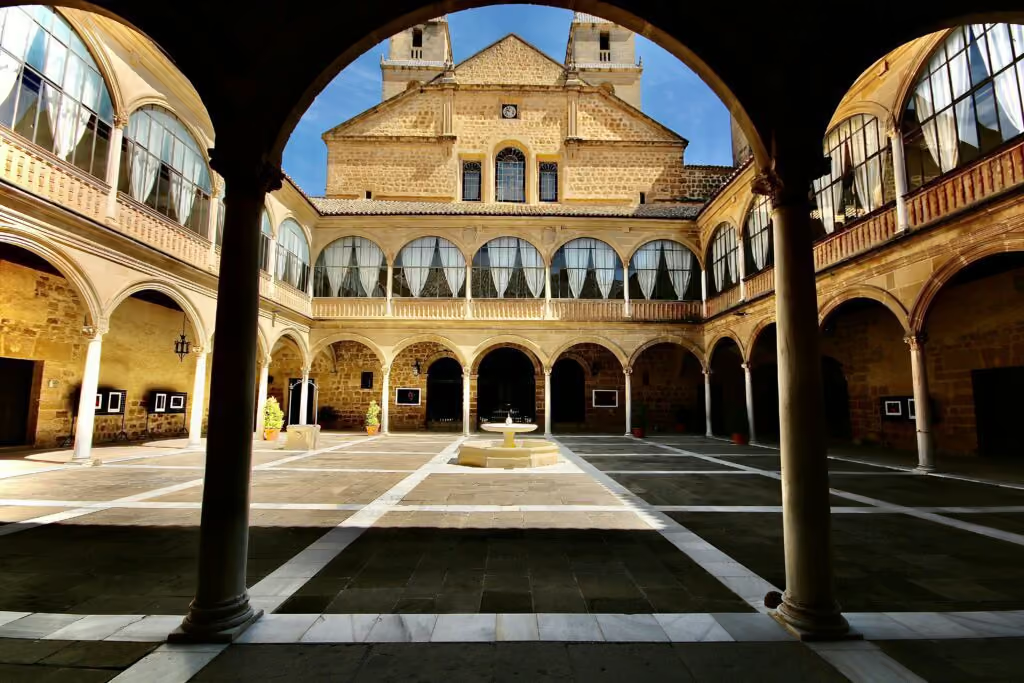
- Jaén Cathedral: the Cathedral of the Assumption of the Virgin, in the heart of Jaén, is a major work of the Spanish Renaissance. Designed by the stonemason Andrés de Vandelvira in the 16th century, it impresses with its majestic façade and an interior rich in sacred art. It also holds the relic of the Holy Face (Santo Rostro), venerated by the faithful.
- Santa Catalina Castle: overlooking the city from its hilltop, Santa Catalina Castle offers an exceptional view over Jaén and the surrounding olive groves. In this fortress of Arab origin, rebuilt in the Middle Ages, every stone is steeped in history. A visit lets you explore its walls and towers and dive into the region's turbulent past.
- The Arab baths: among the largest and best preserved in Spain, the Arab Baths of Jaén, beneath the Villardompardo Palace, date from the 11th century and are well worth a visit.
- Breaking our top 3 rule, two nearby towns are worth the detour: Úbeda and Baeza. Both are recognised as UNESCO World Heritage Site for their Andalusian Renaissance monuments. Not to be missed.
To find out all about life in southern Spain, read our full guide: “Living in Andalusia”.
Zamora: the cheapest city in Spain to buy property
It is in the autonomous community of Castilla y León that you will find the cheapest provincial capital in the country: Zamora. Here is an overview.
Zamora essentials: history, geography and population
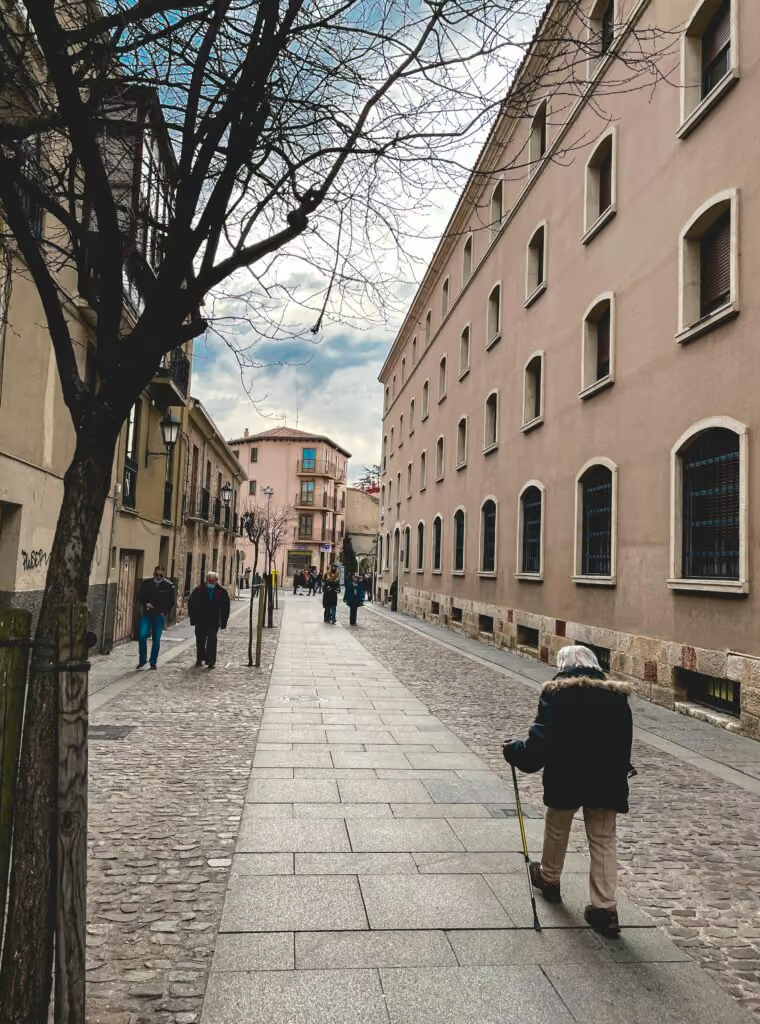
Before we get to the figures, here is what you need to know about the small city of Zamora, little known to international investors and largely ignored by foreign tourists (the province welcomed 230,000 visitors in 2023, of whom only 29,000 came from abroad). Located in north-west Spain, in a splendid natural setting on the banks of the Duero river (which flows into the Atlantic on the Portuguese side), Zamora is surrounded by green landscapes and well-preserved medieval architecture. Nicknamed the “city of the Romanesque” because of its exceptional Romanesque heritage, the city played an important role in the Middle Ages and has kept an almost intact historic centre, a reminder of its glorious past. The 3 key dates in its history are:
- 1174, construction of Zamora Cathedral begins. The building, now iconic, is dedicated to the Assumption of the Virgin Mary. It shows the spiritual and cultural wealth of the city in medieval times.
- 1476, the Battle of Toro takes place near Zamora. This conflict was a turning point in the War of the Castilian Succession. Ferdinand's victory strengthened his power and helped unify Spain under the Catholic Monarchs, Ferdinand and Isabella.
- 1833, the Spanish territorial reform sets the province of Zamora within its current borders. This reorganisation strengthened the city's role as the administrative and economic centre of the area.
With around 60,000 inhabitants, Zamora is a human-scale city where life is good. Locals are known for their warm welcome and relaxed way of life. It has a lot to offer anyone looking to escape the bustle of big cities. Planning to buy property in Spain? Book a call online with our experts to explore all your options. This first call is free and comes with no obligation.
Property in Zamora: unique opportunities for investors
- Prices €1,127/m², €900 less than the national average! Whether for a main home or a buy-to-let investment, Zamora has excellent potential for growth in value. It is also one of the few cities where property prices fell in 2024. A square metre cost 1.5% more at the same time last year.

- Investors ready to take the plunge could buy property 30% cheaper than in 2011, which bodes well for future capital gains.
- Property tax in Zamora Unlike Castilla-La Mancha (9% in Ciudad Real), in Castilla y León the property transfer tax (ITP) is 8%, and 10% on the part of the price above €250,000.
- Rental yields in Zamora In terms of rental yield, Zamora reaches 6.6%. An excellent average for such a small city, which it owes to its exceptionally low prices. Even though rents have risen steadily since 2020, they remain very low in Zamora. Expect €5.8/m² to rent in the city in spring 2024, 6.6% more than in the same period of 2023 and less than half the national average.
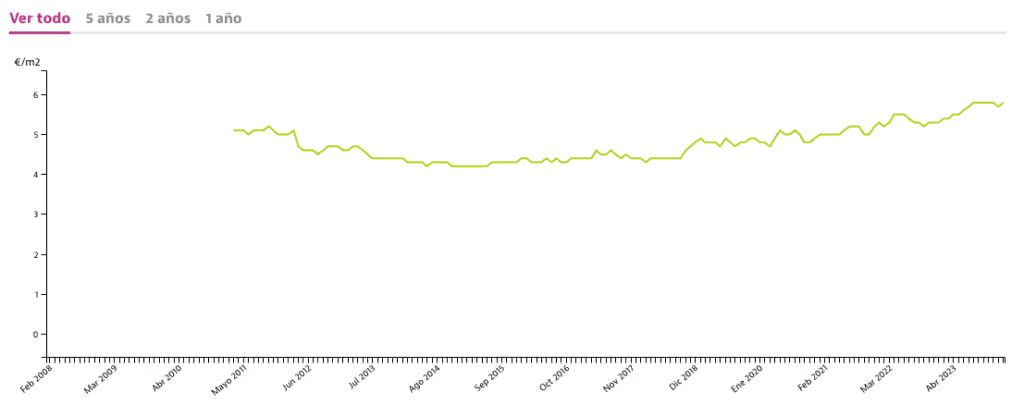
- Caption: rents in Zamora from 2008 to 2024. Source: Idealista. The cheapest neighbourhoods in the city are:
- Pinilla (€954/m²);
- Hiniesta-Villapando (€999/m²);
- and Los Bloques (€1,095/m²).
Where to live in Zamora?
- The historic centre, for its charm, accessibility and range of services;
- Pinilla, for its green spaces and peace and quiet;
- And finally San Lázaro, for its accessibility and full range of services.
An ideal setting at a low price
Zamora offers a high quality of life at a modest cost. It is said to be the third cheapest city in Spain for daily life (expect to save 20 to 30% compared with most other cities). Safety, closeness to nature, an efficient transport network and more: living in Zamora has many advantages. Be aware, however, that the city is not as economically attractive as Ciudad Real and Jaén, and you could struggle if you needed to find a job there.
Must-see visits
The centre of Zamora is a bridge between history and modern life.
- Zamora Cathedral: overlooking the city, this 12th-century Romanesque cathedral is famous for its Byzantine dome, unique in Spain.
- Zamora Castle: perched on a hill, the castle, with its fortified walls and towers, offers a stunning view of the city and the Duero river. Time seems to have stood still there.
- The Holy Week Museum: Zamora is famous for its Holy Week processions. They are listed as being of International Tourist Interest and are what draws tourists to the city (there were 150,000 visitors for this period alone in 2023). The Semana Santa museum (closed for works until further notice) displays religious sculptures linked to this major event.
The surroundings of the city invite you on a journey through the beauty of rural Spain.
- Lake Sanabria Nature Park: this park is home to the largest glacial lake in the Iberian Peninsula, surrounded by dense forests and mountains. A paradise for hikers and nature lovers.
- The Toro vineyards: the Toro area, near Zamora, is renowned for its powerful, aromatic wines. Discover the secrets of local winemaking and taste wines with real character.
The Stone Bridge: this medieval bridge over the Duero has witnessed the city's history and is an ideal viewpoint to watch the sunset over Zamora.
Why are these cities still so cheap?
Cities that foreign buyers overlook: the figures
According to Idealista, of all the property purchases made by foreigners in Spain in 2023:
- 4.3% were in the province of Ciudad Real;
- 2.4% in the province of Jaén;
- 1.4% in Zamora.
Why do these cities not attract foreign investors?
Ciudad Real, Jaén and Zamora fly under the radar of foreign buyers largely because they are in inland Spain, which some call “empty Spain”, far from the coast. They do not get the same media coverage as big cities such as Barcelona, Madrid, or popular coastal areas on the Mediterranean such as the Costa Blanca or the Costa del Sol.
- It should also be noted that the lack of a large expat community in these areas can make them less attractive to buyers from abroad.
- Lack of knowledge about the quality of life, the cost of living and the potential of these cities is another obstacle.
- Investing in lesser-known areas can seem riskier without the promise of high immediate returns, despite the long-term potential.
Without a deep understanding of the local culture and market, it can be hard for international investors to fully appreciate what these cities have to offer. That is why it makes sense to turn to a property specialist when you are ready to invest. Contact us: it is what we do.

Conclusion
Choosing to invest in cities such as Ciudad Real, Jaén or Zamora means enjoying favourable buying conditions and strong potential returns, and also accessing a less saturated property market. It is ideal for first-time buyers or seasoned investors who want to diversify their portfolio.
FAQ
What are the cheapest cities to invest in property in Spain in 2024?
In 2024, the cheapest cities to invest in property in Spain are Zamora, Jaén and Ciudad Real, with prices per square metre of €1,127, €1,157 and €1,232 respectively.
Which city has the most room for property price growth, according to early 2024 data?
Ciudad Real has plenty of room for price growth: prices are still 34% lower than in 2008, the year the Spanish property bubble burst, which points to significant potential for appreciation.
What are the advantages of investing in Ciudad Real, Jaén or Zamora?
Low prices, good rental yields, long-term growth potential and a growing property market, safe from the saturation that threatens the coast and Spain's big cities
Why do inland cities such as Ciudad Real, Zamora and Jaén attract fewer foreign investors despite their attractive prices?
These cities attract fewer foreign investors mainly because they are in inland Spain, far from the coast, and do not get the same media visibility as better-known destinations. In addition, the lack of a large expat community and limited knowledge of their economic potential can make them less attractive for investment projects.
Why invest in buy-to-let property in Spain?
Mainly because property is cheap and rental yields can reach 10% with the help of a market expert. In some regions, tourism drives the market. Property taxation can also be favourable.
Planning to buy property in Spain? Get a call back from one of our advisers on the ground.
Thomas Rouer is the founder of Alveo Search and the CEO of the Alveo group. Based in Spain for almost ten years, he develops property services designed for the specific needs of foreign buyers.
His expertise covers every aspect of buying property in Spain: understanding the market, searching for and selecting properties, negotiation, financing, paperwork, tax and securing the purchase process.

Our resources for buying in Spain