Français
 English
Living in Tenerife: the complete guide to moving there

- Population: 965,857 inhabitants on 1 January 2025, including more than 245,000 foreign residents, or about 25.4% of the total, up from 210,000 three years earlier.
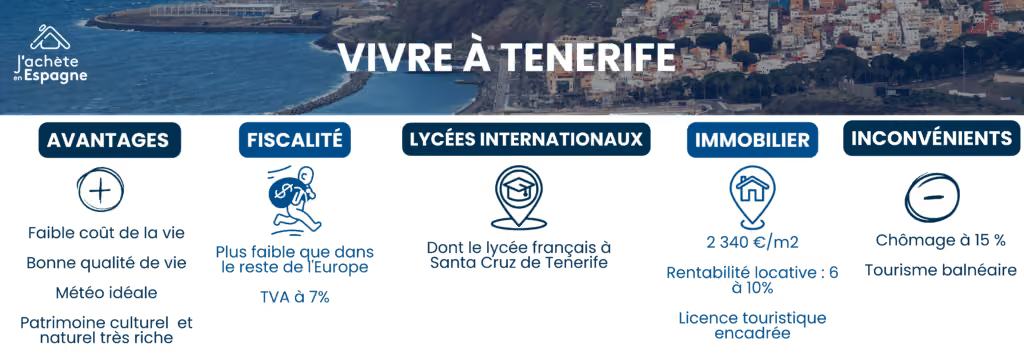
- Purchase prices: €3,604/m² in the province of Santa Cruz de Tenerife in April 2025, up 17.51% in a year. Adeje leads at €4,814/m², followed by Arona at €3,696, Puerto de la Cruz at €3,019, Santa Cruz at €2,305 and La Laguna at €1,912.
- Rents: €15.54/m² in April 2025, up 4.09% in a year, with €23.12/m² in Adeje and €10.81/m² in La Laguna. Some municipalities have restricted tourist licences.
- Daily life: tram at €1.35 per trip, TITSA buses from €1 to €3, and fuel among the cheapest in Spain. Unemployment stood at 13.5% in the Canary Islands, against 10.9% for Spain as a whole, in the first quarter of 2025.
- Key point: quality of life and safety score well, but wages and purchasing power remain lower than on the mainland.
Knowing mainland Spain well does not mean you know the Canary Islands. The archipelago of 8 islands lies off the coast of North Africa, about a hundred kilometres from the Sahara, in the Atlantic Ocean. It has a unique identity. The Canaries have many strengths, and Tenerife in particular.
Tenerife is the largest island in the archipelago. A volcanic island where European, African and American influences meet, Tenerife is a land of contrasts.
Its culture, between tradition and modernity, its stunning and varied nature, its ideal climate and the quality of its healthcare and schools: Tenerife has a lot going for it.
If you dream of living in Tenerife, join us on a journey of discovery.
Why live in Tenerife?
On 1 January 2025, Tenerife had 965,857 inhabitants, making it the most populated island in the Canaries and in Spain. More than 245,000 of them are foreign residents, about 25.4% of the total population. This is a significant increase on the 210,000 foreign residents recorded three years earlier.
The foreign population living in Tenerife has kept growing. In 12 years, it has risen from just over 146,000 to 240,000 people, all nationalities combined, according to the latest official INE data. Many of them come from other European countries, including the UK. Here is why.
A mild climate all year round
The Canary Islands are nicknamed “the land of eternal spring” because temperatures range from 20 to 30 degrees all year round. Thanks to its location and the trade winds that sweep across the ocean, the heat is never stifling. The Canarian climate is also one of the main reasons behind many investments in the islands.
Tenerife has three different microclimates: the coast, the mountains and the area in between. There can be up to 10 degrees of difference between them. Logically, it is warmer on the coast and cooler at altitude.
An island between nature and modernity
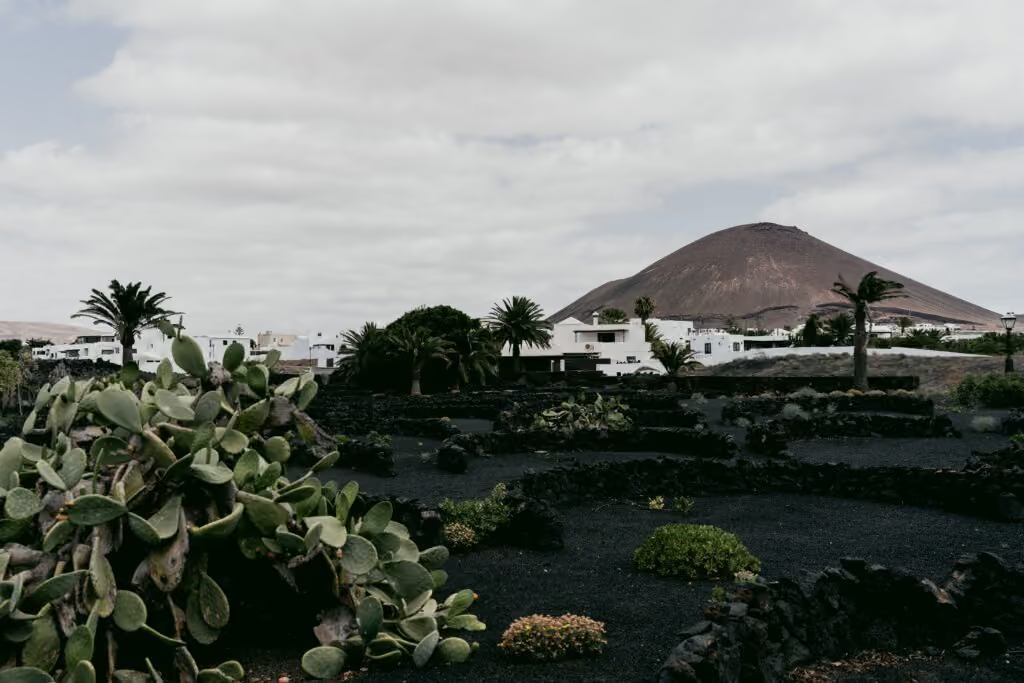
As we have said, at the heart of the archipelago, Tenerife stands out for its highly contrasting landscapes. Desert sits next to the coast and its beaches, and subtropical forests border volcanic land and lunar landscapes. It is rare to find so much natural variety, so easy to reach, on a single island.
Outdoor sports are everywhere (water sports such as surfing and kitesurfing, hiking, golf, cycling, horse riding and more), and theme parks welcome families all year round.
But Tenerife offers more than spectacular nature. It is also an island with modern, well-designed infrastructure for residents and visitors alike. If you live there all year or work remotely from the island, you will find good medical centres, international schools, well-equipped coworking spaces and excellent internet coverage, including in rural areas.
The island is also home to lively cities such as Santa Cruz and La Laguna, with museums, galleries, fine restaurants and a wide range of cultural events. Tenerife combines the authenticity of an island rich in traditions with the comfort of modern living, which makes it a popular choice for people looking for a balanced lifestyle, between wild nature and easy modern comforts.
A large international community
For years, Tenerife has attracted a growing international community, with many English speakers among them: retirees, families, remote workers and entrepreneurs. This makes it much easier to settle in for newcomers who do not yet speak fluent Spanish.
There are active groups on social media, especially Facebook, where expats share tips, advice on paperwork and recommendations for professionals (doctors, tradespeople, etc.). These communities are also a great way to make friends and take part in local events.
Many shops and services run by expats have also opened on the island: artisan bakeries, restaurants, cheese shops and estate agents that work with foreign buyers, which helps you keep some familiar habits while settling abroad.
Retiring in Tenerife
Many of the expats in Tenerife are retirees who want to age well. The pleasant climate lets them live outdoors every day, which is excellent for their health. They can do gentle sports, observe the protected wildlife and plants, and much more, all year round.
As the cost of living is much lower than in the UK or northern Europe, retirees live better there on the same pension. Those who receive a state pension from the UK or an EU country can use public healthcare with an S1 form.
As we have said, Puerto de la Cruz is often the first choice of retirees.
For more information on the paperwork needed to settle there, read our guide: “Retiring in Spain: the complete guide”.
Living in Tenerife with your family
A slower pace of life than in most big cities, outdoor sports all year round, a lower cost of living and a feeling of safety: Tenerife is a paradise for families. Day to day, it is easy to fit everything in: school and work during the week, shopping in a big town centre on Saturday, kitesurfing on Sunday and a sunset on the beach in the evening.
Note that private and international schools charge fees, and you also need to budget for meals, transport and after-school activities.
Moving to Tenerife: the paperwork
NIE, residence and social security
Before you settle in Tenerife, some paperwork is essential. The first step is to get an NIE (Número de Identificación de Extranjero), the identification number foreigners need in Spain. You need it for many things: opening a bank account, working, renting or buying a property, and so on.
To find out more about the NIE and how to get it, read our full article on the subject.
Finally, if you work or earn income in Spain, you need to register with Social Security. This gives you access to the public healthcare system, which is known for its quality.
For personal help with the paperwork in your situation, book a call with our team on the ground.
Finding a job or working remotely
Every year, Tenerife attracts many professionals: employees, freelancers and digital nomads. The local economy relies mainly on tourism, services and retail, with opportunities in hotels, restaurants, marketing and personal services. Speaking Spanish is a major advantage for finding a local job, even though some positions are open to people who speak other languages.
More and more people choose to work remotely from Tenerife, drawn by its lifestyle, reliable internet, affordable prices and many coworking spaces. Many tech companies and start-ups also see the island as an attractive place for remote teams. Being self-employed (autónomo) or running a business remotely fits well with island life, as long as you meet your Spanish tax and social security obligations.
Finally, if you are actively looking for work, check Spanish job portals such as InfoJobs, Milanuncios or LinkedIn, and join expat groups that regularly share opportunities.
Schooling for children
Tenerife offers several schooling options, for a temporary move or a long-term one. The Spanish school system is free and open to all children legally resident in the country. It includes state schools, private schools and concertado schools (private schools funded by the State).
Many international schools, mostly in the south of the island (Adeje, Arona) or in La Laguna, teach in English, sometimes alongside the Spanish curriculum. This helps children become truly bilingual while adapting more easily to local life.
Children on the island also enjoy a safe, sunny and healthy environment, full of sports and cultural activities. It is an ideal setting for them to thrive.
Note that private and international schools charge fees, and you also need to budget for meals, transport and after-school activities.
The cost of living in Tenerife
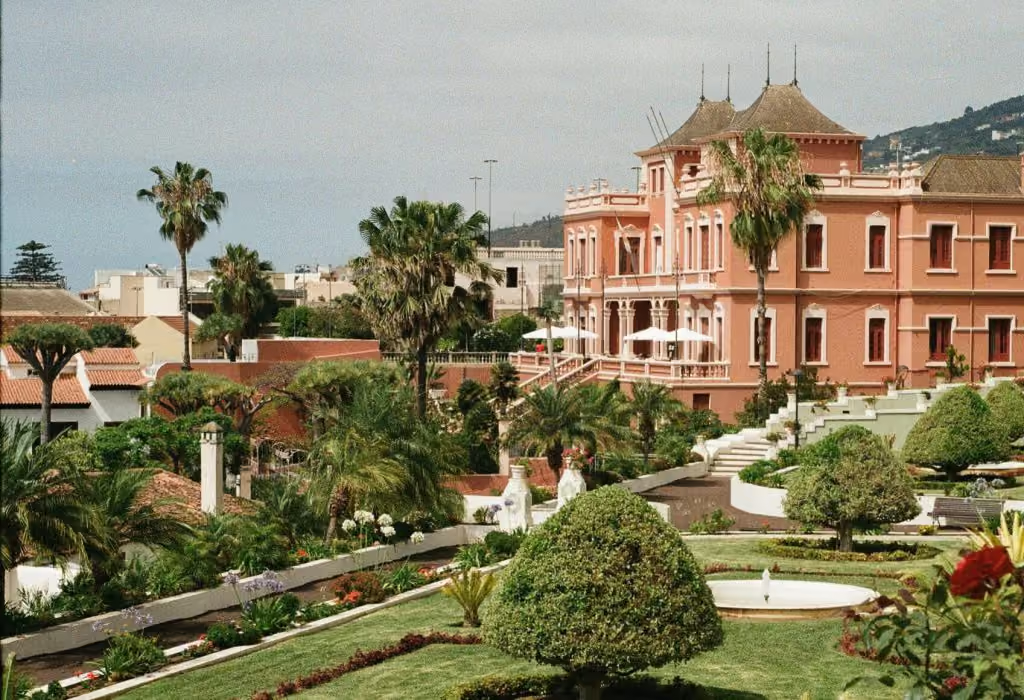
In July 2024, annual inflation in the Canary Islands stood at 3.8%, slightly above the Spanish national average of 2.8%. The rise was mainly due to higher costs for housing, water, gas and electricity.
Despite this inflation, Santa Cruz de Tenerife remains affordable. Compared with Madrid, consumer prices are about 26% lower, with rents 47% cheaper.
However, local residents' purchasing power remains limited: it is 60% lower than in Madrid, which shows the economic challenges facing the people of Tenerife.
Housing and rents
According to Indomio, in April 2025, the average price of homes for sale in the province of Santa Cruz de Tenerife was €3,604/m², up 17.51% compared with April 2024. This upward trend is especially strong in coastal and tourist areas, where demand remains high.
Here are some average prices per square metre in different municipalities:
- Adeje: €4,814/m²
- Arona: €3,696/m²
- Puerto de la Cruz: €3,019/m²
- Santa Cruz de Tenerife: €2,305/m²
- San Cristóbal de La Laguna: €1,912/m²
- Agulo: €483/m² (the lowest in the province)
Tenerife's property market is growing steadily, with significant rises in sale prices and rents. This is especially true in tourist areas such as Adeje and Arona, where demand is strong.
In April 2025, the average rent in the province was €15.54/m², up 4.09% in a year.
Average monthly rents per square metre, for example:
- Adeje: €23.12/m²
- Arona: €20.46/m²
- Puerto de la Cruz: €17.43/m²
- Santa Cruz de Tenerife: €12.78/m²
- San Cristóbal de La Laguna: €10.81/m²
- Fasnia: €1.95/m² (the lowest in the province)
Rental yields remain attractive, especially for short-term lets in tourist areas. In 2022, Santa Cruz de Tenerife was the 4th most profitable provincial capital in the country. However, some municipalities have restricted new tourist licences because the market is saturated.
For more information on the subject, read our guide: “Tourist licences in Spain: the complete guide”.
To start your property search in Tenerife, contact our experts based on the island. They know the specific features of the Canary Islands property market inside out.
Transport, shopping and everyday costs
Public transport is well developed, especially in urban areas such as Santa Cruz de Tenerife and La Laguna. Two tram lines efficiently connect the main parts of the metropolitan area, with a single fare of about €1.35 per trip. Discounted monthly passes are also available, in particular for residents, students and seniors.
The intercity bus network (run by TITSA) covers the whole island, including rural areas and tourist sites. Trips cost between €1 and €3 on average, depending on distance. The rechargeable TEN+ card gives you even cheaper fares.
For those who prefer to drive, fuel is among the cheapest in Spain, thanks to the special tax regime of the Canary Islands. In summer 2023, a litre of petrol cost around €1.20, well below mainland prices.
When it comes to shopping and everyday spending, basic products are very affordable in Tenerife. Local fruit and vegetables, fresh fish, dairy products and eggs are very competitively priced, especially at markets. Everyday services (electricity, water, internet) are generally affordable.
Everyday costs:
- Electricity (monthly, 70 m²): €40 to €60
- Water (monthly): €20 to €30
- Internet (monthly): from €30
- Gym membership: €30 to €40
- Leisure and eating out
- Cinema ticket: €7 to €8
- Restaurant meal: €10 to €15
Where to live in Tenerife: north or south?
The best towns and neighbourhoods
There are dozens of pleasant towns and villages. Your choice will depend on your lifestyle and what you are looking for, but these 3 towns are often mentioned:
- Santa Cruz, the capital, is ideal for easy access to services and culture. You will have everything you need on the spot, without crossing the island every day. Santa Cruz is perfect for families and for people who like to do everything on foot.
- Puerto de la Cruz is ideal for retirees, as it is cooler on the west coast. One drawback: the town is often very busy with tourists because of its volcanic beaches. High and low season do not really mean much here, but Puerto de la Cruz remains a perfect place for retirees. Loro Parque, a huge zoo we come back to below, is ideal for an outing with the grandchildren. The same goes for Lago Martiánez, a seafront swimming and leisure complex with a splendid view of the Teide.
- Adeje is a seaside resort that is lively all year round. Adeje has some of the most beautiful beaches on the island. Its seafront is lined with bars, restaurants and hotels. Adeje is perfect for living with friends or enjoying single life, but families will love Aqualand too.
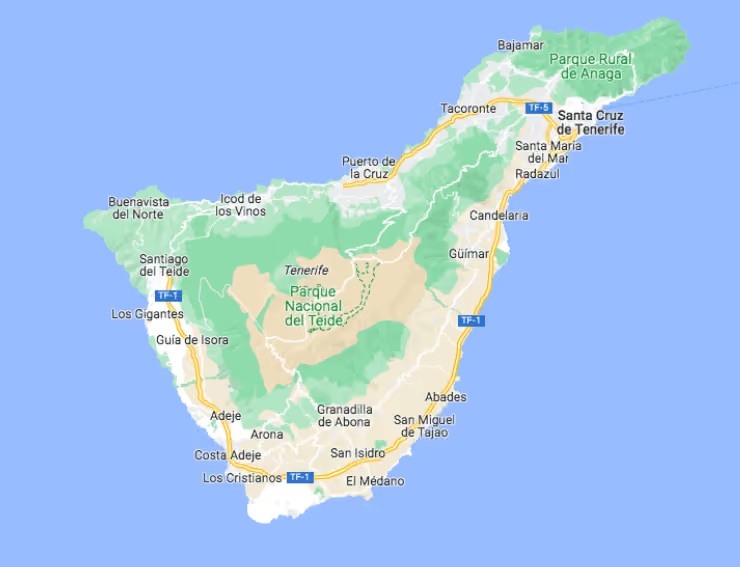
Source: Google
Pros and cons of each area
Tenerife is a volcanic island with spectacular landscapes, but its mountainous terrain and island nature strongly shape where people live. Most inhabitants live on the coast, where infrastructure, services and jobs are concentrated. These same areas are also the most touristy… and so often the busiest, noisiest or most expensive.
Economically, the standard of living in Tenerife is lower than on the Iberian Peninsula, particularly in terms of wages. Unemployment is higher than the national average: 13.5% in the Canary Islands against 10.9% in Spain in the first quarter of 2025.
That said, quality of life remains a major advantage, whatever your situation. According to Numbeo, quality of life in Santa Cruz de Tenerife is high, with an index of 164.35. Madrid is ahead with 189.55, but Santa Cruz has nothing to be ashamed of.
Another strong point for families and people living alone: safety. Santa Cruz has a safety index of 72, the same as Madrid. This is reassuring for anyone who wants to settle for the long term in a calm and stable environment.
Daily life in Tenerife
Healthcare, safety and infrastructure
As in the rest of Spain, healthcare in the Canary Islands is fairly good. There are public and private hospitals on every island. EU visitors can be treated with their European Health Insurance Card (UK visitors with their GHIC), and residents with their tarjeta sanitaria (the Spanish public health card).
To find out how to access Social Security, read our article: “Living in Spain: the complete guide”.
- San Cristóbal de La Laguna is home to the Hospital Universitario de Canarias.
- Phone: +34 922 678 283
- Address: Ctra. Ofra S/N La Cuesta 38320 La Laguna
- Santa Cruz is home to the Hospital Universitario Nuestra Señora de Candelaria.
- Phone: +34 922 602 000
- Address: Ctra. Gral. del Rosario 145 38010 Santa Cruz de Tenerife
The islands have around forty medical facilities (public and private). You will find the full list in this official document.
Tenerife is very safe compared with other large European cities. According to Numbeo, the safety index in Santa Cruz de Tenerife reaches 72, a high score that reflects a generally peaceful climate with little crime.
The Canary Islands are generally seen as one of the safest regions in Spain, an important factor for families with children and people living alone.
The island has modern, well-maintained infrastructure. Two international airports (Tenerife North and Tenerife South) offer regular flights to the UK and mainland Europe. The road network is good, even if some mountain areas have more winding roads.
Culture, leisure and food
A full guide to Tenerife has to mention a few natural wonders you must see, and its cultural heritage, which is richer than you might think.
Beaches you cannot miss
When it comes to beaches, do not miss:
- Playa de La Tejita, in the south-east of the island. It is one of the longest natural beaches in Tenerife.
- Las Teresitas, in the north. It may be an artificial beach lined with palm trees planted for residents and tourists, but it has plenty of charm and advantages, including its closeness to the beautiful, colourful village of San Andrés, perfect for fresh fish at lunchtime.
- El Duque, the Duke's beach. It is on the Costa Adeje, at the southern tip of the island, on the west side. It is very popular with tourists and expats.
- El Bollullo is our favourite: an isolated beach framed by two cliffs, with volcanic sand and a huge rock that looks as if it had been placed there by hand. This wild beach stays at the top of our list. You can reach it on foot, along a path that offers an unrivalled walk through a banana plantation.
- Los Gigantes, in the west of the island. It is an iconic Tenerife beach. Its volcanic sand, open panoramic view and cliffs (los acantilados) overlooking the sea make it a unique place. In the time of the Guanches, these cliffs were known as “the walls of hell”.
- Los Cristianos, in the south of the island. Ideal for family holidays, it is very busy. The Arona beach, which flies a Blue Flag for its good environmental management, and the beach of Las Américas, the busiest on the island, are musts. Las Américas is packed with surfers in every season.
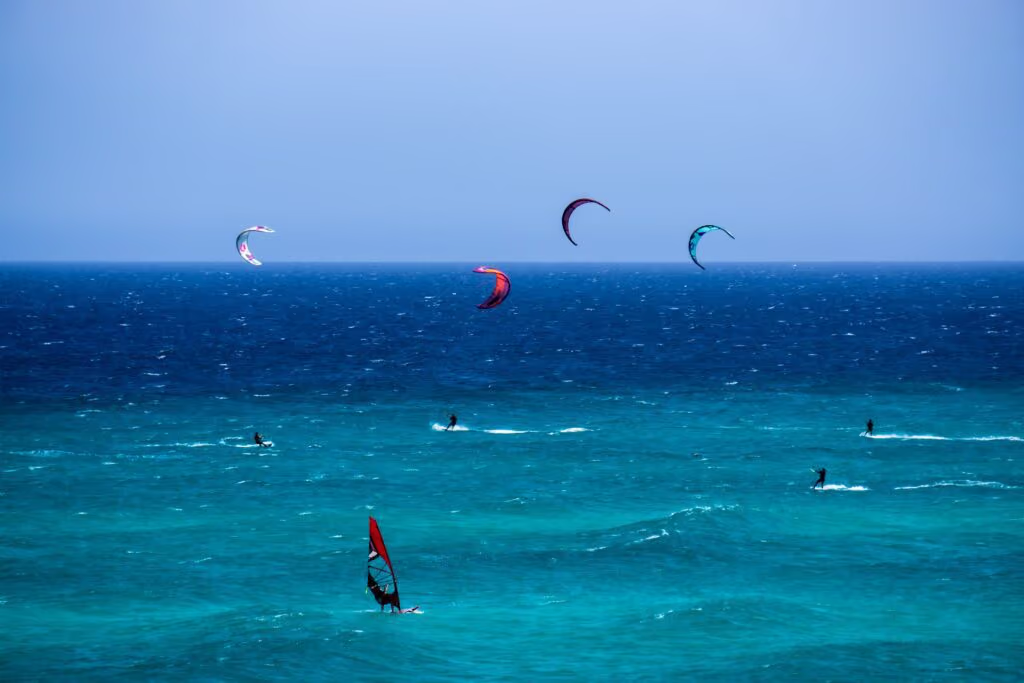
La Orotava and its viewpoint
La Orotava is an authentic, quiet town known for its well-preserved colonial architecture. Its cobbled streets, beautiful colourful houses and picturesque squares will take you back in time. Its botanical garden is perfect for admiring a wide variety of exotic plants and flowers. The town offers a spectacular view of the coast from the famous Mirador de Humboldt, named after a German scientist who fell in love with the view. La Orotava also has a long history of winemaking, and Tenerife was one of the biggest wine exporters until the 19th century. We recommend tasting some while you are there. In moderation, ¡claro!
Mount Teide and its national park
As we have said, Tenerife is a volcanic island, and the Teide is its iconic volcano. It is the highest peak in Spain and in the whole Canary archipelago, rising to 3,718 metres above sea level. It is the third-largest volcano in the world. It is active, but rest assured, its last eruption dates back to 1909. Its seismic activity is closely monitored.
The Teide and its surroundings, a lunar landscape of craters and lava flows, were declared a national park in 1954, and since 2007 the site has been a UNESCO World Heritage Site. It is one of the most visited national parks in Europe, with an average of 4 million visitors a year.
At the top, its observatory is considered one of the best sites in the world for astronomy. The Teide is a paradise for hikers, and the cable car gives a helping hand to the less sporty.
Banana plantations, a Canarian treasure
A trip to Tenerife without a visit to a banana plantation would be incomplete, as banana growing is an emblematic activity on the island.
In its latest report, ASPROCAN, the Association of Canary Islands Banana Producer Organisations, states that Tenerife produced the largest volume of bananas in the Canary archipelago in 2022: more than 175,000 tonnes, over 50% of total Canary production.
Exploring the plantations, discovering traditional growing methods and tasting fresh bananas are must-do experiences on the island.
Architecture, heritage and the Tenerife Carnival
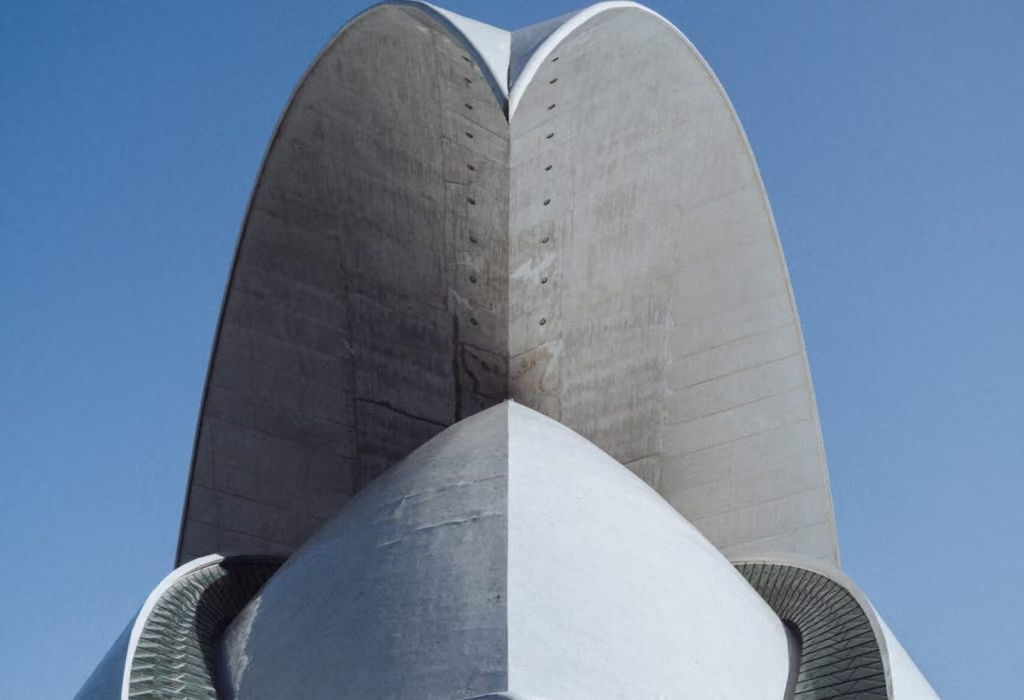
In terms of architecture, the island links tradition and modernity. It has preserved its historic heritage. The beautiful little university town of San Cristóbal de La Laguna, home to the oldest university in the Canary Islands, was the capital of the island and of the archipelago until the early 19th century (1823). Full of charm, it looks a little like Havana and has been a UNESCO World Heritage Site since 1999. This small colonial-style town (and other charming towns) sits alongside avant-garde buildings such as the Santa Cruz auditorium, which faces the ocean. It was designed by the Spanish architect Santiago Calatrava, who also created the City of Arts and Sciences in Valencia.
Tenerife has a very rich history and nature, as its museums show. For a cultural holiday or weekend outings, you can visit the Museum of Nature and Archaeology, the Museum of Science and the Cosmos, and the Museum of History and Anthropology.
You will find the island's cultural calendar on the Lagenda website.
The Tenerife Carnival is the second best-known carnival in the world, after the one in Rio de Janeiro, Brazil. It lasts two weeks and takes place every year between February and March. It draws huge crowds of tourists (around 150,000 every year).
Theme parks
- Siam Park is an institution on the island. It is the largest water park in Europe, with Thai-inspired settings. In 2023, Tripadvisor voted it the best water park in the world for the ninth year in a row. A wave pool, slides and exotic decor make Siam Park a must.
- Loro Parque is ideal for lovers of exotic animals. Located in Puerto de la Cruz, it is famous for its bird collection: its name, Loro, means “parrot” in Spanish. Loro Parque supports endangered species, environmental awareness and scientific research.
- Lago Martiánez, which we mentioned above, is an amazing seafront site. Listed as a Bien de Interés Cultural in Spain since 1995, it is home above all to a huge swimming complex.
A must for tourists, these parks also attract local families.
Canarian food
Canarian cuisine is rich, and each island has its own specialities. It shows African, Spanish and Latin American influences.
In Tenerife, no meal is complete without mojo picón, a typical sauce made with chilli, garlic, olive oil and other spices, or with parsley and coriander. It will also be hard to avoid papas arrugadas (and you should not even try!): small potatoes boiled in salted water until they are tender and their skin wrinkles. Gofio, a kind of toasted flour made from maize or wheat, is another speciality of the Canary Islands, and in Tenerife there is a typical dish called escaldón de gofio, a meat or fish broth to which gofio is added. You will also find many cheeses, plenty of fresh fish of course, and meat, especially pork.
Advice from expats in Tenerife
What they wish they had known
Several expats admit they wish they had better anticipated local delays and slow paperwork: getting an NIE, opening a bank account or exchanging a driving licence can take time. Others say they wish they had known more about the property market: “Rents are not that cheap in the most popular areas, such as the south of the island. You often have to fight to find a home, especially for a long-term let.”
It is also important to understand how local healthcare works. Although there is public cover, many people take out private health insurance to avoid waiting times at some centres.
Their local tips
- To fit in on the island, it is better to speak Spanish. Canarians are very welcoming and know that their economy relies heavily on tourism, and therefore on foreigners, but it will be easier to build relationships if you speak Spanish.
- You can get around by public transport, as the island has a fairly complete and efficient network, but a car lets you enjoy the island properly. The great thing about daily life in Tenerife is its variety. Going without a car means longer journeys and missing out on an essential part of life in Tenerife.
- Island life is different: you will need to take a plane or a boat regularly. If you suffer from travel sickness, you may be better off choosing another destination.
- Good to know: residents of the Canary Islands get large discounts (75%) on domestic flights. This is sometimes controversial.
- A small practical point: the Canary Islands are one hour behind mainland Spain, on the same time as the UK and Ireland. When it is 1 pm in Madrid, it is noon in the Canaries.
Frequently asked questions: living in Tenerife
Is it easy to live in Tenerife without speaking Spanish?
You can live in Tenerife without perfect Spanish, especially in the very touristy south of the island, where English and sometimes French are understood. However, to settle in for the long term, deal more easily with public services, talk to locals or simply build relationships, speaking Spanish is a real advantage. Canarians are warm and patient, which makes it easier to learn the language step by step.
What is the average rent?
Rents in Tenerife vary greatly by location. In tourist areas such as Los Cristianos or Costa Adeje, prices can climb, especially in high season. As a guide, allow €600 to €900 a month for a one-bedroom flat, and more than €1,200 for a well-located family home. In less touristy areas or inland, rents are more affordable. Santa Cruz, for example, offers a good balance between reasonable prices and quality of life.
Can you live in Tenerife with children?
Yes, Tenerife is well suited to family life. The island has many state, private and international schools, some of which offer bilingual programmes. Healthcare facilities are reliable, and the climate and natural environment make for a healthy lifestyle. Children can enjoy many outdoor activities all year round, which makes it a great place to grow up.
Planning to buy a property in Spain?
Get a call back from one of our experts on the ground.
Thomas Rouer is the founder of Alveo Search and the CEO of the Alveo group. Based in Spain for almost ten years, he develops property services designed for the specific needs of foreign buyers.
His expertise covers every aspect of buying property in Spain: understanding the market, searching for and selecting properties, negotiation, financing, paperwork, tax and securing the purchase process.


Our resources for buying in Spain